Choose a free-from snack bar by matching the current pack’s ingredients and any ‘may contain’ statement to the particular allergens you avoid. A gluten-free, dairy-free or vegan claim does not settle other allergy questions: for example, Nakd Cocoa Delight contains cashews, while Tesco’s listing also warns that it may contain soya, peanuts and other nuts.
Who needs to check the label?
The useful starting point is the allergen you need to avoid, not a brand’s general free-from positioning.
Shoppers avoiding a named allergen
Check the ingredients and any precautionary statement for that allergen on each flavour and pack size. The Food Standards Agency explains that ‘may contain’ labelling communicates a possible unintended presence of an allergen; it is different from an ingredient deliberately used in the recipe.
Shoppers combining free-from needs
If you avoid gluten or dairy as well as peanuts, tree nuts or soya, assess each requirement separately. A bar can carry one free-from claim while naming another allergen in its ingredients or precautionary statement.
Parents and carers buying portable snacks
Check the exact pack that will be eaten, particularly when changing flavour or buying a multipack. Information for one bar in a brand’s range should not be assumed to apply to another.
What matters when choosing a bar?
Start with the allergen you must avoid, then check what each claim covers and whether the pack matches the product you intended to buy.
| Priority |
What to check |
Your needs |
| Named allergens |
Read the full ingredients list for the allergen you avoid. Read any ‘may contain’ statement separately: the Food Standards Agency describes this as information about possible unintended presence, not a recipe ingredient. |
I need to know whether my allergen is listed as an ingredient or named in a precautionary warning before choosing the bar. |
| Scope of a free-from claim |
Check precisely what a gluten-free, dairy-free or vegan claim describes, then screen for other allergens. Nakd lists cashews in Cocoa Delight; Tesco also lists a precautionary warning for soya, peanuts and other nuts. |
A gluten-free or dairy-free claim helps with one requirement, but I still need to check any other allergens I avoid. |
| Exact pack |
Match the flavour and pack size to the label in your hand. Check the ingredients and precautionary wording on that pack before it is eaten, rather than relying on another flavour or an online listing. |
When I buy a different flavour or multipack, I want the allergen information for that specific product. |
Common label-reading mistakes
-
Treating ‘free from’ or vegan as an all-allergen claim
These descriptions do not answer every allergy question. Tesco’s listing for the gluten-free TREK Original Oat Protein Flapjack names soya ingredients and warns that it may contain peanuts, nuts and milk.
Use the claim for the attribute it names, then check the ingredients and precautionary statement against every allergen you avoid.
-
Assuming a whole brand range has one allergen profile
A brand name does not identify the ingredients of a particular flavour. Nature Valley’s Chocolate & Coffee Protein bar, for example, contains peanuts, soya and milk and may contain tree nuts, according to Nature Valley UK.
Read the label for the exact flavour and pack size, including when switching from a single bar to a multipack.
-
Using a website listing instead of the pack
A listing can help narrow down options, but the bar being eaten needs its own ingredient and precautionary-label check.
Compare the physical pack with your allergen requirements before eating it. If the product identity or allergen wording is unclear, do not rely on the online description to resolve it.
Brand examples and their limits
These examples show why suitability belongs to a specific product and label, rather than to a brand as a whole.
Graze
Graze makes flapjacks and other snacks using ingredients that include wholegrains, fruit and nuts, according to the brand.
- Its range description does not establish that a particular snack bar is free from an allergen. Check the chosen pack.
Nature Valley
The range includes protein snack bars with product-specific allergen information.
- Nature Valley UK says its Chocolate & Coffee Protein bar contains peanuts, soya and milk and may contain tree nuts. Do not apply that ingredient list to another flavour.
Alpen
Alpen’s own allergy information says its products contain wheat, barley or oats.
- Check the exact product’s ingredients and allergen information; a range-wide description cannot establish suitability for a particular allergy.
Eat Natural
Its Dark Chocolate & Peanut Protein Bar is a nut-led example.
- Eat Natural UK lists a ‘may contain’ warning for milk, almonds, Brazil nuts, hazelnuts and cashews on that bar. Check both the ingredients and precautionary wording for the allergens you avoid.
Nakd
Nakd’s Cocoa Delight is a fruit-and-nut bar; the brand lists dates, cashews, raisins and cocoa powder as ingredients.
- It contains cashews. Tesco’s listing also says it may contain soya, peanuts and other nuts, so its gluten-free or dairy-free positioning does not answer those allergy questions.
Trek
TREK offers protein flapjacks, including an Original Oat product listed by Tesco.
- Tesco lists soya ingredients for Original Oat and a precautionary warning for peanuts, nuts and milk. Check the current pack rather than extending that information to every TREK flavour.
Snack bars on Joybuy
These bars offer different flavours and pack formats to check against your own allergen requirements. None can be selected on its name or a general free-from claim alone: use the current pack’s ingredients and precautionary statement to make the final choice.
 No image available
Nature Valley Protein Peanut & Chocolate Bar, 4 x 40g
If you avoid peanuts, check this peanut-named variant’s full ingredient list before considering it. The pack contains four 40g bars; also read its precautionary statement for any other allergens you avoid.
View on Joybuy
 No image available
Nature Valley Protein Salted Caramel Nut Bar, 4 x 40g
The nut-named flavour calls for an ingredient check if you avoid peanuts or tree nuts. This is a pack of four 40g bars; check its own allergen and ‘may contain’ wording rather than using another Nature Valley flavour as a guide.
View on Joybuy
 No image available
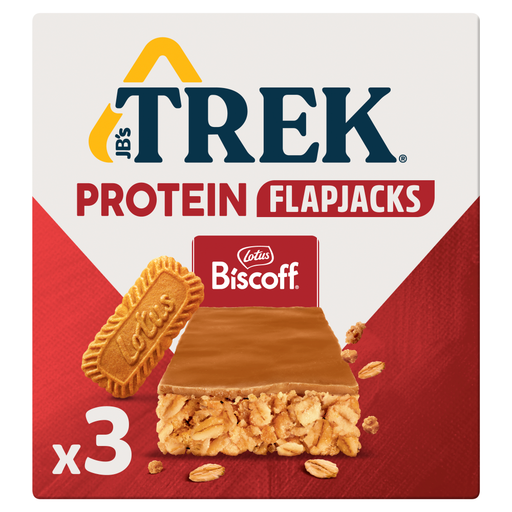
Trek Biscoff Flapjack, 3 x 50g
Check this Biscoff-flavour flapjack’s ingredients and precautionary statement against the allergens you avoid. The pack contains three 50g flapjacks; information for a different TREK flapjack does not establish this variant’s suitability.
View on Joybuy
 No image available
Nakd Peanut Delight, 4 x 35g
The listing uses both Peanut Delight and Cocoa Hazelnut names. Confirm the flavour and full allergen statement on the physical pack before choosing it, particularly if you avoid peanuts or tree nuts. The title specifies four 35g bars.
Purchase link unavailable
 No image available
Trek High Protein Flapjack Cocoa Oat, 16 x 50g
If you are considering an oat flapjack, check this Cocoa Oat variant’s ingredients and precautionary statement for each allergen you avoid. Its title specifies sixteen 50g flapjacks; the allergen information for TREK Original Oat should not be assumed to cover it.
View on Joybuy
Questions about allergen labels
What must UK snack-bar labels tell me about allergens?
GOV.UK’s August 2026 consumer advice says UK food businesses must inform consumers when they use any of the 14 regulated allergens as ingredients. For a packaged snack bar, read the exact pack’s ingredients and allergen information for the substances you avoid; also check any precautionary statement.
Does ‘gluten-free’ mean a bar is suitable for every food allergy?
No. A gluten-free claim does not establish the absence of other allergens. Nakd lists cashews in Cocoa Delight, and Tesco’s listing warns that it may contain soya, peanuts and other nuts. Check the current pack against your particular allergens.
What does ‘may contain’ mean on a snack bar?
It is precautionary wording about an allergen that could be unintentionally present, rather than one deliberately listed as a recipe ingredient, as the Food Standards Agency explains. Read the named allergen in that warning alongside the ingredients when assessing the bar.
Can I rely on a brand or retailer website’s ingredient list?
Use a website to narrow down products, but check the physical pack before eating. Match its flavour and pack size, then read its current ingredients and precautionary statement rather than relying on information for a similar bar.


