Do not choose a snack bar on a ‘diabetic friendly’, ‘no added sugar’ or free-from claim alone. Diabetes UK advises checking total carbohydrate for the portion you will eat; separately, check the exact bar’s ingredients, declared allergens and any ‘may contain’ statement against the allergen you need to avoid. A gluten-free bar can still contain nuts, milk or soya, while a no-added-sugar fruit bar can still contain substantial carbohydrate.
Who needs to check what?
The relevant label checks depend on both your carbohydrate plan and the particular ingredient or allergen you need to avoid.
Shoppers counting carbohydrate
If you count carbohydrate as part of your diabetes plan, compare the total carbohydrate in the bar you intend to eat, not just its sugars figure or front-of-pack traffic lights. Diabetes UK advises using the total carbohydrate information on the pack.
Shoppers avoiding gluten or dairy
Check the exact product and flavour for the ingredient you need to avoid, then assess its carbohydrate per portion separately. A free-from statement about one ingredient does not answer either the carbohydrate question or questions about other allergens.
Shoppers with a nut or soya allergy
Read the ingredients, declared allergens and any precautionary wording for the exact bar. Some gluten-free protein bars still contain peanuts, tree nuts or soya; a vegan claim is not a substitute for an allergen check.
What should you check before choosing?
Start with the portion and its total carbohydrate, then make a separate check for every ingredient or allergen that matters to you.
| Priority |
What to check |
Your needs |
| Total carbohydrate |
Read total carbohydrate per bar or stated serving. Check whether that serving is the amount you will eat; use per 100g figures when comparing bars of different sizes. |
I count carbohydrate, so the figure for my actual portion matters more than a claim on the front of the pack. |
| No-added-sugar claims |
Compare total carbohydrate with the sugars figure and ingredient list. Nakd lists 19g carbohydrate per 35g Cocoa Delight bar despite its no-added-sugar claim. |
A bar made with dates or raisins might fit my ingredient preferences, but I still need to account for its carbohydrate. |
| Allergens |
Check the exact flavour’s ingredients, declared allergens and any ‘may contain’ wording. The Food Standards Agency explains that precautionary wording communicates possible unintended allergen presence. |
If I must avoid nuts, milk or soya, a gluten-free or vegan statement does not settle that separate question. |
| Portion and snack role |
Confirm the bar size and whether a nutrition figure is per bar, per serving or per 100g. Consider the snack within your existing eating plan rather than treating a protein or fibre claim as a carbohydrate measure. |
I want to know what one bar contributes, and whether I actually need a between-meal snack. Diabetes UK notes that snack needs vary with factors including diabetes type, insulin programme and activity. |
Where can bar labels mislead?
-
Treating ‘diabetic friendly’ as a selection rule
Diabetes UK’s position on foods marketed for people with diabetes does not make that wording a substitute for assessing a particular bar and portion.
Use the total carbohydrate, intended portion, ingredients and relevant allergen information to make the product-specific check.
-
Reading ‘no added sugar’ as ‘low carbohydrate’
A no-added-sugar claim does not state the bar’s total carbohydrate. For example, Nakd lists 19g carbohydrate per 35g Cocoa Delight bar, which contains dates and raisins.
Read total carbohydrate per bar first; use the sugars figure and ingredients for additional context.
-
Using one free-from claim to judge other allergens
Nature Valley Protein Salted Caramel Nut is labelled gluten free but lists peanuts, almonds, milk and soya. Other bars can also carry ‘may contain’ statements about allergens not listed as ingredients.
Check every relevant allergen on the exact pack, including precautionary wording, against your allergy-management advice.
-
Stopping at front-of-pack traffic lights
Diabetes UK notes that front-of-pack traffic-light information does not show total carbohydrate, the figure needed for carbohydrate counting.
Turn the pack over to compare total carbohydrate per portion and, when bar sizes differ, per 100g.
Which brands provide useful examples?
These product-line examples show why a brand or free-from description cannot replace checking the particular bar you intend to buy.
Nature Valley
Its gluten-free Protein Salted Caramel Nut bar provides an example of a bar with per-serving nutrition information and several other declared allergens.
- Nature Valley lists 10.5g carbohydrate per 40g bar; Joybuy’s listing states 10.0g per 40g serving. Check the current pack when using that figure.
- The bar lists peanuts, almonds, milk and soya, so its gluten-free status does not address those allergies.
Nakd
Its fruit-and-nut bars illustrate how an ingredient preference and a carbohydrate decision can lead to different checks.
- Nakd describes Cocoa Delight as vegan and made with no added sugar; its listed ingredients include dates, cashews and raisins.
- Nakd lists 19g carbohydrate per 35g Cocoa Delight bar. Cashews also make this example unsuitable for someone who must avoid them.
TREK
TREK describes its bars as plant-based and offers protein-bar and flapjack ranges.
- TREK states that its Protein Flapjacks provide 9g plant protein; this is a range statement, not a carbohydrate figure for every flavour.
- Check the chosen flavour’s carbohydrate, ingredients and allergens rather than using ‘plant-based’ or ‘protein’ as a free-from statement.
Eat Natural
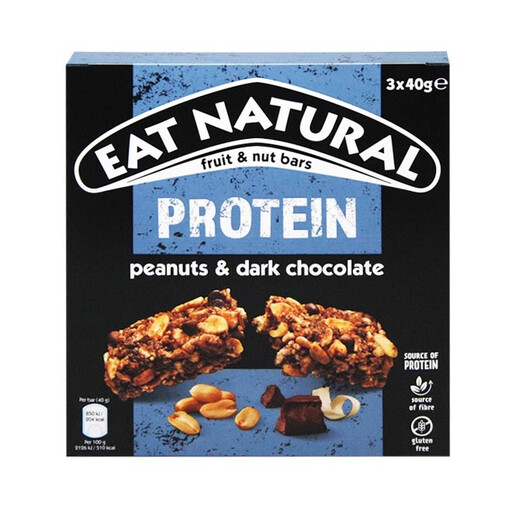
Its Peanuts & Dark Chocolate protein bar is a nut-led, gluten-free example with product-specific nutrition and allergen information.
- Eat Natural lists 13.4g carbohydrate and 7.8g protein per 40g bar for that product.
- That bar contains peanuts and soya and may contain milk and several tree nuts. Check the exact product rather than extending its specifications to other Eat Natural bars.
Graze
Its oat-based flapjacks offer another format to compare by portion and nutrition label.
- Graze makes a reduced-sugar comparison claim for its Oat Boost flapjacks.
- That range-level sugar comparison does not establish the total carbohydrate or allergen status of a particular bar; check its pack.
Joybuy snack bars to compare
These options include named protein bars and a protein flapjack. Compare the exact pack’s carbohydrate and allergen information with your own requirements; a product’s place in this list does not establish individual suitability.
 No image available
Nature Valley Protein Peanut & Chocolate, 4 × 40g
For this peanut-and-chocolate protein bar, compare the current pack’s total carbohydrate per 40g bar with your plan. Its peanut content is a decisive consideration if you need to avoid peanuts; check the full allergen and gluten information for this exact variant.
View on Joybuy
 No image available
Nature Valley Protein Salted Caramel Nut, 4 × 40g
This bar is labelled gluten free, but its listed allergens include peanuts, almonds, milk and soya. Joybuy lists 10.0g carbohydrate per 40g serving, while Nature Valley lists 10.5g per 40g bar; use the current pack for the figure relevant to your portion.
View on Joybuy
 No image available
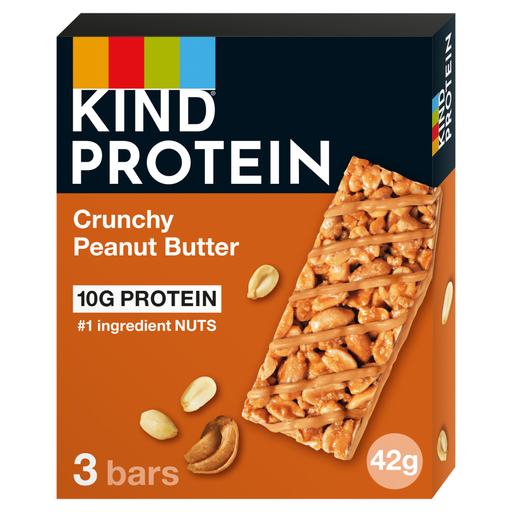
KIND Protein Crunchy Peanut Butter, 3 × 42g
The peanut-butter flavour makes peanut avoidance a reason to exclude this option. For other requirements, check the exact 42g bar’s carbohydrate, complete allergen information and any relevant free-from statement on the pack.
View on Joybuy
 No image available
Eat Natural Protein-Packed Peanuts and Chocolate, 3 × 40g
This peanut-and-chocolate bar is not a candidate for someone avoiding peanuts. Check the carbohydrate per 40g bar and the full ingredients, allergen declarations and any free-from claim on this exact pack rather than assuming another Eat Natural product has the same details.
View on Joybuy
 No image available
TREK Salted Caramel Protein Flapjacks, 3 × 50g
This flapjack format is a separate option from the nut-led protein bars above. Check total carbohydrate for the 50g flapjack and its exact ingredients and allergen statements; a protein description does not give you those answers.
View on Joybuy
Common questions
Does ‘no added sugar’ mean a bar is low in carbohydrate?
No. Check total carbohydrate for the bar you will eat. Nakd describes Cocoa Delight as having no added sugar but lists 19g carbohydrate per 35g bar.
For carbohydrate counting, should I read sugars or total carbohydrate?
Use total carbohydrate, not only ‘of which sugars’. Diabetes UK advises checking the back-of-pack carbohydrate figure; confirm whether the stated portion is the whole bar.
Does gluten free mean a bar is free from nuts, milk and soya?
No. Nature Valley Protein Salted Caramel Nut is labelled gluten free but lists peanuts, almonds, milk and soya. Check every allergen relevant to you on the exact product.
What does ‘may contain’ mean on a UK bar label?
The Food Standards Agency explains that precautionary allergen wording communicates possible unintended presence of an allergen. If you have a diagnosed allergy, assess the exact statement against your allergy-management advice rather than treating it as an allergen-free claim.
Is under 10g carbohydrate a rule for everyone with diabetes?
No. Diabetes UK’s under-10g snack observation applies specifically to people with Type 1 diabetes who have completed a carb-counting course; it is not a universal snack-bar threshold. Assess a bar’s portion within your own diabetes-care plan.


