Who is choosing the bar?
The useful label details depend on who will eat the bar, especially when several people are sharing or packing the lunch.
Shoppers avoiding a particular allergen
If the person eating the bar needs to avoid peanuts, tree nuts, milk, soya or a gluten-containing cereal, check the exact flavour’s ingredients and any “may contain” statement. A broad free-from description cannot answer every allergen question.
People looking for a gluten-free lunchbox bar
Look for an explicitly gluten-free product rather than assuming any oat bar will do. Coeliac UK explains that standard oats can be contaminated when produced alongside wheat, barley and rye; suitability of gluten-free oats for the individual still matters.
Vegetarian or vegan protein-bar shoppers
A vegan or plant-protein description can help narrow the choice for a packed lunch, but it is separate from allergen information. Check soya, milk and nut declarations on the particular bar before choosing it for someone with an allergy.
What should you check first?
Start with ingredients that must be avoided, then read precautionary statements. Compare nutrition per bar only among products that meet those requirements.
| Priority | What to check | Your needs |
|---|
| Specific ingredients |
Read the current ingredients and allergen information for the exact flavour. Distinguish gluten-free, dairy-free and vegan claims rather than treating them as interchangeable. |
“I need to avoid a particular ingredient, so a general free-from claim is not enough.” Nature Valley Protein Salted Caramel Nut, for example, is described as gluten-free but contains peanuts, almonds, soya and milk. |
| Cross-contact |
Check any “may contain” statement separately from the ingredients list. The Food Standards Agency explains that precautionary allergen labelling communicates possible unintended allergen presence. |
“The bar is for someone with an allergy; I need to see both what is added and what the pack warns may be present.” |
| Gluten-free oats |
Look for explicit gluten-free labelling on an oat bar. Coeliac UK notes that many standard oats are produced alongside wheat, barley and rye and can be contaminated. |
“I’m packing a gluten-free lunch and do not want to rely on the word ‘oat’ alone.” Whether the person can eat gluten-free oats is a separate consideration. |
| Protein and fibre |
Compare the stated amounts per bar and the bar size, not just a front-of-pack description. Keep the ingredient and precautionary allergen checks ahead of nutrition comparisons. |
“Once the ingredients fit, I’d like to compare bars by their stated protein or fibre.” TREK describes Original Oat as providing 10 g of plant protein per bar, while Nature Valley describes Salted Caramel Nut as providing around 10 g of protein per bar; these are different products with different allergen declarations. |
What do the relevant brands offer?
These brand examples point to particular products or ranges, not to one allergen profile shared by every bar a brand makes.
nākd.
Fruit-and-nut bars include Cocoa Delight, which nākd. describes as vegan, gluten-free and dairy-free.
- Cocoa Delight offers those three stated dietary characteristics in one bar.
- Its ingredients include cashews, according to nākd.; it is not a choice for someone avoiding cashews.
TREK
The Original Oat flapjack is described by TREK as vegan and gluten-free, with 10 g of plant protein per bar.
- It gives shoppers a named gluten-free oat product to assess, rather than relying on oats alone as a gluten-free indicator.
- Original Oat contains soya and may contain peanuts, nuts and milk; check other TREK flavours individually.
Nature Valley
Its Protein Salted Caramel Nut bar is described as gluten-free, with around 10 g of protein per bar.
- The named bar allows a protein comparison after its ingredients have been checked.
- It contains peanuts, almonds, soya and milk and may contain other tree nuts, according to Nature Valley.
Eat Natural
Its Dark Chocolate & Peanut Protein Bar is a gluten-free-labelled example containing peanuts and soya.
- The named product offers another distinct ingredient profile to compare when peanuts and soya are acceptable.
- Eat Natural lists possible milk and several tree nuts alongside its peanut and soya ingredients.
Graze
Graze describes its Oat Boost flapjacks as made with wholegrain oats.
- The Oat Boost range is a starting point for checking an oat-based snack alongside lunch.
- Check the exact flavour’s current ingredients, gluten-free wording and allergen statements; the range name does not establish those details.
Alpen
Alpen is a useful reminder that cereal and oat wording does not establish gluten-free suitability.
- The brand’s FAQ gives a clear position to consult when screening cereal products for gluten.
- Alpen states that all its products contain gluten from wheat, barley or oats; do not select an Alpen product as a gluten-free substitute on the strength of its cereal ingredients.
Snack bars on Joybuy
These bars offer oat, nut-based and fruit-and-nut options to consider alongside a ploughman’s lunch. Check the exact pack against the eater’s ingredient and precautionary-allergen requirements; the products do not share one free-from profile.
 No image available
TREK Salted Caramel Protein Flapjacks, 3 × 50 g
An oat-flapjack option for a packed lunch when you are checking gluten-free and vegan labelling. This flavour contains soya; read its current pack for the full ingredients and any precautionary statements. Allergen details for TREK Original Oat should not be assumed to apply to Salted Caramel.
View on Joybuy
 No image available
Nature Valley Protein Salted Caramel Nut Bars, 4 × 40 g
A gluten-free-labelled nut protein bar to consider only when its ingredients fit the eater’s needs. Nature Valley describes this flavour as providing around 10 g of protein per bar; it contains peanuts, almonds, soya and milk and may contain other tree nuts. Confirm those details on the current pack.
View on Joybuy
 No image available
Nature Valley Protein Peanut & Chocolate Bars, 4 × 40 g
Consider this peanut protein bar only if peanuts, soya and milk are acceptable. Its product information also lists a possible presence of other nuts. Check the Peanut & Chocolate pack’s own gluten-free and allergen wording rather than carrying details over from the Salted Caramel Nut flavour.
View on Joybuy
 No image available
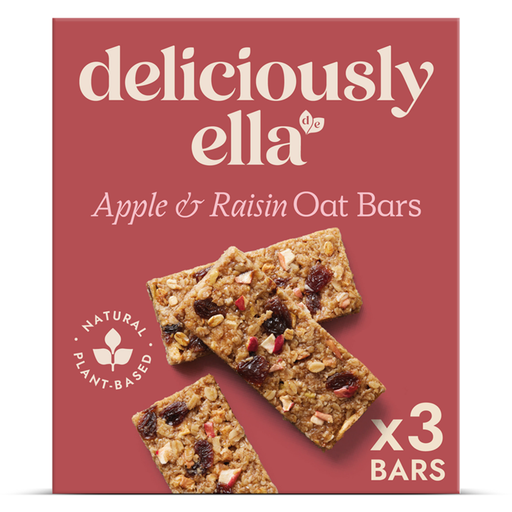
Deliciously Ella Apple, Raisin & Cinnamon Oat Bars, 3 × 50 g
A fruit-flavoured oat-bar option for a packed lunch; check the exact pack for its gluten-free and vegan wording. Its product information warns that milk, nuts, peanuts and soya may be present, so those statements matter even when the bar otherwise meets a dietary preference.
View on Joybuy
 No image available
nākd. Blueberry Muffin Fruit & Nut Bars, 4 × 35 g
A fruit-and-nut option when checking gluten-free and dairy-free choices for lunch. This flavour contains cashews and almonds; its product information also gives a precautionary warning for nuts, peanuts and soya. Check the Blueberry Muffin pack itself rather than assuming it has the same ingredients as nākd. Cocoa Delight.
View on Joybuy
Common questions
Does gluten-free also mean dairy-free, nut-free or vegan?
No. Each description addresses a different requirement. Nature Valley Protein Salted Caramel Nut is described as gluten-free but contains peanuts, almonds, soya and milk; nākd. Cocoa Delight is described as gluten-free, dairy-free and vegan but contains cashews. Check the exact bar against the ingredient you need to avoid.
Will any oat bar work for a gluten-free lunch?
No. Coeliac UK explains that many standard oats are produced alongside wheat, barley and rye and can be contaminated. Look for an explicitly gluten-free product, then consider whether gluten-free oats are suitable for the person eating it.
How should I read “may contain nuts” or “may contain milk”?
Read it separately from the ingredients list, not as a free-from claim. The Food Standards Agency explains that precautionary allergen labelling communicates possible unintended allergen presence through cross-contact. Check the exact pack when choosing for someone with an allergy.
Must a packaged snack bar provide allergen information in the UK?
Yes. GOV.UK’s allergen guidance states that food businesses must provide allergen information for prepacked and non-prepacked food. For a packaged bar, check its current label for the ingredients and allergens relevant to the person eating it.
What if a bar is packed at a deli counter?
If it is food prepacked for direct sale in the UK, the applicable labelling requirement includes the food name and a full ingredients list with the 14 regulated allergens emphasised. The Food Standards Agency and Food Standards Scotland describe this requirement as in force since 1 October 2021. For an item that is not prepacked for direct sale, ask the retailer for its current allergen information rather than assuming the same label format applies.


