
24/7 Customer Support

Free returns

Same-day & Next-day Delivery

Quality Guaranteed

Unlock Your Welcome Offers: FREE Delivery | Up to 80% OFF | Free 30-day JoyPlus trial
Download the APP
Choosing a new freestanding fridge freezer can feel overwhelming. The market is flooded with models boasting impressive features and sleek designs. However, beneath the marketing gloss, there are common pitfalls that can lead to a purchase you regret. As a Joybuy Product Recommendation Officer, my role is to help you see past the hype and focus on what truly matters for your home and budget. Let's look at the frequent traps and how to sidestep them.
The 3 Common Traps When Buying a Fridge Freezer
To ensure your new appliance is a perfect fit, focus on these non-negotiable parameters.
This is the most critical step. A freestanding fridge freezer needs breathing room to work efficiently.
Understanding the difference here saves you a significant amount of time and effort.
An energy efficient fridge freezer saves you money and is better for the environment.
Here are some recommendations matched to different household needs, all of which address the common pitfalls.

Why This Fits Their Persona: Ideal for first-time buyers, renters or those with limited space. Its ultra-slim 47cm width and 144cm height allow it to fit into small flats, studio flats or utility rooms where a standard appliance is not an option. It provides a practical 157L net capacity, perfect for an individual or a couple.
It is honestly advertised with Low Frost technology, setting clear expectations about maintenance. Its compact size means its E-rating translates to low annual running costs, avoiding the energy rating puzzle.
Ultra-slim 47cm width for tight spaces. Features a reversible door for maximum installation flexibility.
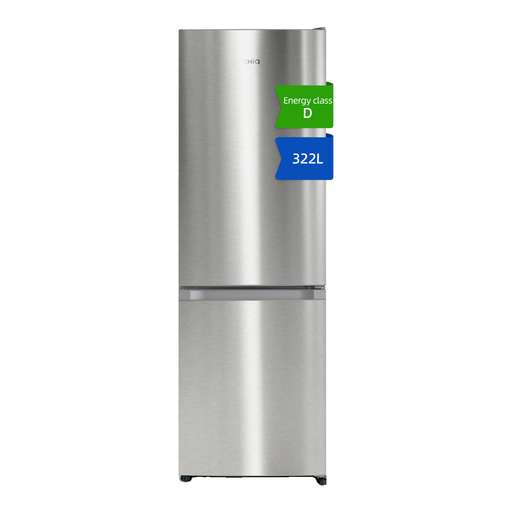
Why This Fits Their Persona: A great all-rounder for a family home. It has a standard 60cm width but offers a generous 322L net capacity. The premium stainless steel fridge freezer finish fits well in contemporary kitchens and it's packed with features that make family life easier.
This model features true Total No Frost with a Multi Airflow system, eliminating the defrosting chore entirely. Its impressive D-rating is backed by Dual Inverter Technology, ensuring it is genuinely energy efficient for its size.
Total No Frost technology for zero manual defrosting. The Dual Inverter system provides quiet, efficient and stable cooling.
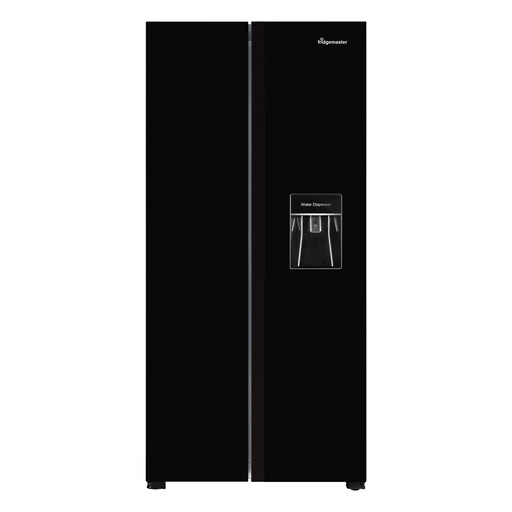
Why This Fits Their Persona: For those who need maximum storage for big family shops, batch cooking or entertaining guests. This American fridge freezer offers a huge 440L net capacity. The side-by-side design provides excellent organisation and the sleek black fridge freezer finish makes a bold statement.
It provides a massive, clearly stated 440L net capacity with a practical layout. The non-plumbed water dispenser offers the convenience of chilled water without the hidden cost and hassle of professional plumbing.
Huge 440L capacity for large households. Features a convenient non-plumbed water dispenser and Total No Frost technology.
We have compiled a complete, real-time list of products that fully satisfy these strict selection criteria and UK safety regulations.
As a general rule, you should leave at least 5cm (2 inches) of clearance at the back and on both sides and around 10cm (4 inches) at the top. This space is essential for the appliance to dissipate heat effectively, ensuring it runs efficiently and preventing the compressor from overworking, which could shorten its lifespan.
The average lifespan of a modern fridge freezer is typically between 10 and 15 years. This can vary based on the quality of the model, how heavily it is used and whether it is properly maintained. Models with features like inverter compressors are often designed for greater longevity.
Not necessarily. Under the stricter 2021 energy labelling system, a D rating is actually quite respectable and indicates good efficiency. To compare running costs accurately, you should always look at the 'kWh/annum' (kilowatt-hours per year) figure on the energy label. This tells you exactly how much electricity the appliance is estimated to use over a year, allowing for a direct comparison with other models, regardless of their size or rating.