
24/7 Customer Support

Free returns

Same-day & Next-day Delivery

Quality Guaranteed

Unlock Your Welcome Offers: FREE Delivery | Up to 80% OFF | Free 30-day JoyPlus trial
Download the APP
Choosing among freestanding fridge freezers is not simply a matter of picking a capacity and colour. The wrong model can block a doorway, fail to fit through a hallway, leave too little freezer space or cost more to run than expected. Marketing descriptions can also make familiar features sound more capable than they are.
This guide explains the specifications that matter, highlights common buying traps and matches selected Joybuy models to different UK household needs.
A listed width of 54cm or 60cm does not tell the whole story. You also need to check height, depth, door swing, ventilation clearance and delivery access. Measure doorways, stairwells and turns before ordering. A model may fit its final space but be impossible to bring into the property.
Also check whether the doors can open beyond 90 degrees, particularly with American fridge freezers and French door fridge freezers. Nearby walls or cabinets can prevent drawers and shelves from being removed fully.
Low Frost reduces ice accumulation but normally still requires occasional manual defrosting. Total No Frost or Frost Free systems circulate cooled air to reduce frost formation across the fridge freezer compartments. They can reduce maintenance, but the appliance still needs cleaning and proper ventilation.
If you want to avoid regular defrosting, check the actual defrost specification rather than relying on phrases such as “easy maintenance” or “advanced cooling”.
A large capacity does not automatically mean convenient storage. Side-by-side designs offer good visibility but may have narrower shelves. French door models provide wider refrigerated compartments, while bottom freezer drawers can make frozen food easier to organise.
Compare the fridge-to-freezer split, shelf layout and drawer dimensions with your shopping habits. A couple who buys fresh food frequently may prefer more fridge space, whereas a family that batch-cooks may prioritise a larger freezer.
Record the available width, height and depth in millimetres, then compare them with the manufacturer’s product dimensions. Allow room for airflow around the appliance as specified in the user manual. Do not position a fridge freezer directly beside a heat source or block ventilation openings.
For smaller kitchens, slimline fridge freezers, 54cm fridge freezers and compact fridge freezers can provide useful storage without occupying a standard 60cm space. Models below standard height may suit student accommodation, studios or rooms with low ceilings.
Total capacity is measured in litres, but usable storage depends on shelves, drawers and door balconies. As a broad comparison:
Check whether the quoted capacity is divided between fridge and freezer sections. For example, a 254-litre model with 154 litres of fridge capacity and 100 litres of freezer space has a different use profile from a model with a much larger fresh-food compartment.
The UK energy label uses an A to G scale, where A is the higher efficiency class within the current system. A D-rated model and an E-rated model should not be compared by letter alone: check the label’s annual energy consumption in kWh, capacity and features.
Useful cooling terms include:
A water dispenser may be non-plumbed, using an internal tank, or require an external water connection. Confirm this before buying, particularly if you rent and cannot alter kitchen plumbing.
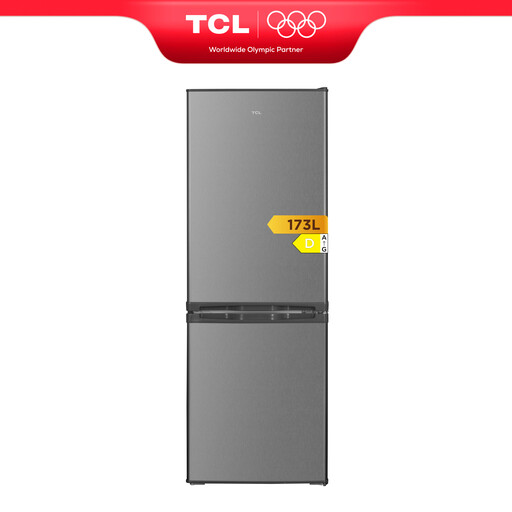
Why This Fits Their Persona: Its 50cm width and 143cm height suit smaller kitchens, rented homes and modest households that need a separate fridge and freezer without a tall full-size appliance.
The listed compact dimensions make it easier to check access and available floor space before purchase.
173-litre total capacity; D energy class; graphite finish.
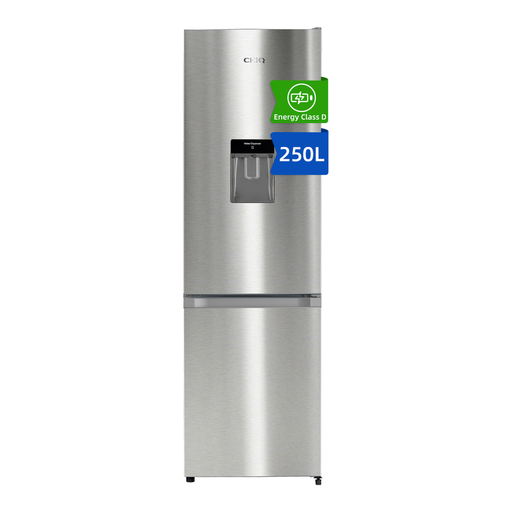
Why This Fits Their Persona: It combines a slim footprint with a stainless steel finish, non-plumbed chilled water dispenser and Total No Frost cooling for households wanting convenience without a wide American-style appliance.
The water dispenser is specified as non-plumbed, while Total No Frost is stated separately from Low Frost.
250-litre capacity; 39dB listed noise level; D energy class.
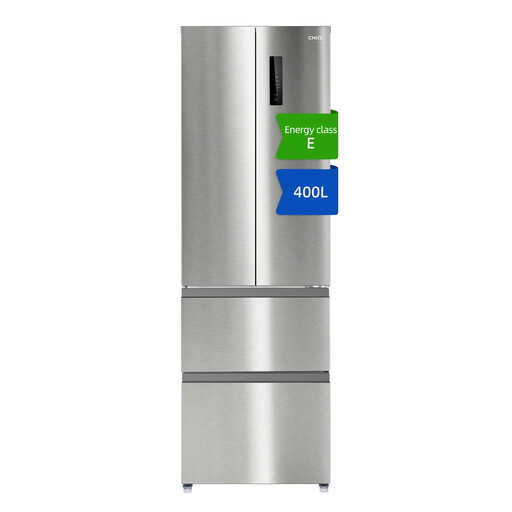
Why This Fits Their Persona: Its 400-litre capacity is suited to larger households, batch cooking and bulk shopping, while the 60cm width can work where a wider American fridge freezer cannot.
The product specifies separate fridge, Care+ Space and freezer capacities, helping shoppers assess usable storage rather than total litres alone.
400-litre total capacity; 37dB listed noise level; two direct-access freezer drawers.
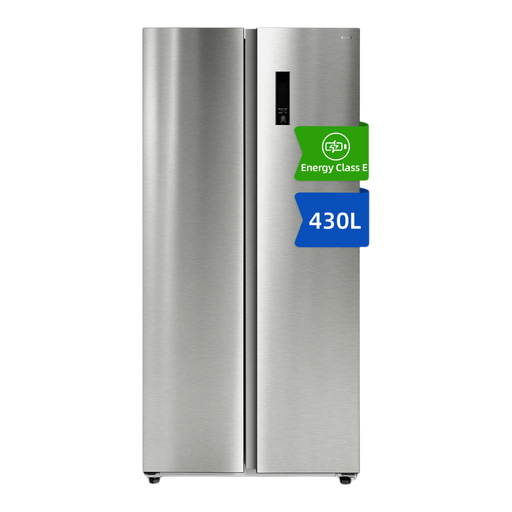
Why This Fits Their Persona: The 430-litre layout provides substantial fresh and frozen storage for frequent family shops, with side-by-side access for households that value visibility.
Its 84cm width and 637mm depth are clearly stated, making it easier to assess whether the larger format is realistic for the kitchen and delivery route.
261-litre fridge and 169-litre freezer; Total No Frost; six adjustable glass shelves.
We have compiled a complete, real-time list of products that fully satisfy these strict selection criteria and UK safety regulations.
A fridge freezer’s service life depends on usage, installation, ventilation, maintenance and component quality. Keep vents clear, clean door seals and avoid placing hot food directly inside. Follow the manufacturer’s instructions and check the warranty terms, including any registration requirements.
Running cost depends on the appliance’s energy label, annual kWh figure, size, temperature settings and household electricity tariff. Compare annual energy consumption rather than relying only on the D or E class. A larger appliance may use more electricity overall even if its design includes efficient components.
Possibly, but check the door-opening requirement and manufacturer’s clearance guidance first. A reversible-door model can offer more flexibility, while French door and side-by-side designs may need extra space for drawers and shelves to open fully. Ensure the appliance stands level and is connected to a suitable, earthed UK socket without blocking ventilation.