
24/7 Customer Support

Free returns

Same-day & Next-day Delivery

Quality Guaranteed

Unlock Your Welcome Offers: FREE Delivery | Up to 80% OFF | Free 30-day JoyPlus trial
Download the APP
As a Joybuy Product Recommendation Officer, my role is to help you navigate the crowded market of home storage. A freestanding kitchen larder cupboard can transform a cluttered kitchen into an organised, functional space. However, not all units are created equal. Many promising-looking cabinets hide design flaws that lead to frustration and wasted money.
This guide cuts through the marketing jargon, highlighting the common pitfalls to avoid and the essential features to look for. We will focus on practical advice to help you find a storage solution that genuinely meets the demands of a modern UK household.
Before you add a unit to your basket, be aware of these frequent issues that can turn a promising purchase into a wobbly regret.
To ensure your new cabinet is a long-term asset, focus on these core parameters.
The foundation of a good tall kitchen storage cabinet is its material and construction. Look for units made from high-density particleboard or MDF, as these offer better durability and resistance to warping than cheaper, low-density alternatives. Crucially, check the specifications for the back panel's thickness and material. A solid back panel is a non-negotiable feature for a stable, long-lasting cupboard. Always ensure the product includes an anti-tipping device and that you use it to secure the unit to a wall, a vital safety step for any tall furniture.
Beyond the overall height and width, analyse the internal layout. Will the shelves accommodate your largest dinner plates (typically 27-30cm in diameter)? Is there a dedicated section tall enough for your small appliances? A well-designed unit might function as a dining room sideboard with hutch, offering a combination of concealed storage, drawers for cutlery and an open countertop space for serving or daily use. Measure your appliances and tallest pantry items before you buy to ensure a perfect fit.
The most practical designs incorporate modern conveniences. A kitchen unit with power outlets is a game-changer, creating a dedicated breakfast or coffee station that keeps trailing wires off your main work surfaces. Similarly, a larder unit with LED lights illuminates the contents of your cupboard, so you can easily find what you need without rummaging. For those who want to display their best crockery, a modern kitchen display cabinet with tempered glass doors offers a stylish yet practical touch.
We have matched a few storage solutions to different household needs, showing how focusing on the right features can help you avoid common purchasing mistakes.
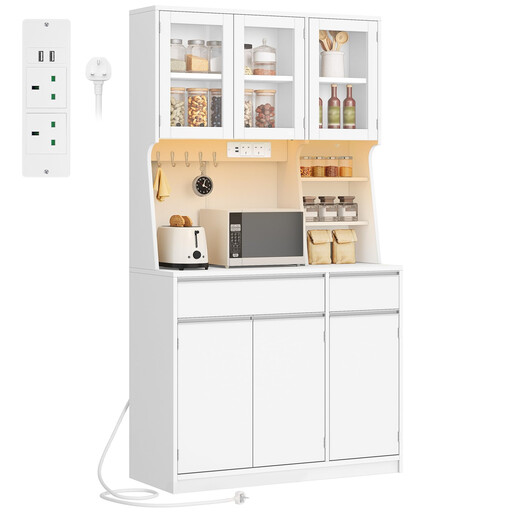
Why This Fits Their Persona: This user wants a single unit to solve multiple problems: appliance storage, pantry space and countertop clutter. This white pantry cupboard is designed as a complete hub for a busy kitchen.
It directly counters the 'overlooked features' pitfall by integrating a power strip with UK sockets and USB ports, plus multi-mode LED lighting. The structure uses high-density particleboard and includes an anti-tip kit for stability.
The combination of a wide countertop, integrated power and varied storage (glass display, drawers, deep cupboards) creates a highly functional appliance and coffee station.

Why This Fits Their Persona: Ideal for renters or those with small kitchens who need a flexible, non-permanent solution. This mobile unit can serve as a mini-pantry, a coffee bar on wheels or extra worktop space that can be moved aside when not in use.
It avoids the 'unstable frame' pitfall by being designed for office use, with a sturdy engineered wood construction and a high load capacity (68 kg). The lockable casters prevent it from moving unintentionally, ensuring stability.
Its primary advantage is mobility. It provides targeted storage without the commitment of a large, fixed unit. The combination of drawers and open shelving is versatile for storing both small items and bulkier goods.
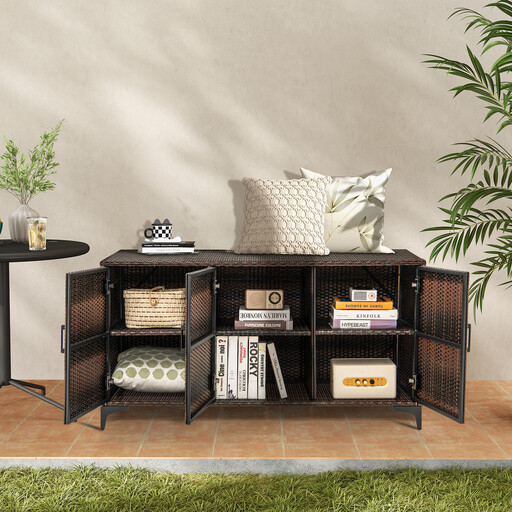
Why This Fits Their Persona: This user needs robust, high-capacity storage for a utility room, garage or covered porch area adjacent to the kitchen. It's perfect for bulk-buy dry goods, pet food, cleaning supplies or seasonal items.
It sidesteps the 'flimsy material' trap by using a sturdy metal frame and durable PE rattan. This construction is far more resilient to dampness or temperature changes in a utility space than a standard particleboard kitchen unit would be.
The huge 318L capacity and removable shelves offer excellent storage flexibility. Its weather-resistant properties and anti-toppling device make it a safe and durable choice for less-protected indoor or semi-outdoor areas.
We have compiled a complete, real-time list of products that fully satisfy these strict selection criteria and UK safety regulations.
1. How do I secure a tall kitchen storage cabinet to the wall? Most reputable freestanding larder cupboards come with an anti-tipping kit. This usually consists of brackets and straps or screws to anchor the top of the unit to the wall behind it. It is essential to follow the manufacturer's instructions and use fixings appropriate for your wall type (e.g., plasterboard plugs for drywall). This prevents the unit from tipping over if a child tries to climb it or if it's overloaded at the top.
2. What is the average lifespan of a freestanding kitchen larder? The lifespan depends heavily on the material quality and usage. A low-cost unit made from thin particleboard in a high-humidity kitchen might only last a few years before showing signs of warping or instability. A well-made cabinet constructed from high-density board with a solid back panel, properly assembled and secured, can easily last for 10 years or more with normal use.
3. Can a larder unit with LED lights be left on? Yes, the LED lighting systems integrated into modern kitchen units are designed for low energy consumption and have a very long operational life. They produce very little heat, making them safe to leave on for extended periods to create ambient lighting in your kitchen or dining area. However, for energy conservation, it is always best to switch them off when not needed.