Families washing up after shared meals
If plates, bowls, cutlery and serving dishes regularly arrive together, look beyond the stated place settings. Basket adjustment matters when you want larger items to fit alongside everyday crockery.


Choose a full-size freestanding dishwasher if you have suitable connections but do not need to hide the appliance behind a cabinet door; choose a fully integrated model if a fitted-kitchen finish matters and the cabinet and door system are compatible. For everyday family meals, check whether the baskets hold your usual mix of crockery and cookware, then compare Eco-cycle figures, declared noise and programmes for the loads you actually wash.
If plates, bowls, cutlery and serving dishes regularly arrive together, look beyond the stated place settings. Basket adjustment matters when you want larger items to fit alongside everyday crockery.
Decide whether the dishwasher needs a matching cabinet door before comparing programmes. An integrated appliance also has to suit the cabinet opening, door system and available connections.
If the kitchen opens onto a living area, compare the declared noise figure and the duration of programmes you expect to use. A longer Eco cycle may fit your routine differently from a short wash.
Settle the freestanding-versus-integrated fit first. Then judge capacity by your own dishes, and compare running figures and programme timing on a like-for-like basis.
| Concern | What to check | Who this matters to |
|---|---|---|
| Family-load capacity | Compare place settings and basket layouts; measure your largest regular pans, bowls and glasses. | I want the usual meal clear-down to fit without leaving cookware for another wash; around 33% of consumers put fitting that load first. |
| Kitchen fit | Measure the intended space and door clearance. For an integrated model, confirm the cabinet opening, furniture door and installation requirements. | My fitted kitchen needs an appliance that works with its cabinet and door; roughly 25% of consumers make installation fit their primary concern. |
| Water and energy use | For the exact model, compare energy per 100 Eco cycles and water per Eco cycle, alongside the Eco programme duration. | If I run frequent loads, I want to understand what the labelled Eco figures mean for repeated use; about 25% of consumers prioritise those resources. |
| Evening noise and timing | Check the declared noise level and whether the available programmes suit normally, lightly and heavily soiled loads. | When the dishwasher runs near the living area after dinner, its noise and finishing time shape my choice; around 17% of consumers put these first. |
A stated capacity cannot tell you whether your roasting tin, tall glasses and serving bowls will fit together.
Measure the items you wash most often and inspect the basket layout. An adjustable upper basket or folding supports may help with changing load shapes.
A quick programme intended for lightly soiled dishes is not necessarily suitable for dried-on food or greasy cookware. AEG, for example, describes its 30-minute programme as a wash for slightly dirty dishes.
Match the programme to the soil level: consider Eco for ordinary crockery when you have time, and check the model's guidance for heavily soiled items.
A nominal 60 cm width does not establish that an appliance will fit the opening or work with the intended furniture door.
Get the exact installation drawing and confirm the cabinet opening, hinges, door panel, water supply, drainage and electrical connection before ordering.
An incompatible opening or door system can mean additional fitting work.
Water and energy figures are only useful for a direct comparison when they describe the same programme basis. Bosch UK explains that Eco operation uses a longer programme duration to reduce resource consumption.
Compare each model's labelled Eco figures together, then check quick or intensive programme guidance separately for the loads you expect to wash.
Relevant when comparing 60 cm freestanding and fully integrated dishwashers with adjustable loading options.
A reference point for full-size freestanding layouts and adjustable loading features.
Relevant to fitted-kitchen buyers comparing published capacity, noise and basket details.
Relevant when considering a fully integrated dishwasher with published Eco-cycle and loading specifications.
Relevant to buyers comparing 60 cm fully integrated machines with flexible lower-basket elements.
These full-size freestanding and fully integrated dishwashers offer two ways to accommodate family-meal crockery. Choose the format that fits your kitchen before comparing the stated capacity and each model's loading arrangement.
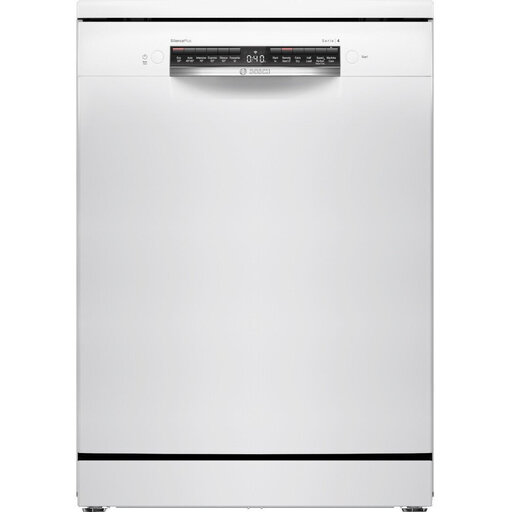 No image available
Consider this freestanding model if you do not need a matching cabinet door and want to assess how your family's crockery fits its baskets.
The product name identifies an energy class B variant. Check the exact model's Eco-cycle figures and programme duration when comparing regular use.
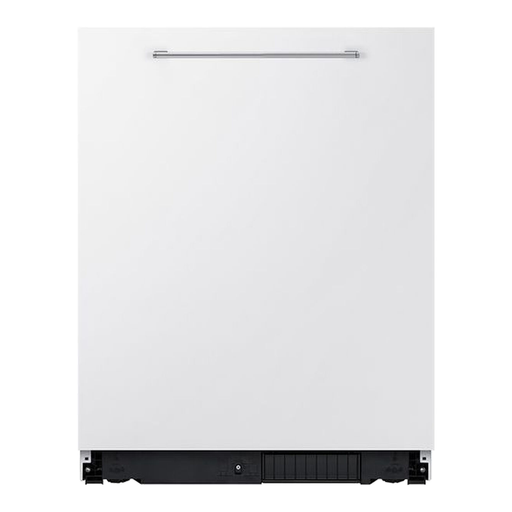 No image available
Consider this fitted-kitchen option if a concealed appliance suits your plans and its cabinet and door requirements can be met.
The product name states 14 place settings and energy class D. Confirm the installation dimensions and compare its labelled Eco figures with other models on the same basis.
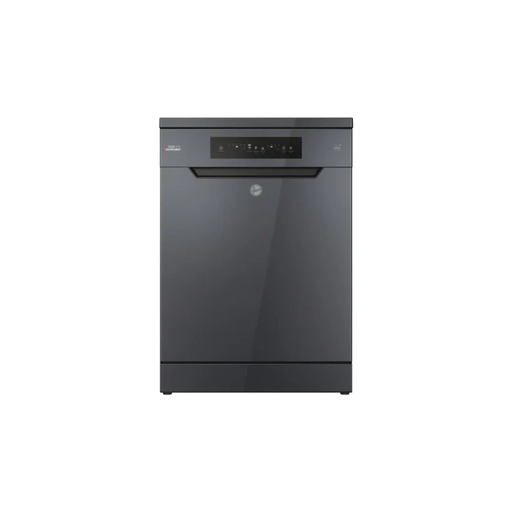 No image available
Consider this full-size freestanding model if your usual family-meal load calls for substantial crockery capacity without an integrated cabinet door.
The product name states 14 place settings and energy class C. Its listed 49-minute rapid programme is for a half-load, so do not assume it suits a full meal clear-down.
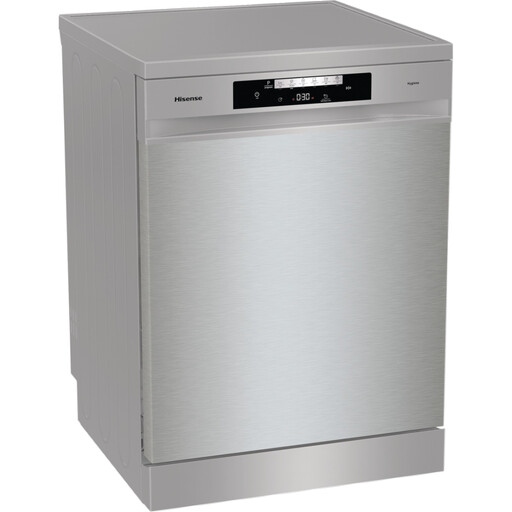 No image available
Consider this freestanding model if you have room for a 60 cm appliance and want to check how mixed family crockery fits inside.
The product name states 14 place settings and energy class D. Measure the available space and use the exact model's energy information to compare Eco-cycle water and electricity use.
 No image available
Consider this fitted-kitchen model if its cabinet opening and furniture-door arrangement suit your planned installation.
The product name states a 60 cm width, 14 place settings and energy class E. Confirm the door-panel requirements; its listed 28-minute cycle is intended for lightly soiled dishes rather than every family-meal load.
Eco is a suitable option for normally soiled crockery when you can allow a longer cycle. Bosch UK describes its Eco mode as designed to use less water and energy over a longer duration, while AEG says its Eco programme handles normal and slightly dry residue; follow the guidance for your exact model.
Only use a short programme for a full load if the exact model permits that load and its soil level suits the programme. AEG describes its 30-minute cycle as intended for slightly dirty dishes, while the listed rapid cycle on the Hoover HFP 4C7E0A-80 is for a half-load.
No. Before ordering an integrated dishwasher, compare its installation drawing with the cabinet opening, furniture door and hinge arrangement, then confirm water, drainage and electrical requirements. A nominal width alone does not establish that those parts will work together.