
24/7 Customer Support

Free returns

Same-day & Next-day Delivery

Quality Guaranteed

Unlock Your Welcome Offers: FREE Delivery | Up to 80% OFF | Free 30-day JoyPlus trial
Download the APP
Replacing a fridge freezer is rarely as simple as choosing the largest capacity within budget. A model may fit the available gap but fail to clear the skirting board, offer less usable freezer space than expected or cost more to run than its energy label suggests. For UK households, the most suitable choice depends on dimensions, storage habits, ventilation and the amount of maintenance you are prepared to accept.
This guide explains the main buying pitfalls and compares practical options for flats, families, large households and outdoor use.
A listed width of 60cm does not mean every 60cm model will fit comfortably. You also need to measure:
For example, the Samsung RB53DG706AS9EU is 75.9cm wide, 203cm high and 71.1cm deep, while an ultra-slim model such as the CHiQ JKR157LWE is 47cm wide and 49.5cm deep. These are very different installation requirements.
UK fridge freezer energy labels run from A to G, but the rating is not the same as a guaranteed annual bill. Actual consumption depends on capacity, room temperature, usage, door-opening frequency and installation.
A larger Class C appliance may use more electricity overall than a smaller Class E model because it cools a considerably larger volume. Compare the annual energy consumption in kWh, where available, alongside the energy class. Avoid assuming that a smart energy mode will automatically deliver a specific saving; it is a control feature rather than a guaranteed reduction.
A frost-free fridge freezer circulates cold air to reduce ice accumulation, so manual freezer defrosting is generally not required. However, shelves, drawers, door seals and ventilation areas still need regular cleaning.
A low frost fridge freezer normally reduces ice build-up compared with a static design but may still require occasional manual defrosting. This can be a sensible compromise where purchase price and compact dimensions matter more than eliminating defrosting altogether.
Total litres provide a useful starting point, but the split between fridge and freezer sections matters more for everyday use. A 70/30 arrangement suits households that buy fresh food frequently, while a larger freezer section can help batch-cooking households or bulk buyers.
As a broad guide:
Look for adjustable shelves, transparent freezer drawers, bottle storage and a separate crisper. These features affect usable capacity more than the headline litre figure alone.
A slimline fridge freezer may be the only workable option in a flat or galley kitchen. Models around 47–54cm wide can provide useful storage while leaving more room for worktops and walkways. A reversible door fridge freezer gives additional flexibility, but check whether hinge reversal must be completed during installation and whether the open door will block drawers.
Leave the clearance specified in the product instructions, particularly around the rear and sides. Blocking ventilation can affect cooling performance and may increase energy use. Level-adjustable feet are useful on uneven floors, especially in older UK properties or utility rooms.
Total No Frost systems reduce ice formation through circulating air. Multi-airflow designs distribute cooled air through several vents, while separate cooling circuits can help reduce odour transfer between the fridge and freezer.
Noise is measured in decibels, or dB(A). Models listed at around 34–40dB may be more suitable for open-plan kitchens, studio flats or rooms close to bedrooms. The rating is a guide rather than a promise of complete silence, as compressors may sound louder during cooling cycles.

Why This Fits Their Persona: Its 47cm width and 144cm height suit students, couples and flat dwellers working with restricted kitchen space.
The published dimensions make it easier to assess tight gaps before ordering, while Low Frost sets realistic expectations about occasional defrosting.
157L capacity, three freezer drawers, LED lighting, reversible door and a listed 39dB noise level.
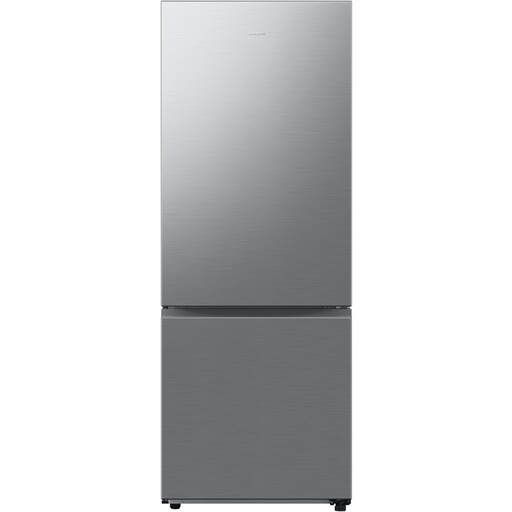
Why This Fits Their Persona: This extra-wide model suits households wanting substantial storage, separate cooling circuits and connected controls without choosing an American-style cabinet.
The specification lists the full dimensions, 370L fridge and 168L freezer split, rather than relying only on a broad capacity claim.
Class A rating, Twin Cooling Plus, Total No Frost, Wi-Fi controls and a listed 34dB noise level.
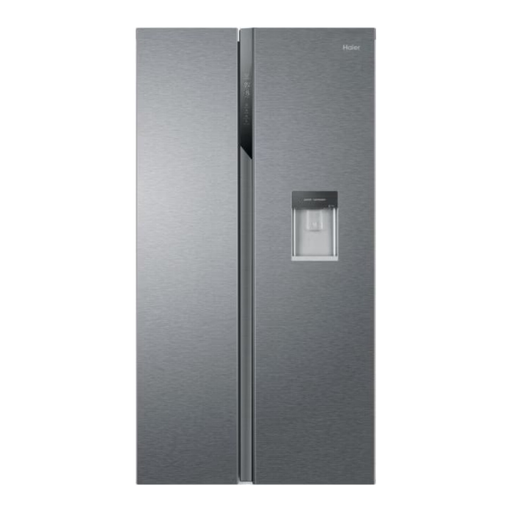
Why This Fits Their Persona: Its side-by-side design and 521L capacity are suited to families buying in bulk or storing larger containers.
The water dispenser uses an internal refillable tank, so installation does not require a dedicated water connection. Check the 90.8cm width before purchase.
330L fridge space, 191L freezer space, Total No Frost, Multi Air Flow and a listed 38dBA noise level.
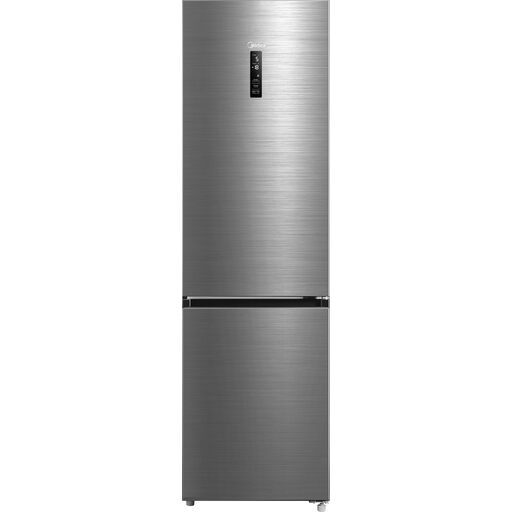
Why This Fits Their Persona: The 59.5cm-wide format offers a substantial capacity for family shopping while remaining close to a standard UK appliance width.
Total No Frost avoids the expectation of manual defrosting, while the published 201.8cm height highlights the need to check overhead clearance.
378L total capacity, Class C rating, inverter compressor, humidity-control crisper and dedicated chiller zone.
Before ordering freestanding fridge freezers, confirm:
For a garage, utility room or other non-standard location, check the appliance’s climate-class guidance before purchase. You can also browse the wider outbuilding fridge freezer range for models intended for secondary storage situations.
We have compiled a complete, real-time list of products that fully satisfy these strict selection criteria and UK safety regulations.
They can be simpler to position because they do not require a matching cabinet door or specialist housing. However, delivery access, ventilation, electrical safety and door clearance still need to be checked. A water dispenser may also require plumbing unless it uses a refillable tank.
Lifespan varies with usage, installation, maintenance and component reliability. Keeping ventilation clear, cleaning door seals and avoiding overloading can support consistent operation. Review the manufacturer’s warranty and any separate compressor cover before buying.
A higher-rated model may reduce electricity consumption, but compare the full kWh-per-year figure, capacity and purchase price rather than relying on the letter alone. A correctly sized appliance that is installed with suitable ventilation can be more economical for your household than an unnecessarily large model.