Occasional single-person batch cook
You freeze a few portions of cooled apple compote at a time. Space for your containers and an arrangement that lets you find them may matter more than bulk capacity.


If you freeze occasional portions of cooled apple compote for one person, check whether your existing freezer can hold them before buying another appliance. If you need dedicated storage, an undercounter freezer is a compact format to investigate; choose an integrated model only for compatible cabinetry, and consider a tall or chest freezer when regular larger batches or other bulky food justify the space.
You freeze a few portions of cooled apple compote at a time. Space for your containers and an arrangement that lets you find them may matter more than bulk capacity.
You want dedicated frozen storage within an existing undercounter housing unit. The cabinet dimensions and door-hinge arrangement determine which integrated models you can consider.
You freeze larger seasonal batches of compote or other bulky food as well. Work out how much you need to store at once before deciding whether an undercounter freezer offers enough room.
For one-person compote storage, start with the portions you expect to freeze and the space available. Then weigh up how you will organise them, maintain the freezer and accommodate any larger batches.
| Concern | What to check | Who this matters to |
|---|---|---|
| Capacity and kitchen fit | Compare usable volume with your portion containers. Measure the intended space, door swing and ventilation clearances against the exact model. | If kitchen space is tight, I want enough room for my portions without choosing an appliance larger than I need. Around 33% of consumers put proportionate capacity and fit first. |
| Portion organisation | Check whether the drawers or shelves accommodate your containers and make separate batches easy to find. | When I freeze several small containers, I want to retrieve one without shifting everything else. Roughly 27% of consumers make portion organisation their primary concern. |
| Freezing and maintenance | Check the temperature controls and defrost method; compare the energy information for shortlisted models. | I want dependable frozen storage for cooled compote, but I also care about the work involved in defrosting. Around 20% of consumers put freezing conditions and maintenance first. |
| Room for bigger batches | Allow for your largest realistic batch and other frozen food. Check lid-opening space for a chest freezer or available height for a tall model. | If I regularly preserve more than a few portions, I need room for those batches as well as everyday food. About 20% of consumers prioritise larger-batch capacity. |
Extra capacity is useful only if you expect to fill it. A chest freezer also needs floor and lid-opening space, while a tall model needs sufficient height.
Count the compote containers and other food you realistically expect to store. Consider a larger format if regular bulk batches or bulky items make an undercounter model impractical.
An appliance larger than your storage needs also takes up more space and runs as an additional freezer.
An integrated freezer must suit both its housing unit and its cabinet-door arrangement. General guidance advises checking the hinge type when replacing an integrated appliance.
Measure the housing and compare its fixed or sliding hinge system with the installation instructions for the exact model.
Low-ambient operation is model-specific, so a feature stated for one freezer should not be assumed for another model or an entire brand range.
Check the selected freezer’s permitted ambient-temperature range and installation instructions against the proposed location.
A freezer runs continuously, while its defrost arrangement affects routine maintenance. Bosch describes No Frost as avoiding manual defrosting, but the feature depends on the model.
Compare the energy labels and product information for the appliances you are considering, and check whether each requires manual defrosting.
Electricity use and time spent defrosting remain part of living with the appliance.
Beko offers undercounter, tall and chest freezer formats, including freestanding and integrated undercounter models.
Bosch lists undercounter, built-in and freestanding freezer formats for different kitchen arrangements.
Hotpoint describes freestanding, built-in, undercounter, tall and chest options in its freezer range.
These compact built-under and freestanding undercounter freezers are options for dedicated portion storage. A built-under model needs compatible cabinetry; for a freestanding model, check the intended location and required ventilation space.
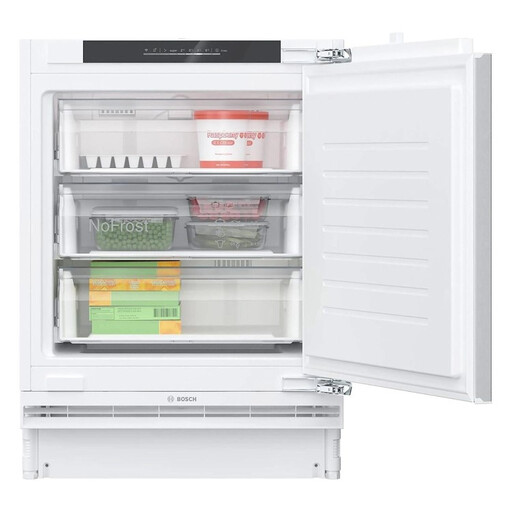 No image available
Consider this built-under model if you want dedicated compote storage behind a furniture door. Its name specifies No Frost; check the housing dimensions, door arrangement and plinth ventilation requirements before ordering.
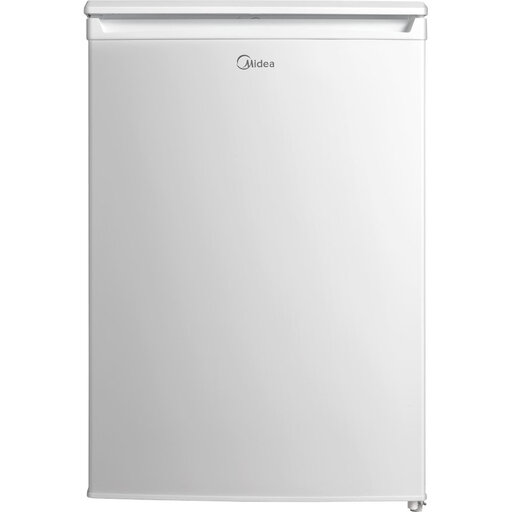 No image available
Consider this freestanding undercounter model if you need a separate place for compote portions. Confirm its usable capacity before deciding how many containers it will hold: the product title gives 83 L, while its descriptions give 86 litres. It requires manual defrosting, so allow for that maintenance as well as the installation clearances.
 No image available
This freestanding undercounter model is worth checking if you want a dedicated 85 L space for frozen portions. Measure the installation area and check that your containers fit its shelf arrangement. The model requires manual defrosting.
Choose by the number and size of portions you will store, your other frozen food and the space available, rather than by household size alone. Smeg describes undercounter freezers as offering around 50–100 litres of storage; use that range to begin comparing containers and usable space, not as a required capacity.
A fast-freeze setting is worth considering if you regularly add several cooled portions or larger batches, but it is not established as necessary for occasional small loads. Check the exact model’s controls, then prioritise sufficient space for the food you actually freeze.
No: an integrated freezer must fit the housing and use a compatible cabinet-door arrangement. Measure the unit and check whether its door uses fixed or sliding hinges; General guidance advises matching the hinge type when replacing an integrated appliance.
The Food Standards Agency’s research report gives −18 °C as the recommended temperature for domestic freezers. Follow the chosen appliance’s operating instructions when setting and loading it.
Only choose a garage or outbuilding if the exact freezer model is specified for the temperatures expected there and its installation instructions permit the location. Beko states that its UFS4584 can operate down to an ambient temperature of −15 °C; that model-specific claim should not be applied to other freezers.