
24/7 全天候客户支持

免费退货

当日/次日达

品质保障

开启新人专享福利: 全场免邮 | 低至 2 折 | 免费试用 30 天 JoyPlus 会员
下载 Joybuy
Freezer bags are useful for batch cooking, portioning meat and vegetables, storing leftovers and keeping a crowded freezer organised. However, choosing the wrong type can lead to split seams, frost-covered food or bags that are too small for practical use.
The product description alone does not always tell you what matters most. A large pack may offer poor value if the bags are flimsy, while a reusable design may be inconvenient if it is difficult to clean and dry properly. Before buying, focus on construction, dimensions and sealing method rather than pack size alone.
A roll of hundreds of disposable freezer bags can look economical, but only if the size suits your usual portions. Small bags are practical for chopped fruit, grated cheese and individual servings, whereas large freezer bags are more appropriate for loaves, family meals and bulk ingredients.
Compare price per bag and usable capacity, not just the headline quantity. A pack of 18 heavyweight bags may be more suitable for occasional family storage than 450 smaller bags if you mainly freeze large portions.
Some zip seal bags are designed for general fridge, lunch or household organisation use. They may still be suitable for freezing, but buyers should check the product description or packaging for explicit freezer-safe guidance.
Also check temperature limitations. Freezer bags are not automatically suitable for ovens, microwaves, boiling water or hot liquids. Cool cooked food before filling, and follow the product’s stated instructions.
Sharp bones, protruding food edges and overfilled bags can damage the material or prevent a secure closure. Air left around food can contribute to drying and ice build-up, commonly known as freezer burn.
A practical freezer bag should be easy to fill without stretching excessively, allow excess air to be pressed out and close securely along the full opening.
Heavyweight freezer bags are generally more suitable for raw meat, marinated food and heavier portions than very thin plastic bags. Thicker polythene can provide greater resistance to tearing during filling and handling, although no bag is puncture-proof.
For freezer bags for meat and vegetables, look for wording such as heavyweight, heavy-gauge or tear-resistant, then check the dimensions and closure type. Use an additional container or tray when storing liquid foods in case of accidental leakage.
Choose the bag size around your normal storage routine:
Leave room at the top for expansion, particularly when freezing liquids. Flat bags are easier to stack, while stand-up designs can be simpler to fill with sauces or other moist foods.
Freezer bags with zip seal closures can be convenient for repeated opening and closing. A slider or zip mechanism is useful for meal prep because it can make portioning and labelling simpler. Tie-top or manually sealed bags may be more appropriate where a high pack quantity and low unit cost are priorities.
Reusable freezer bags should be washed thoroughly and dried completely between uses. They are generally more practical for dry or low-grease foods. Disposable freezer bags may be preferable for raw meat, oily marinades or situations where cleaning is difficult.
For bags to prevent freezer burn, remove as much air as possible before sealing, press the closure firmly and label each bag with its contents and date. Organising food into flat portions also helps make better use of freezer space.
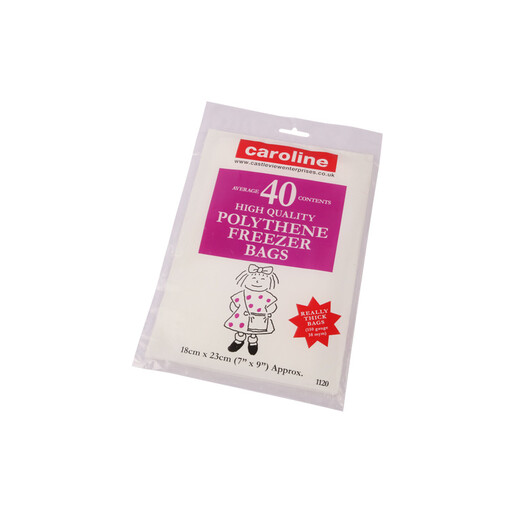
Why This Fits Their Persona: The compact 18 x 23cm format suits everyday portions, leftovers and chopped ingredients without taking up unnecessary space in a typical UK freezer.
Its heavyweight, food-safe polythene construction addresses the risk of flimsy bags tearing during normal portioning.
Pack of 40; compact dimensions; freezer-safe and suitable for portioning.
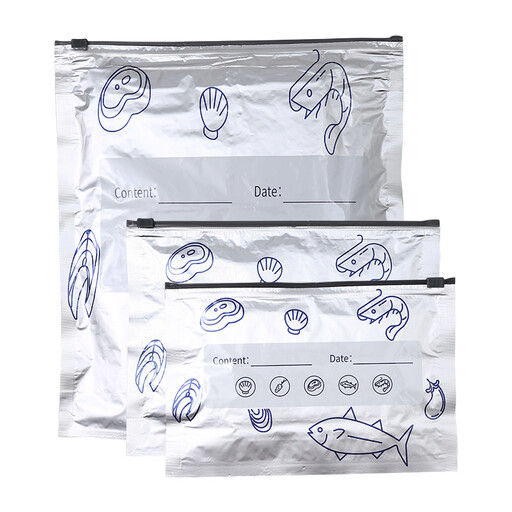
Why This Fits Their Persona: Households that want reusable freezer-safe storage bags with multiple sizes can use the three-format set for meat, seafood, vegetables and prepared food.
The product specifies a sliding zipper, writable label area and washable construction, rather than relying only on a high bag count.
30 bags across three sizes; stand-up design; stated -20°C to 100°C range. Not suitable for heating.
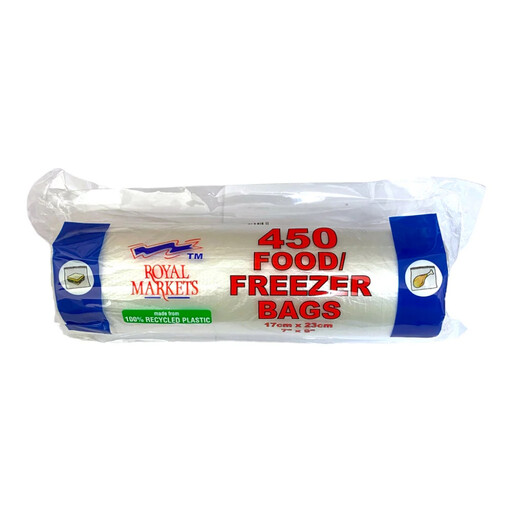
Why This Fits Their Persona: Frequent batch cooks, caterers and small food businesses may value a high-volume supply of compact food freezer bags for regular portioning.
The 7 x 9-inch size is clearly stated, helping buyers avoid ordering a large quantity that does not match their portion sizes.
450 bags per roll; heavyweight plastic; suitable for small portions and frequent use.
We have compiled a complete, real-time list of products that fully satisfy these strict selection criteria and UK safety regulations.
Freezer-safe bags can be used for raw meat when the packaging states that they are intended for freezing. Choose a heavyweight option, avoid sharp bones that could puncture the material and place the sealed bag on a tray if leakage would be a concern.
There is no universal lifespan. It depends on the material, cleaning routine and the type of food stored. Wash reusable bags with mild detergent, rinse thoroughly and air-dry completely. Replace any bag that becomes cloudy, cracked, stretched or difficult to seal.
No storage bag can guarantee complete prevention. However, a heavyweight freezer-safe bag with a secure closure can help limit air exposure. Pressing out excess air, sealing correctly and avoiding long-term storage beyond recommended food guidance can help protect texture and reduce drying.