
24/7 全天候客户支持

免费退货

当日/次日达

品质保障

开启新人专享福利: 全场免邮 | 低至 2 折 | 免费试用 30 天 JoyPlus 会员
下载 Joybuy
Freezer bags can make batch cooking, bulk shopping and leftover storage much easier, but the wrong type may create leaks, freezer burn or unnecessary waste. A low price per pack does not always mean lower running costs if bags split, seals fail or the size is unsuitable for your portions.
Before choosing freezer bags, watch for three common buying pitfalls:
Choose the bag around your usual portions rather than simply selecting the largest available option. Small freezer bags are useful for chopped fruit, individual servings and grated ingredients. Medium bags can accommodate leftovers, sandwiches and meal-prep portions, while large freezer bags are more suitable for bulk meat, bread, vegetables and family-sized dishes.
For frequent use, compare the cost per bag, not just the headline pack price. A roll of 250 or 450 bags may suit a busy household, caterer or bulk food shopper, while a smaller pack could be more practical if your freezer usage is occasional.
Flat, stackable bags help organise drawers and shelves. Leave room for expansion when freezing liquids, and freeze soups or sauces flat where possible so they take up less space once solid.
Heavyweight freezer bags and thick-gauge polythene freezer bags are less prone to tearing during filling and handling. This matters when storing food with hard edges, bones or bulky shapes, although sharp items can still puncture plastic and should be wrapped or handled carefully.
Look for product information that identifies the bags as freezer-safe. A suitable bag should remain flexible at low temperatures rather than becoming brittle. However, temperature claims vary by product, so check the packaging or listing instead of assuming all freezer bags have the same tolerance.
To reduce freezer burn, press out as much air as possible before sealing. Freezer burn occurs when food loses moisture through prolonged exposure to cold, dry air; bags for preventing freezer burn work by limiting this exposure, but no bag can compensate for a loose closure or long, unsuitable storage.
A secure zip closure is convenient for repeated opening and closing. Check whether the bag has a single or double seal, whether it can stand upright while being filled, and whether it includes a writable panel for contents and dates.
Tie-top or roll bags can be economical for high-volume storage, but they require careful sealing. Self-sealing ice cube bags have a different purpose and should not be treated as general-purpose food storage bags. Reusable freezer bags should be washed according to their instructions and dried fully before their next use.
Avoid placing hot food directly into plastic bags. Cool cooked food appropriately, portion it, remove excess air, seal it securely and label it with the contents and date. Never use a freezer bag in a microwave or conventional oven unless the product specifically states that it is designed for that appliance.
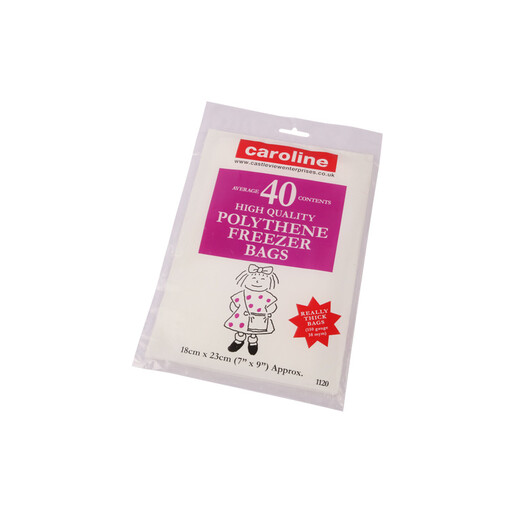
Why This Fits Their Persona: The compact 18 x 23cm format suits smaller households, first-time meal preppers and anyone portioning everyday ingredients without storing bulky items.
The listed dimensions and 40-bag quantity make it easier to judge suitability and cost before buying, rather than relying only on a vague “large” label.
Heavy-gauge polythene; freezer-safe design; suitable for portioning meat, vegetables, baked goods and leftovers.
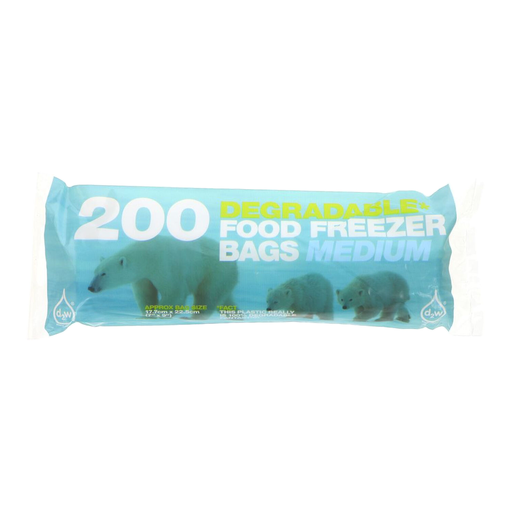
Why This Fits Their Persona: The large 10L format is suited to households that freeze bulk portions and want writable labelling for more orderly freezer management.
The listing provides a stated 225 x 355mm size, zip closure and freezing guidance. Its degradable feature should still be assessed against local disposal facilities and instructions.
Large 10L capacity; secure zip seal; writable labelling area; listed food-grade plastic construction.
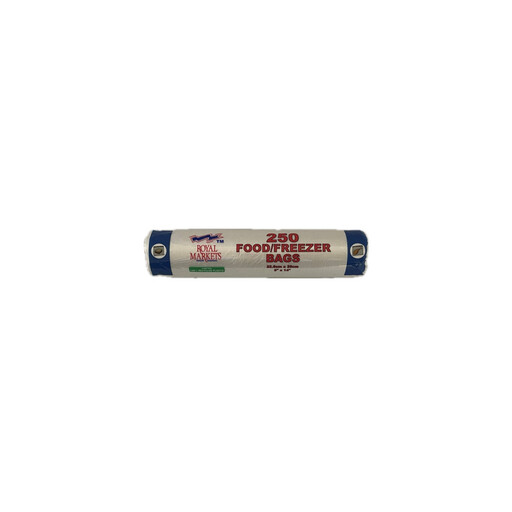
Why This Fits Their Persona: The 250-bag roll is a practical match for frequent batch cooking, bulk food shopping, small catering operations and households that freeze food regularly.
Its 9 x 14-inch measurements and heavyweight construction are stated clearly, helping buyers avoid choosing a high-quantity pack that is too small or too thin for regular use.
250 bags per roll; heavyweight plastic; moisture-locking design; suitable for meats, vegetables, leftovers and portions.
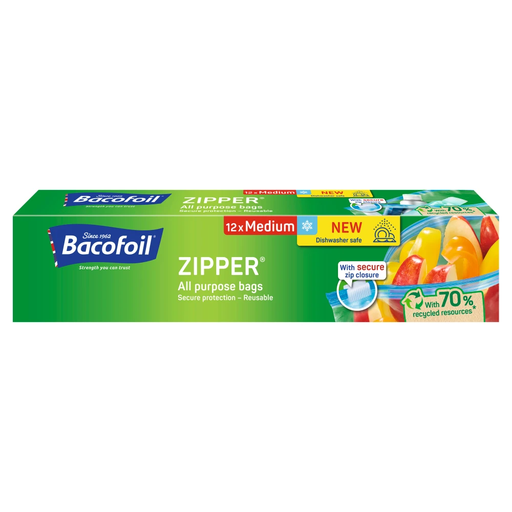
Why This Fits Their Persona: Medium 3L bags suit leftovers, packed lunches and meal prep where a washable, stand-up bag is convenient for filling and storage.
The product information states that it is dishwasher-safe and reusable up to 10 times, while also identifying limits such as no microwave or oven use.
3L capacity; zip-tight closure; flexible stand-alone base; listed reuse of up to 10 times.
We have compiled a complete, real-time list of products that fully satisfy these strict selection criteria and UK safety regulations.
Some reusable freezer bags are designed for repeated use and may be washable or dishwasher-safe. Others are intended for one use only. Follow the individual product instructions, wash thoroughly and dry completely. Do not reuse a bag if it is punctured, cloudy, split or difficult to seal.
For individual portions, small bags around 18 x 23cm or 7 x 9 inches are practical. Medium 3L bags suit leftovers and meal prep, while 9 x 14-inch or larger formats are more suitable for bulk ingredients and family portions. Compare the opening width as well as the overall length.
Freezer bags reduce contact between food and dry freezer air when they are sealed securely with as much air removed as possible. Heavyweight materials can provide a more substantial moisture barrier, but storage time, temperature stability and sealing technique also affect results.