
24/7 全天候客户支持

免费退货

当日/次日达

品质保障

开启新人专享福利: 全场免邮 | 低至 2 折 | 免费试用 30 天 JoyPlus 会员
下载 Joybuy
Freezer bags can make batch cooking, leftover storage and bulk shopping much easier. However, a low price or large pack count does not always mean good value. The wrong size may waste freezer space, while a weak seal or thin material can leave food exposed to air, moisture and punctures.
Before buying freezer bags, watch for three common traps:
Size affects both usability and freezer organisation. Small freezer bags work well for chopped fruit, grated cheese, individual portions and snacks. Medium sizes are suitable for leftovers, prepared ingredients and smaller cuts of meat. Large freezer bags are more practical for family portions, loaves of bread, whole cuts and batch-cooked meals.
Useful dimensions to compare include:
Avoid overfilling any bag. Leave room for expansion, particularly when storing liquids such as soups, sauces or stews.
Heavy-duty freezer bags made from thicker polythene or another freezer-suitable plastic are less likely to split when handled in a cold freezer. A more substantial material can also help limit air and moisture exchange, reducing the risk of freezer burn when the bag is sealed correctly.
This does not mean thicker is always necessary. Lightweight disposable freezer bags may be sufficient for dry foods or short-term storage, while heavyweight bags are more suitable for meat, sauces, bones or irregularly shaped food.
Check the product description for:
Zip freezer bags offer a convenient closure and can be easier to open and reseal than bags requiring a tie. However, the seal must be pressed fully closed and the bag should not be overfilled. Some bags have a stand-alone base, which is useful when filling liquids or meal-prep ingredients.
For regular batch cooking, compare the cost per bag, not just the pack price. Bulk freezer bags can reduce the need for frequent replacements, but only if the size matches your usual portions. Reusable freezer bags may be more suitable for dry foods or items that do not leave grease or strong odours. Follow the manufacturer’s cleaning and reuse instructions.
Freezer burn occurs when frozen food loses moisture through exposure to cold, dry air. It can affect texture and flavour, although it does not automatically mean the food is unsafe. The following steps can help reduce the risk:
For freezer bags for meat and vegetables, avoid placing sharp bones or pointed edges directly against the plastic. Consider wrapping particularly sharp items first or choosing a heavyweight option.
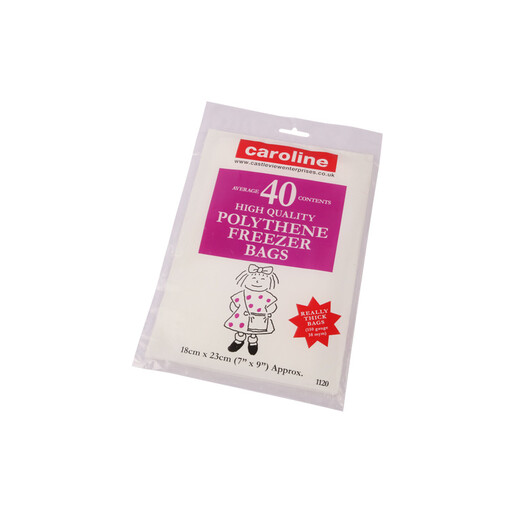
Why This Fits Their Persona: The compact format and 40-bag pack suit students, couples and smaller households storing individual portions, bread, vegetables and leftovers.
The stated 18 x 23cm size makes the capacity clear, helping prevent paying for oversized bags that are rarely filled.
Heavy-gauge polythene; freezer-safe design; pack of 40 for frequent everyday use.
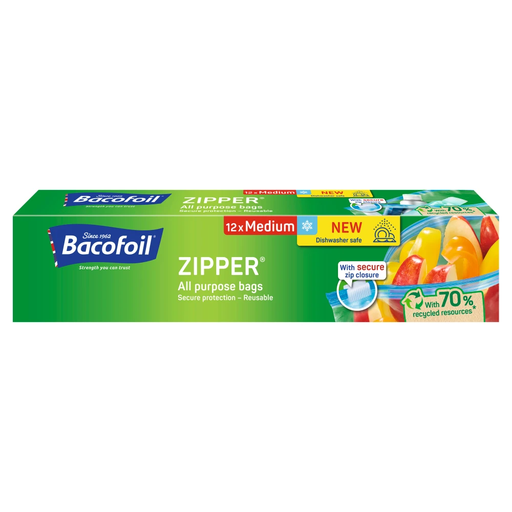
Why This Fits Their Persona: The 3L medium format and zip-tight closure suit organised meal-preppers who want easy filling, transport and resealing.
The closure type and capacity are specified, rather than relying on a vague “freshness” description.
Stand-alone base; tear-resistant material; stated reuse of up to 10 times when cleaned as directed.
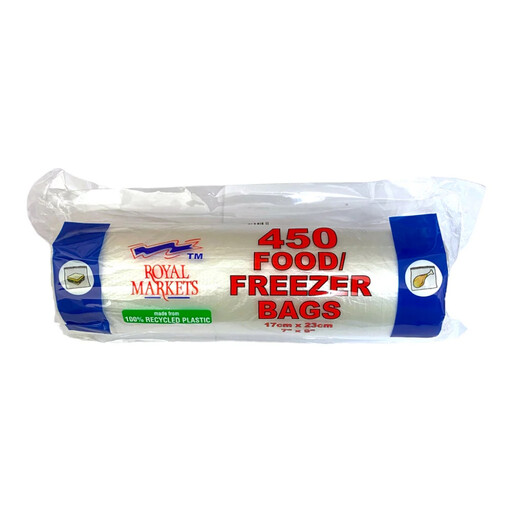
Why This Fits Their Persona: Frequent batch cooks, small catering businesses and large households can use the compact bags for high-volume portioning.
The roll format and 7 x 9-inch dimensions make the quantity and intended portion size transparent.
Heavyweight plastic; freezer-safe format; 450 bags for regular portioning of smaller foods.
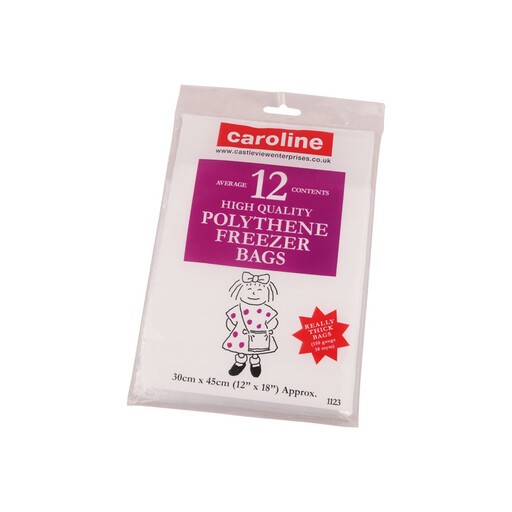
Why This Fits Their Persona: The extra-large 30 x 45cm format is suited to family-sized meals, larger cuts of meat and bulky batches of vegetables.
Its clearly stated large dimensions reduce the temptation to force bulky food into several undersized bags.
Heavyweight plastic; moisture-locking design; 12 large bags for household or small-business storage.
We have compiled a complete, real-time list of products that fully satisfy these strict selection criteria and UK safety regulations.
They can be useful for portioning cooked meals, chopped vegetables, fruit and raw ingredients. Choose a size that matches one meal and remove excess air before sealing. Flat bags are easier to label, stack and thaw in an organised freezer.
Storage life depends on the food, freezer temperature, packaging quality and how well air has been removed. Use the dates and guidance provided by UK food safety authorities, and label bags with the freezing date so older items can be used first. Inspect packaging regularly for splits, leaks or heavy ice accumulation.
Some reusable freezer bags are designed for repeated use, but follow the product instructions. Wash and dry them thoroughly before reuse, and avoid reusing bags that held raw meat, greasy food or items that have punctured the material. Disposable freezer bags should be discarded after use according to local household waste guidance.