High-volume batch cooks
If you freeze family-sized dishes or bulk ingredients, start with a chest freezer or a large tall upright. Compare the space inside with the size and shape of your usual containers, not just the stated capacity in litres.


Choose a chest freezer if bulk storage matters most, or a tall upright if you regularly retrieve labelled meal portions from separate compartments. An under-counter model suits smaller batches where space is tight; an integrated model makes sense when it fits an existing kitchen housing. Whichever format you consider, check that your containers fit, allow room for the door or lid to open, and confirm the exact model’s operating conditions if it will go in a garage.
If you freeze family-sized dishes or bulk ingredients, start with a chest freezer or a large tall upright. Compare the space inside with the size and shape of your usual containers, not just the stated capacity in litres.
If weekday meals go into labelled single- or two-person portions, drawers or baskets may matter more to you than one large cavity. Check how easily you can see and retrieve what you have stored.
An under-counter gap, fitted cabinet, narrow delivery route or unheated outbuilding can determine which models are practical. Measure the route and installation space, then check hinges or permitted ambient temperatures where relevant.
Choose a format around the amount of food you freeze and how often you need to find individual portions; treat the installation location as a separate check.
Choose it when: Large batches or bulk ingredients make storage volume your main concern.
Bear in mind: Portions at the bottom can take more effort to find, so consider baskets and a stock list.
Choose it when: You frequently take out individual meals and want compartments to separate them.
Bear in mind: Check drawer dimensions as well as the space needed to open the door.
Choose it when: You freeze smaller batches and have an under-counter space rather than room for a larger appliance.
Bear in mind: Check how many of your normal containers fit before relying on it for a large meal rotation.
Choose it when: You need full-height portion storage within a compatible fitted-kitchen housing.
Bear in mind: Cabinet dimensions and the furniture-door hinge system must match the appliance.
| Concern | What to check | Who this matters to |
|---|---|---|
| Storage capacity | Compare capacity in litres with the size of your containers and the layout of drawers or baskets. | If I freeze large cooking batches or bulk ingredients, I need room for them without filling the freezer immediately. Around 33% of consumers put capacity first. |
| Finding portions | Look at drawer or basket dimensions and whether portions can be separated and labelled. | When I take out individual meals during the week, I want to find the right container without digging through the freezer; roughly 27% of consumers prioritise organisation. |
| Maintenance and loading | Check the exact model’s defrost system, freezing capacity if stated, and instructions for any fast-freeze function. | If I add cooled portions regularly, I want manageable defrosting and a clear way to handle each new load. Around 20% of consumers make that convenience their main concern. |
| Installation fit | Measure the delivery route and opening clearance; check cabinet hinges or the model’s permitted ambient range where applicable. | A tight kitchen space or unheated outbuilding may decide where I can put a freezer at all. For roughly 20% of consumers, location and fit come first. |
Stated capacity does not tell you whether your usual containers fit inside the compartments or whether the appliance will fit through your home.
Measure containers, the delivery route and the installation space. Allow room to open the lid or door, and inspect the drawer or basket layout.
How you cool and portion homemade food matters alongside the appliance you choose.
The Food Standards Agency advises cooling cooked dishes before freezing, dividing them into smaller portions or freezer bags, and freezing homemade food as soon as possible. Keep the freezer around -18°C.
Suitability for a cold outbuilding depends on the exact model’s stated operating conditions. Beko specifies operation down to -15°C for selected FreezerGuard models, not every freezer it makes.
Compare the model-specific minimum ambient temperature and installation instructions with the conditions expected where you plan to put it.
An integrated freezer may not fit the existing housing or furniture-door hinges, even if its overall size looks similar.
Confirm the cabinet measurements, hinge system and delivery access before ordering, and check what fitting and old-appliance removal arrangements you will need.
A reference point for comparing chest, upright, under-counter and integrated formats, particularly if an unheated location affects your choice.
Relevant when comparing upright storage layouts for individual portions and larger containers.
Relevant to buyers comparing fitted-kitchen freezer options.
Its CF182EWE0 listing provides a compact-to-mid-size chest-freezer example for comparing bulk storage with a larger upright.
These chest, integrated and freestanding upright freezers offer different starting points for storing batch-cooked food. Match the format and stated variant to your containers and installation space before comparing individual features.
 No image available
Consider this freestanding chest format if you need space for larger batches or bulk ingredients.
Stated capacity: 297 L. Check container fit, floor space and lid-opening clearance. If it will stand in an outbuilding, confirm the model’s installation instructions for that location.
 No image available
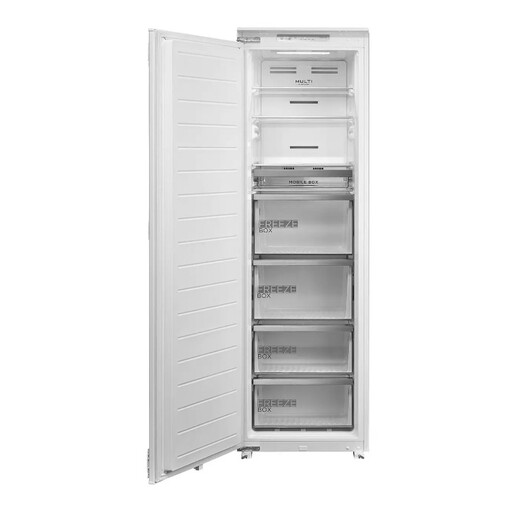
Consider this integrated format for meal portions if your fitted kitchen has a compatible appliance housing.
The product name specifies Total No Frost, a sliding hinge and an E energy rating. Confirm cabinet dimensions, ventilation and furniture-door compatibility before ordering.
 No image available
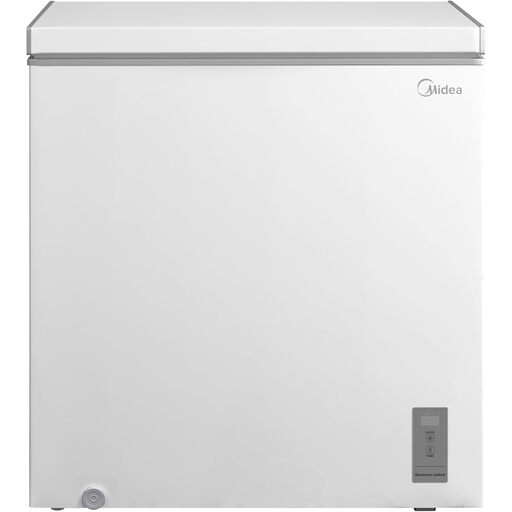
Consider this chest format if a separate freezer would help you store bulk ingredients and cooked portions.
Stated capacity: 198 L; the product name specifies an E energy rating. Check your containers and lid clearance. For a garage or outbuilding, confirm the exact model’s permitted conditions.
 No image available
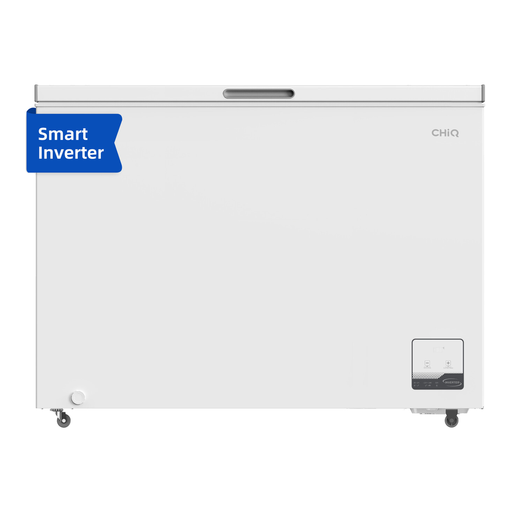
Consider this chest format if your batch-cooking routine calls for a larger space for frozen food.
Stated capacity: 299 L; the product name specifies a digital inverter variant. Check the internal layout, container fit and lid-opening space, especially if you retrieve individual portions often.
 No image available
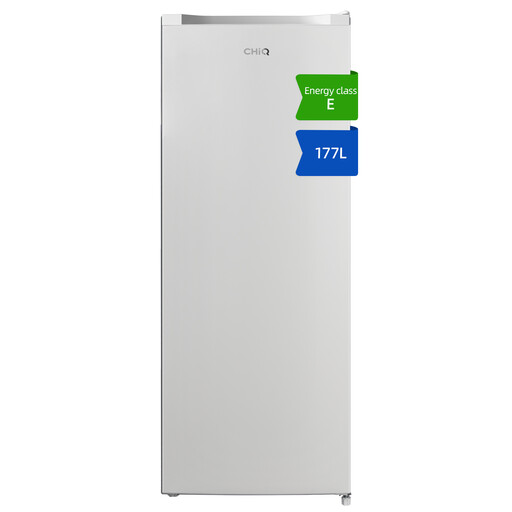
Consider an upright format if you want to organise portions for frequent retrieval rather than use one chest-style cavity.
The product name specifies a 54 cm width, 144 cm height and E energy rating. Measure the delivery route and allow for the door to open; check the internal layout against your containers.
Keep the freezer around -18°C, in line with Food Standards Agency guidance. Follow your appliance instructions to set and monitor its temperature.
Yes, if the food is suitable for freezing and you follow its storage instructions. The Food Standards Agency advises cooling cooked food first, dividing it into smaller portions or freezer bags, and freezing leftovers and homemade food as soon as possible.
Frost-free is worth considering if avoiding manual defrosting matters to you, particularly when you use freezer drawers frequently. It does not replace safe cooling and portioning of cooked food; check the feature on the exact model.
No: check the exact model’s stated ambient operating range and installation instructions before placing it in an unheated space. Beko specifies FreezerGuard operation down to -15°C on selected models, but that limit must not be assumed for other freezers.
Check the cabinet housing, appliance dimensions and furniture-door hinge system. An integrated replacement needs to suit the existing installation, including whether its hinge arrangement is fixed or sliding.