People freezing broccoli in batches
Portioning and labelling make it easier for housemates to identify what belongs to whom. GOV.UK advises cooling warm food before freezing it and dividing food into smaller portions.


For a shared household kitchen, choose a freezer that can keep food around −18°C, fits the available space and gives everyone a clear place for labelled broccoli portions. An upright layout is worth considering when people retrieve portions frequently; a chest freezer needs a workable basket and labelling system if bulk storage matters more. Check the exact model’s capacity, energy label, noise information and installation clearance before choosing.
Portioning and labelling make it easier for housemates to identify what belongs to whom. GOV.UK advises cooling warm food before freezing it and dividing food into smaller portions.
When no one wants to take on regular manual defrosting, check whether the exact model has a frost-free feature. Beko and Bosch describe their respective Frost Free and No Frost systems as preventing ice build-up.
Upright, undercounter, chest and integrated formats call for different space and access checks. Energy Saving Trust advises comparing appliance size alongside energy use; the energy label also provides noise information.
Decide how much room the freezer can occupy and how often people will need individual portions. Then compare the storage layout and the exact model’s energy label: the right format alone does not settle those questions.
| Concern | What to check when buying | Who this matters to |
|---|---|---|
| Freezing and labelling | Check usable capacity for cooled, portioned broccoli and how you will check the freezer temperature. GOV.UK advises a freezer temperature of around −18°C. | I want each batch to stay frozen and its portions to be identifiable later; around 33% of consumers put freezing and stock rotation first. |
| Access for several users | Inspect the drawers, shelves or baskets and check whether your labelled containers will fit. | When several people use the same freezer, I need to reach my portion without shifting everyone else’s food; roughly 27% of consumers prioritise access and separation. |
| Defrosting work | Confirm whether the exact model specifies Frost Free or No Frost; check its layout separately. | I do not want ice management to become an unassigned household chore; about 20% of consumers make lower-maintenance defrosting their primary concern. |
| Fit and running costs | Measure the space and door or lid clearance, then compare capacity, energy use and noise on the energy label. | My available space is limited, and I need to judge ongoing electricity use and noise as well as storage; around 20% of consumers put these practical constraints first. |
Physical size does not tell you how much frozen food will fit or what the appliance will use in electricity. Energy Saving Trust notes that larger models often use more energy even when they have the same efficiency rating.
Measure the installation and access spaces, then compare the exact models’ frozen capacity, energy use and noise information.
A single container makes portions harder to identify and retrieve in a shared freezer. GOV.UK advises cooling warm food before freezing and dividing it into smaller portions.
Cool the broccoli, pack it into suitable smaller portions and label each one before placing it in its allocated space.
Beko and Bosch describe frost-free features as addressing ice build-up, not whether a model’s compartments will hold your containers or give each person enough space.
Check the exact model’s defrost specification and storage layout as separate buying decisions.
Food prepared for sale calls for controls beyond agreeing which housemate uses each drawer. Food Standards Agency guidance addresses adequate freezing and temperature-monitoring facilities; Lichfield District Council’s home-food-business guidance calls for business and personal food to be separated.
If the kitchen is used to prepare food for sale, check the requirements applicable to that operation and its separation arrangements before choosing an appliance.
Beko’s UK range includes chest, tall, undercounter and integrated freezers, making it a useful reference when deciding on format.
Bosch lists built-in, undercounter and freestanding freezers, including No Frost options.
Hotpoint’s UK range includes integrated, undercounter, chest and tall freezer formats.
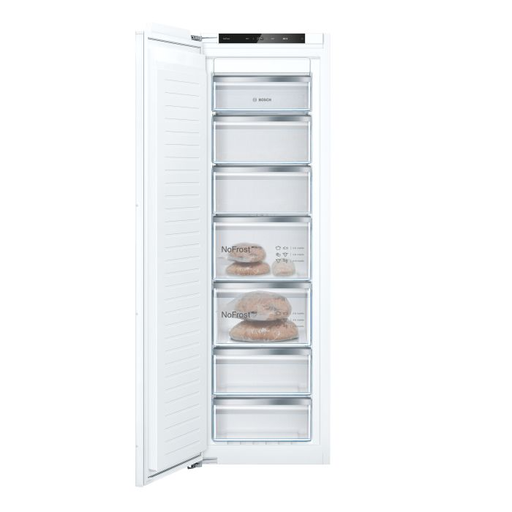
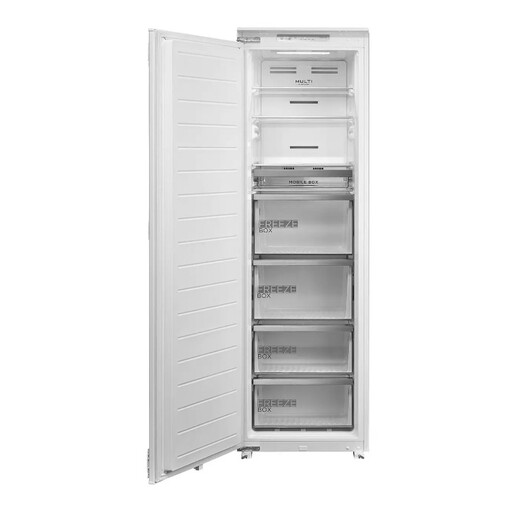
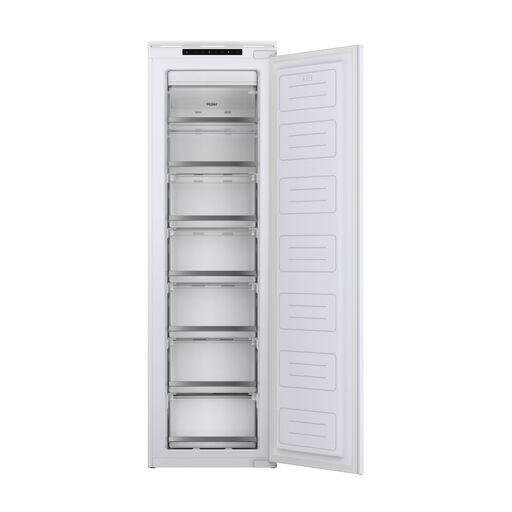
These integrated freezers are options for a shared kitchen with a suitable built-in cabinet. Compare cabinet and hinge compatibility before considering their storage features; if the kitchen has no compatible opening, assess a freestanding format instead.
 No image available
Consider this model if the shared kitchen has a compatible fixed-hinge cabinet opening and needs an integrated tall freezer.
The product name specifies NoFrost, 212L capacity and an E energy rating. Check the cabinet dimensions and the appliance’s temperature guidance before installation.
 No image available
Consider this model where an integrated sliding-hinge installation suits the kitchen and portions need a dedicated freezer.
The product name specifies Total No Frost and an E energy rating. Confirm the required cabinet opening and the appliance’s temperature guidance.
 No image available
Consider this format if a three-quarter-height integrated freezer matches the available cabinet and the household’s portioning needs.
Check its cabinet-opening requirements, usable storage arrangement and temperature guidance before choosing it for shared use.
 No image available
Consider this upright model if several people need allocated frozen storage and the kitchen has a suitable sliding-hinge cabinet.
The product name specifies Total No Frost, 200L capacity and an E energy rating. Check the cabinet niche, storage layout and temperature guidance.
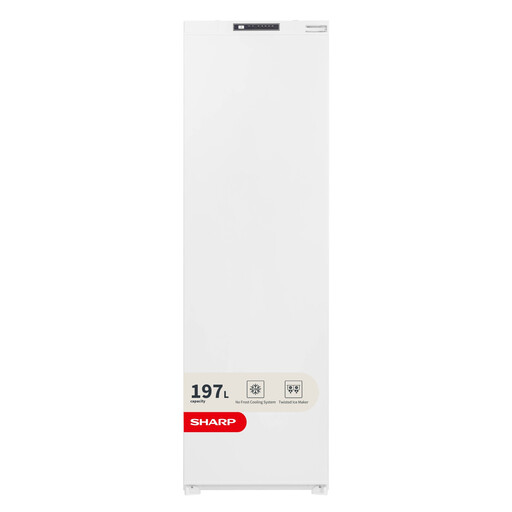 No image available
Consider this upright option if the household can accommodate manual defrosting as a shared maintenance task.
The product name specifies an E energy rating. Check cabinet compatibility, usable storage space and temperature guidance; its listed defrost method is manual.
GOV.UK advises that a freezer should be around −18°C. Follow the appliance instructions and consider a freezer thermometer if you need to check its actual temperature.
Yes: GOV.UK advises cooling warm food before putting it in a freezer and dividing food into smaller portions. Pack the broccoli in suitable containers or freezer bags so that housemates can take out the amount they need.
Label portions with their contents and freezing date, then agree which drawer, basket or marked area each person will use. Check the proposed freezer’s compartment arrangement against the containers you actually plan to store.
Assess the freezer as part of the food business’s hygiene and temperature-control arrangements, rather than relying only on a household storage plan. GOV.UK advises food businesses to label frozen food, while Food Standards Agency guidance addresses adequate freezing and temperature-monitoring facilities; check the requirements that apply to the particular operation.