Seasonal cottage herb preservers
If you mainly freeze labelled portions of chopped herbs, with little other frozen food, look for enough space to separate and retrieve small packs rather than choosing a large freezer on capacity alone.


For chopped herbs and a modest amount of other food, start with a compact freezer: a chest model offers flexible storage, while an under-counter upright makes labelled portions easier to organise. Choose a larger chest only if the cottage regularly stores substantially more food. If the freezer will stand in an unheated space, check the exact model’s stated operating-temperature range before deciding on its format.
If you mainly freeze labelled portions of chopped herbs, with little other frozen food, look for enough space to separate and retrieve small packs rather than choosing a large freezer on capacity alone.
If the planned location is an unheated garage, shed, porch or utility area, its lowest likely temperature matters. Check the operating range of the exact freezer model before choosing where to install it.
If the freezer stays on between visits, consider how guests will find labelled portions, who will check it after an outage, and whether its capacity and defrosting requirements suit your changeover routine.
Decide where the freezer will stand before comparing storage formats. Compact chest models suit flexible storage, an under-counter upright suits access to small portions in a suitable indoor space, and a larger chest makes sense when herbs are only part of a wider food-storage need.
Consider it when: Herbs and occasional extra food need dedicated storage; for a cold location, choose only a model whose stated operating range covers that location.
Trade-off: Small packs need deliberate grouping in a deep compartment. The Beko CF4098 and Fridgemaster MCF96E examples require manual defrosting.
Consider it when: A suitable indoor kitchen or utility space is available and ready access to labelled herb portions matters more than bulk storage.
Trade-off: Check the door clearance and the exact model’s defrosting and ambient-temperature instructions; an indoor layout does not establish suitability for an unheated outbuilding.
Consider it when: The cottage regularly freezes guest provisions, batch-cooked meals or a substantial seasonal harvest as well as herbs.
Trade-off: It takes more floor space, and small herb packs need a labelling and rotation system. Compare the energy information for models with capacity you will use.
| Concern | What to check | Who this matters to |
|---|---|---|
| Cold-location suitability | Compare the location’s lowest likely temperature with the exact model’s stated ambient operating range. | If my freezer will stand in an unheated garage or shed, I need its stated operating range to cover the temperatures there. Around 45% of consumers put cold-location suitability first. |
| Capacity and access | Check usable volume, the internal layout and space to open the lid or door fully. | When I freeze mostly small herb portions, I want to find a labelled pack without sorting through other food; roughly 33% of consumers prioritise compact, organised storage. |
| Unattended periods | Compare energy-label information, the stated power-failure storage period, temperature alerts and the defrosting method. | If the cottage stands empty between visits, I need a workable plan for outages and maintenance as well as ongoing electricity use. About 22% of consumers make these demands their primary concern. |
Ambient operating ranges vary by appliance. Beko states that its FreezerGuard-equipped CF4098 can operate at ambient temperatures down to -15°C; that claim does not apply to every Beko freezer or to other models.
Check the likely lowest temperature at the intended location against the exact model’s instructions. For a fridge-freezer, check the guidance for both compartments.
Extra volume is useful when the cottage also stores substantial amounts of other food, but it does not make small herb portions easier to find. Energy Saving Trust advises that larger appliances can use more energy even when they have the same efficiency rating.
Estimate how much food will be stored alongside the herbs, then compare appropriately sized models using their capacity and energy-label information.
The Beko CF4098 and Fridgemaster MCF96E compact chest examples require manual defrosting. Loose herb portions can also be difficult to retrieve from a deep compartment.
Check the exact model’s defrosting method, and group clearly labelled herb packs in suitable baskets or containers.
Food Standards Agency guidance says food may stay frozen for up to 48 hours in a full freezer, or up to 24 hours if it is half full. The outcome varies with the appliance, surrounding temperature and how often the door is opened.
Compare the model’s stated power-failure storage period and any temperature warning, and arrange who will check the freezer if the cottage is empty during an outage.
A reference for compact chest freezers when an unheated installation is being considered.
A reference for compact chest storage where the intended location may become cold.
A reference for an under-counter upright in a suitable indoor cottage space.
A reference when the cottage needs substantially more chest-freezer space than herb portions alone require.
These compact chest and under-counter options suit the cottage herb-storage decision. If the installation space may become unheated, check the operating-temperature instructions for the exact model before choosing one.
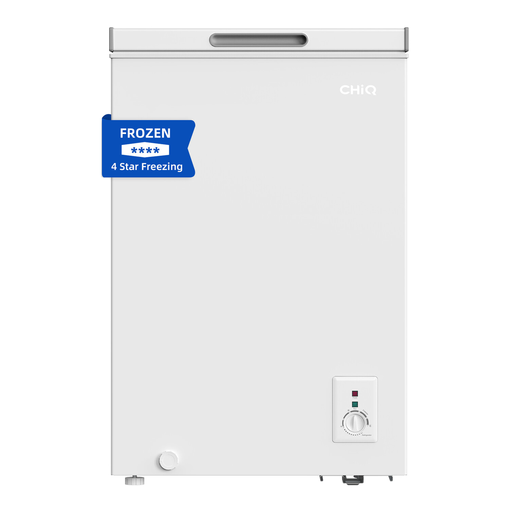 No image available
A compact chest option for herb portions and a modest amount of other frozen food.
The product title states 99 litres and an E energy rating. Check its operating-temperature range, power-failure storage period and defrosting method if those affect your cottage plans.
 No image available
Consider this compact chest format if the cottage needs frozen herb storage but may also have a separate use for its switchable fridge mode; confirm the mode before storing herbs.
The product title states a 95-litre capacity, E energy class, removable basket and defrost drain. Check the model’s ambient operating range, defrosting method and power-failure storage period for the intended location.
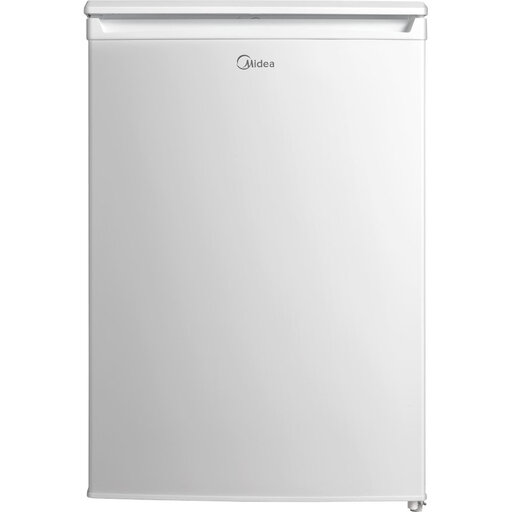 No image available
An upright option for keeping labelled herb portions accessible in a suitable under-counter space.
The product title states an E energy rating. Confirm the capacity before buying, as the title and description give different figures. Check the ambient operating range for an unheated location and allow for the stated manual defrosting.
Yes, if the exact model is specified to operate at the temperatures that space reaches. Beko states that its CF4098 with FreezerGuard can operate at ambient temperatures down to -15°C, but that does not establish the suitability of another freezer or a fridge-freezer’s fridge compartment.
Choose a freezer that can keep food properly frozen and follow its temperature-control instructions. Which? states that food needs to be kept below -16°C for preservation; check the appliance’s temperature setting and avoid adding more fresh food at once than its instructions allow.
Divide chopped herbs into small portions in clearly labelled freezer-safe bags or containers, so you can remove the amount needed without searching through loose packs. Follow the freezer and container instructions when filling and storing them.
Keep the freezer door closed as much as possible and arrange for someone to check it if the cottage is empty. Food Standards Agency guidance says food may stay frozen for up to 48 hours in a full freezer or 24 hours in a half-full one, but those estimates vary with the appliance and conditions; compare a model’s stated power-failure storage period before buying.
Compare the energy information alongside capacity for freezer types and sizes that meet your storage needs. Energy Saving Trust explains that the A-to-G rating is not the whole picture: a larger appliance can use more electricity than a smaller one with the same rating.