Regular batch-cooking households
If you repeatedly make stock and family meals, space for labelled portions alongside your usual frozen food matters. Drawer access may be more useful to you than the smallest possible appliance footprint.


For regular batches of cooled vegetable stock in labelled portions, an upright freezer with drawers makes individual portions easier to separate and find; consider a chest freezer when space for larger batches matters more than quick access. Choose a capacity that also accommodates your usual frozen food, then check the energy label, installation clearance and, for an outbuilding, the exact model’s approved ambient-temperature range.
If you repeatedly make stock and family meals, space for labelled portions alongside your usual frozen food matters. Drawer access may be more useful to you than the smallest possible appliance footprint.
If you freeze large batches or other bulky food and have room for a top-opening appliance, a chest freezer is worth considering. Which? notes that smaller items can get lost in its deep compartment, so plan how you will group stock portions.
If this freezer will supplement existing storage, start with the space and capacity you need rather than assuming a larger appliance is worthwhile. Energy Saving Trust advises considering appliance size alongside its energy label.
Decide whether you need quick access to individual portions, room for bulky batches or an appliance that fits beneath a worktop. Then compare the usable layout and installation requirements of actual models.
Choose it when: You regularly retrieve labelled portions and want drawers to separate them from other food.
Allow for: Its height, door swing and required ventilation space.
Choose it when: Bulk storage and space for large containers take priority, and you have room to open the lid.
Allow for: The deeper compartment: Which? cautions that small items can get lost without an organisation system.
Choose it when: Stock is an occasional addition and the available kitchen space rules out a taller appliance.
Allow for: The model’s actual storage layout and capacity before committing space to it.
| Concern | What to check | Who this matters to |
|---|---|---|
| Batch capacity | Compare storage volume and the space left after your usual frozen food; check the rated freezing capacity if you add several portions at once. | I need a family batch to fit without crowding the food already in the freezer. Around 50% of consumers put batch capacity first. |
| Portion access | Check whether your containers fit the drawers, or plan baskets and labels for a chest freezer. | When I prepare meals, I want to find an older labelled portion without searching through everything else; around 30% of consumers prioritise portion access. |
| Space and energy | Measure installation and opening clearance, then compare annual kWh figures for models with sufficient capacity. | I have limited room and do not want more freezer capacity than I will use. Fitting the space and managing electricity use come first for around 20% of consumers. |
Which? identifies chest freezers as useful for bulky food but notes that smaller items can get lost. That matters when individual tubs or bags of stock need to be found and used in date order.
Use labelled portions and baskets or dividers, placing newer portions behind or beneath older ones.
A large compartment is not useful if much of it will remain unused. Energy Saving Trust advises considering the appliance size you need as well as its energy rating.
Allow for your normal frozen food and stock batches, then compare the annual kWh figures of suitably sized models.
Low-ambient operation depends on the model. Beko states that its FFP4671 with FreezerGuard operates at ambient temperatures as low as -15°C; that claim does not apply to every freezer.
Check the exact model’s stated operating range and installation instructions against the intended location.
A Beko appliance manual warns that adding warm food can cause its refrigeration machine to run continuously until the food is frozen solid. Freezing does not replace following food-handling instructions for cooling stock.
Prepare manageable portions and follow current Food Standards Agency guidance and the instructions for your appliance before freezing them.
Relevant if you are comparing frost-free models or checking whether a particular freezer is approved for a colder outbuilding.
Relevant when comparing under-counter, upright and integrated freezer layouts.
Relevant if you are deciding between chest, upright, freestanding and built-in formats.
These integrated upright and built-under freezers are choices for keeping stock portions in kitchen cabinetry. Check the cabinet and door arrangement before comparing their storage layouts.
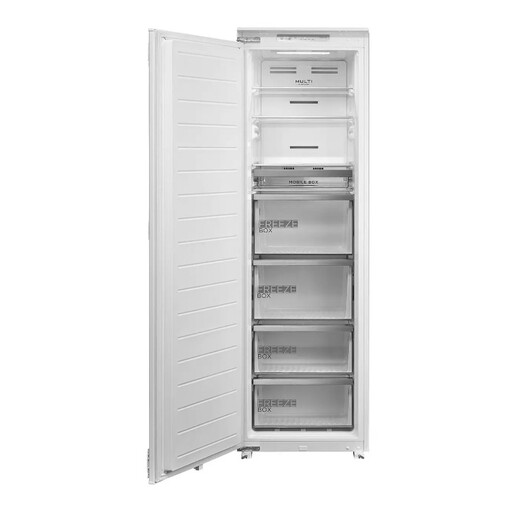 Image unavailable
Consider this integrated model if its compartments accommodate your labelled stock portions alongside other food. Its product name specifies an E energy class; compare annual kWh on the label and check cabinet fit and ventilation for the sliding-hinge installation.
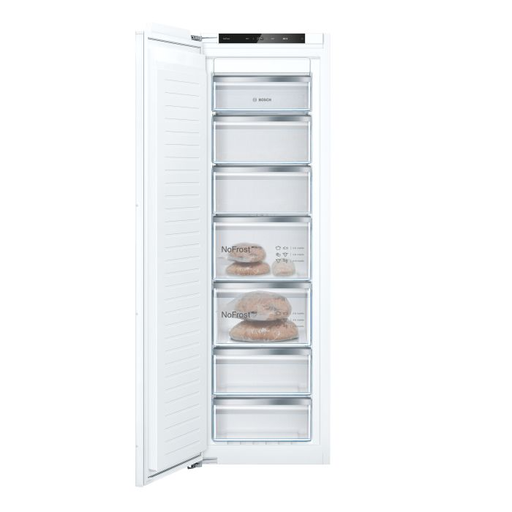 Image unavailable
The tall format is relevant if you regularly separate portions for family meals. The product name specifies 212 L, NoFrost and an E energy class; confirm that the fixed-hinge door, cabinet space and internal layout suit your kitchen and containers.
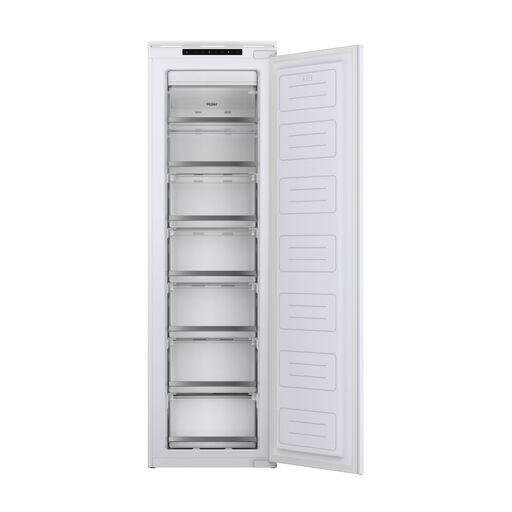 Image unavailable
This tall integrated option is relevant if you want to organise portions within fitted kitchen cabinetry. Its product name specifies 200 L, Total No Frost and an E energy class; check container fit, cabinet dimensions and the sliding-hinge arrangement.
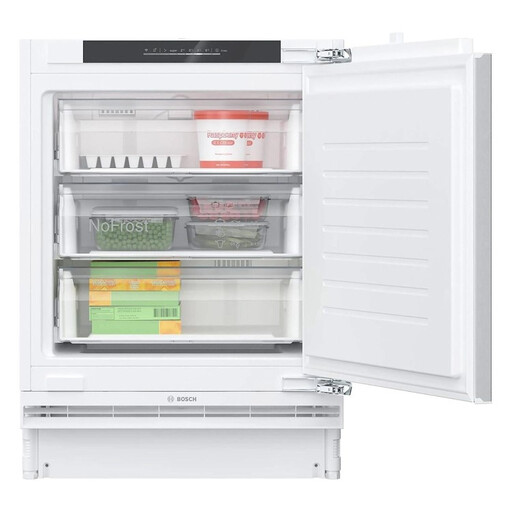 Image unavailable
Consider a built-under model when stock portions are an addition to your normal frozen-food load and a tall cabinet is not suitable. The product name specifies an E energy class; check that its storage space, furniture-door arrangement and ventilation requirements work for your kitchen.
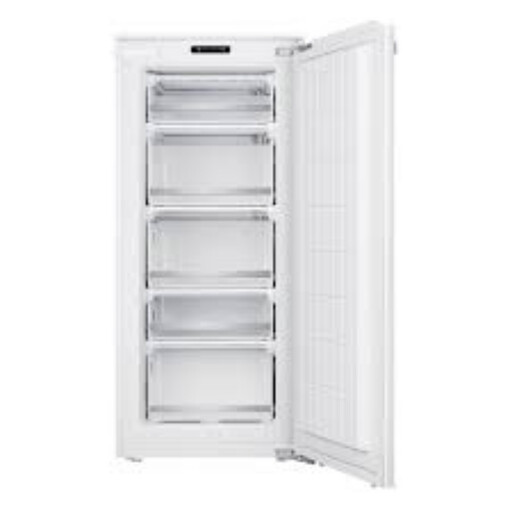 Image unavailable
This format is worth checking if a full-height integrated freezer will not suit your cabinetry but you need room for portioned stock. Confirm the recess fit, usable storage layout and energy-label information before deciding whether it accommodates your usual batch.
Plan to use it within 24 hours of defrosting, in line with the Food Standards Agency’s consumer freezing guidance for food. Date your frozen portions so you can choose what to thaw for a meal.
Compare the energy class and annual kWh figure of freezers with enough capacity for your food. GOV.UK says an energy label must be displayed at the point of sale for products within the rules, including on a website; Energy Saving Trust also advises considering the size you need.
Check the chosen model’s approved ambient-temperature range rather than relying on its freezer format. Beko states that its FFP4671 with FreezerGuard operates in ambient temperatures as low as -15°C, but that is a specification for that model.
No: for batches of stock, usable storage, a suitable layout and the model’s freezing specification also matter. Bosch and Hotpoint describe rapid-freezing functions on selected models, so check the exact appliance rather than assuming the feature tells you how much new food it can freeze at once.