Owners freezing occasional dessert portions
If you prepare crumble only occasionally, compare the space taken up by the appliance with the space your covered portions actually need. Measure the containers as well as the proposed kitchen position.


Choose the freezer around its installation space and the amount of cooled crumble you need to store: an under-counter model can handle occasional portions, while a tall upright gives repeated batches more organised storage. Consider a chest freezer when you also need bulk storage and have room to open its lid; an integrated model needs a compatible kitchen cabinet. Whichever format you choose, check that your containers fit, confirm the permitted room temperature for the exact model, and follow the Food Standards Agency’s guidance to cool warm food before freezing it in a freezer kept around −18°C.
If you prepare crumble only occasionally, compare the space taken up by the appliance with the space your covered portions actually need. Measure the containers as well as the proposed kitchen position.
When several labelled portions need to remain separate, drawer layout and access may matter as much as overall capacity. The freezer guide distinguishes compact under-counter models from larger upright formats.
If the freezer will sit in a garage, utility area or outbuilding, check the exact model’s permitted ambient-temperature range before choosing its position. Beko’s low-temperature claim for the FFP4671 applies to that model, not to every freezer.
Start with the installation space, then decide whether you are storing a whole dish or separate portions; convenience features come after those fit checks.
Consider it when: Occasional portions need to fit beneath a worktop rather than in a tall appliance.
Trade-off: The listing identifies under-counter models as the smallest format, so check drawer space against the containers you intend to use.
Consider it when: Repeated batches need separate, easily reached storage.
Trade-off: It needs a suitable tall installation space; an unheated location also requires a model specifically rated for its ambient conditions.
Consider it when: You need bulk frozen storage beyond dessert portions and have available floor space.
Trade-off: Its top-opening lid needs clearance, and you should consider how you will find individually labelled portions.
Consider it when: The cottage has a suitable cabinet and the appliance needs to sit behind its furniture door.
Trade-off: Cabinet dimensions and the door’s hinge arrangement must match the replacement appliance.
| Concern | What to check | Who this matters to |
|---|---|---|
| Placement and room temperature | Measure the space and access route; check the exact model’s permitted ambient-temperature range and installation clearances. | If my only available position is an unheated room, I need a freezer whose stated operating conditions cover that location. Around 42% of consumers put suitable placement first. |
| Container fit and organisation | Compare covered dish or container dimensions with internal drawers or shelves, not just capacity in litres; check cabinet and hinge fit for integrated models. | When I prepare several portions for different stays, I need them to fit and remain easy to separate and label. Roughly 33% of consumers prioritise container fit and organisation. |
| Upkeep and freezing routine | Consider frost-free operation and a door-open warning; check temperature controls and plan how food will be cooled and covered. | Between guest visits, I want manageable upkeep without losing track of whether prepared food is stored appropriately. Around 25% of consumers make upkeep and the freezing routine their main concern. |
Low-temperature operation is model-specific: Beko states that its FFP4671 FreezerGuard model operates in ambient temperatures down to −15°C. That does not establish the operating range of another freezer.
Check the proposed location against the exact model’s installation instructions, including its ambient-temperature range and ventilation requirements.
A capacity figure cannot tell you whether a covered crumble dish will pass through an opening or fit inside a drawer. An integrated replacement must also fit its cabinet and door arrangement.
Measure the dish or portion containers, internal storage space where specified, appliance recess and access route; check the hinge type for an integrated model.
A Fast Freeze setting does not replace food preparation. The Food Standards Agency advises cooling warm dishes before they go into a freezer.
Cool the crumble, divide it into smaller portions where helpful, and cover it before freezing; keep the freezer around −18°C.
Frost-free features address defrosting work, not whether prepared food has been cooled and covered or the freezer door has closed properly.
Choose frost-free for convenience if it matters to you, while checking the temperature and following a consistent food-handling routine.
Relevant when considering a freestanding freezer for a position that may get cold.
Relevant when comparing upright freezer organisation with combined fridge-freezer storage.
Relevant to an integrated freezer installation where cabinet fit and access matter.
These models cover under-counter, integrated and freestanding upright storage for cooled crumble. Choose by installation fit and container layout first, then consider the features stated for each model.
 No image available
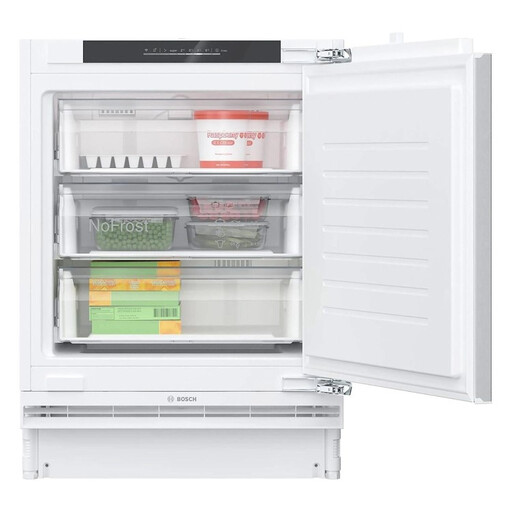
Consider this built-under model for portions in a worktop-height kitchen space. Its title specifies No Frost; check the installation requirements and internal drawer dimensions against your space and containers.
 No image available
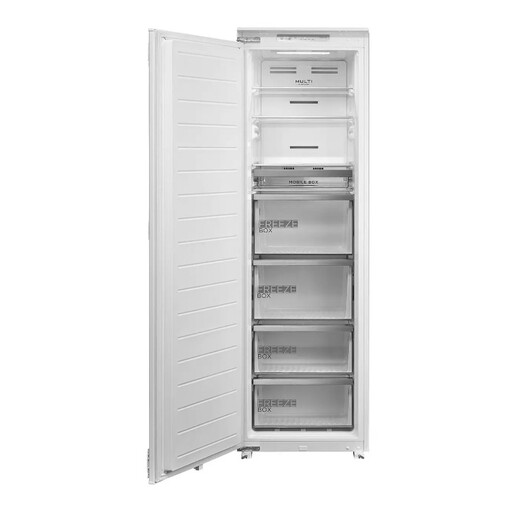
Consider this integrated model if the cottage has a matching cabinet and furniture-door arrangement. The title specifies a sliding hinge and Total No Frost; confirm cabinet, ventilation and container fit before choosing it.
 No image available
This three-quarter-height integrated format is worth considering when a full-height cabinet is not the intended installation. Confirm the cabinet and door arrangement, container fit and available temperature settings for the exact model.
 No image available
The stated 85 L capacity and 55 cm width make this an option to assess for occasional portions in a compact kitchen. Check internal shelf space against your containers and allow for the manual defrosting specified for this model.
 No image available
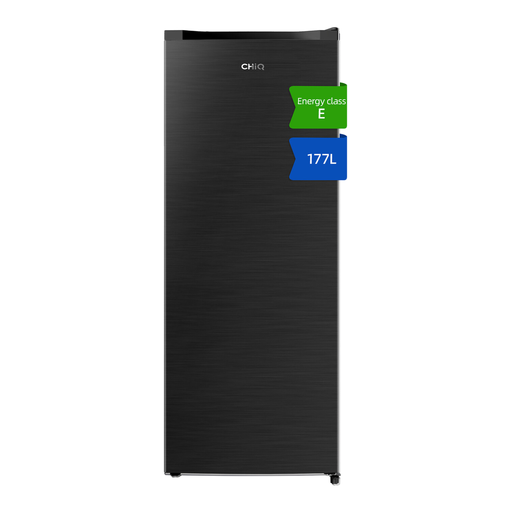
Consider this upright format when repeated batches call for separate storage and a freestanding position is available. Its stated 54 cm width and 144 cm height help with placement planning; check drawer fit, temperature settings and permitted ambient conditions for the intended location.
Yes, once it has cooled appropriately and is covered in freezer-safe containers. The Food Standards Agency advises cooling warm dishes before freezing, dividing food into smaller portions to help it cool, and keeping the freezer around −18°C.
No. Measure the covered dish or portion containers and compare them with the usable drawer or shelf space; an overall capacity figure does not establish the shape of that space.
No: choose by the exact model’s stated ambient-temperature range, not its brand or appearance. Beko says its FFP4671 operates down to an ambient temperature of −15°C, but that claim does not apply to other models.
No. Frost-free operation can reduce defrosting work, but you still need to cool and cover the crumble, maintain an appropriate freezer temperature and make sure the door closes properly.
For a self-catering holiday home in England, GOV.UK guidance says operators must follow HSE electrical-safety guidance. Check the requirements applicable to the property before supplying an appliance for guest use; this England-specific guidance should not be treated as a single rule for every UK jurisdiction.