Seasonal berry preservers
If you pick berries over several sessions, you need room to keep dated portions accessible alongside other frozen food.


Choose a freezer by measuring the shared kitchen and estimating how much of the berry harvest needs storing at once. An under-counter freezer can suit smaller, portioned batches; a tall upright offers more separated storage if the household can give it the space. Check the freezer compartment’s capacity and layout, how residents will label their food, and whether everyone can still reach cupboards and use the kitchen comfortably.
If you pick berries over several sessions, you need room to keep dated portions accessible alongside other frozen food.
You need extra freezer capacity without blocking worktops, cupboards, walkways or other residents’ access.
When several residents use the appliance, labelled storage and an agreed approach to defrosting can make everyday use easier to manage.
Settle the space and installation question before comparing freezer litres: the most useful capacity is capacity the household can access and keep organised.
Consider it when: The kitchen has an available under-counter space and berries will be frozen in smaller, labelled portions.
Trade-off: Check whether its usable freezer space will cover the busiest picking period.
Consider it when: Repeated harvests call for drawers that separate berry batches from other residents’ food.
Trade-off: It needs an agreed floor position and enough room to open the door.
Consider it when: The household also needs chilled storage and expects only a modest berry harvest.
Trade-off: Judge the freezer compartment on its own; everyday frozen food will use some of that space.
Consider it when: Bulk storage takes priority and there is a suitable place for a top-opening appliance.
Trade-off: An open interior suits bulk storage, but small labelled portions need a plan for retrieval and rotation.
| Concern | What to check | Who this matters to |
|---|---|---|
| Organised harvest capacity | Compare freezer litres, then inspect drawers or baskets for the portions you plan to store. | If I pick berries repeatedly, I need space to separate batches without losing track of older portions. Around 29% of consumers put organised harvest capacity first. |
| Fit and shared access | Measure the installation space and check the model’s ventilation and door-opening requirements. | I need other residents to reach cupboards and move through the kitchen while the freezer is in use. For around 36% of consumers, fit and shared access are the main concern. |
| Freezing and food rotation | Check temperature controls; plan portion-sized containers and labels showing contents and freezing dates. | When I add berries across several picking days, I want to identify each batch and maintain appropriate frozen storage. Around 21% of consumers place freezing conditions and rotation first. |
| Shared upkeep | Check the exact model’s defrost system, energy label and warranty terms. | I want freezer upkeep to remain manageable when several people share the appliance. Low-maintenance operation is the leading concern for around 14% of consumers. |
A large open compartment may hold bulk bags yet make small berry portions harder to find among everyone else’s food.
Decide whether you need bulk storage or easy access to labelled portions, then inspect the internal layout as well as capacity.
A freezer can fit the recess but still obstruct a cupboard or walkway when its door opens.
Measure height, width and depth, then follow the exact model’s ventilation and door-clearance instructions.
Frost-free operation, fast-freeze settings and low-ambient suitability depend on the model. A feature intended for an outbuilding need not be a priority in an indoor shared kitchen.
Check the exact model’s specification and manual rather than relying on another product in the same range.
Without contents and dates on each portion, residents can struggle to identify and rotate stored berries.
Use portion-sized bags or containers, mark each with its contents and freezing date, and agree a clearly identified storage area.
Relevant when comparing freezer formats or considering whether an appliance might later be placed in an outbuilding.
Offers freezer ranges in built-in, under-counter and freestanding formats.
Relevant if an existing kitchen has space for an integrated tall freezer.
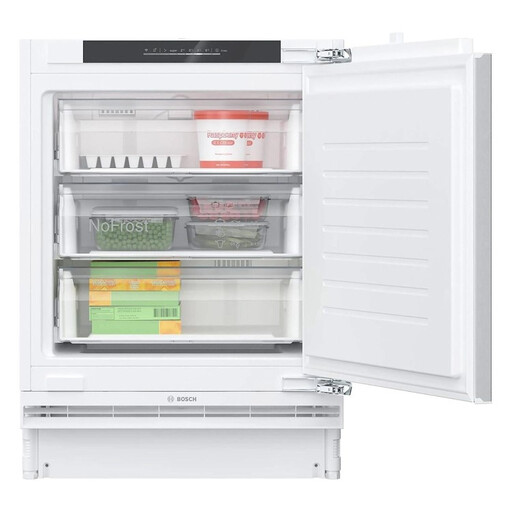
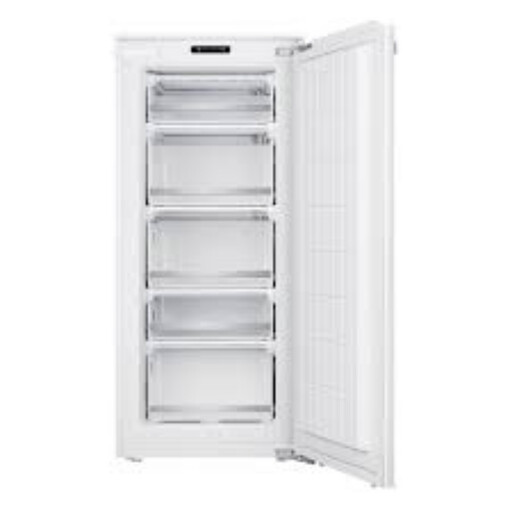
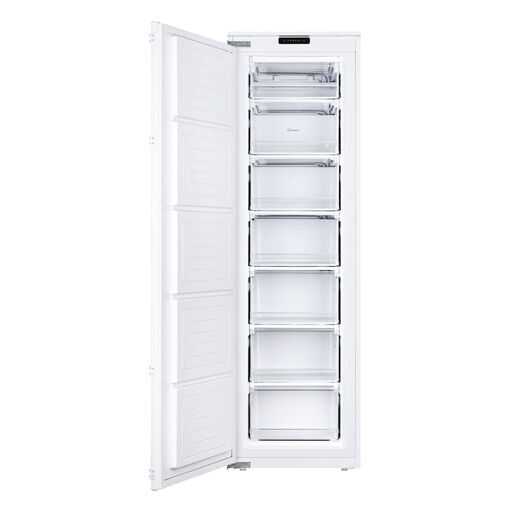
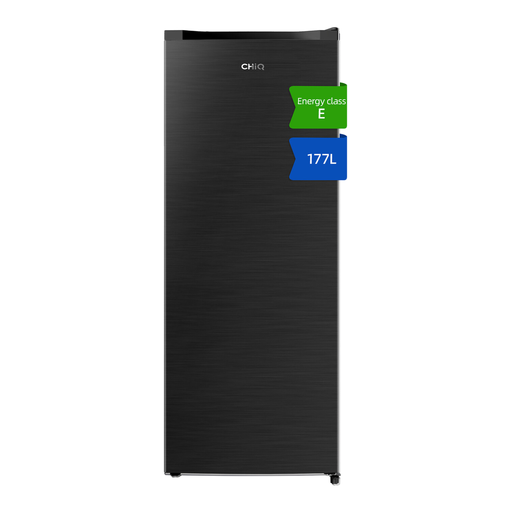
These freezer choices cover built-under, integrated and freestanding formats for storing garden berries. Match the installation type to the shared kitchen before comparing the storage space offered by each model.
 No image available
Consider this dedicated freezer if an under-counter installation can give berry portions their own space. The product name specifies No Frost operation and an E energy class; confirm the cabinet, furniture-door arrangement and ventilation requirements before buying.
 No image available
This dedicated freezer is a choice for a shared kitchen with a suitable integrated cabinet. Check the cabinet recess, door hinges and installation clearances, and consult the manual for temperature-setting instructions.
 No image available
A tall integrated format may suit repeated berry harvests where the household already has an appropriate cabinet. Agree how manual defrosting will be handled, and check cabinet dimensions, hinge compatibility and temperature controls before ordering.
 No image available
Consider this freestanding upright format if an integrated cabinet is not part of the kitchen plan. Its named width and height help with an initial space check; also confirm depth, door-opening clearance, defrost operation and temperature controls for the exact model.
 No image available
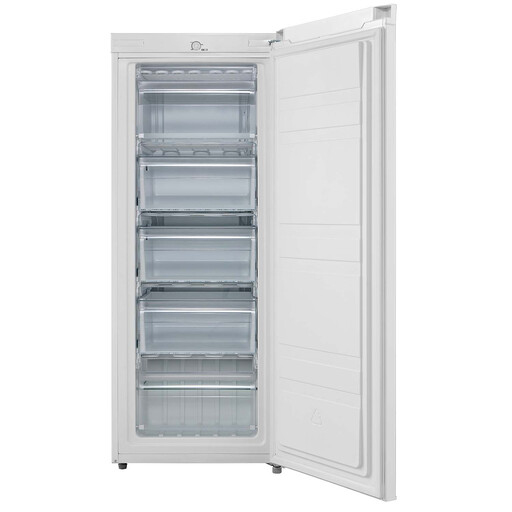
This dedicated tall freezer is worth considering when the harvest calls for more storage and the kitchen has an agreed position for it. The product name specifies an adjustable thermostat, reversible door, four-star freezing and an E energy class; check its full dimensions, opening clearance and manual before choosing a position.
GOV.UK domestic guidance says a freezer should be around -18°C. Check the appliance manual for how to set and monitor its temperature.
Freeze berries in smaller portions and label each bag or container with its contents and freezing date. An agreed drawer, basket or clearly marked area can help residents identify whose food is whose.
It is worth considering if residents are unlikely to arrange regular manual defrosting. Beko and Bosch describe their frost-free systems as preventing ice build-up, but compare that convenience with the exact freezer’s capacity, fit and energy label.
Not necessarily: suitable freezer temperature, manageable portions and clear labels remain important. A fast-freeze setting may be useful when adding repeated batches; Beko and Hotpoint describe such functions on specific models, so check the model you are considering.