Family batch cooks
If you freeze vegetables alongside prepared meals, look for enough room for both and a layout that lets you find labelled portions without moving everything else.


For regularly used portions of blanched green beans and family meals, an upright freezer makes separated storage easier to access; a chest freezer suits larger batches when floor space and lid clearance are available. If kitchen space or cabinetry determines the format, check the exact model’s usable capacity, installation requirements, freezing performance, energy information and defrosting needs before choosing.
If you freeze vegetables alongside prepared meals, look for enough room for both and a layout that lets you find labelled portions without moving everything else.
An under-counter or integrated freezer may suit the available space, provided its storage, door movement and specified ventilation clearance work in the intended position.
A chest freezer is worth considering for larger batches of vegetables and other food if you have room for its footprint, an open lid and an approved installation location.
Start with the amount of food you need to store and how often you will retrieve it. Then check whether the freezer can be installed where you intend to put it, before comparing freezing performance, energy information and defrosting requirements.
| Concern | What to check | Who this matters to |
|---|---|---|
| Freezing new batches | Check the model’s freezing capacity, temperature controls and instructions for any fast-freeze function. Which? treats freezing performance and thermostat accuracy as distinct checks. | When I add a substantial batch of cooled beans or prepared food, I want dependable freezing without crowding what is already stored. Around 29% of consumers put this need first. |
| Usable storage | Compare usable litres with the dimensions of your bags and meal containers, then inspect the drawer or basket layout. | Vegetable batches must share space with everyday frozen food, so I need room for the quantities my household actually prepares. For around 36% of consumers, practical capacity is the main concern. |
| Fit and access | Measure the route into the room, appliance footprint, door or lid clearance and specified ventilation space. Check cabinetry compatibility or the approved ambient range where relevant. | I need to reach stored portions easily without blocking the kitchen or placing the freezer outside its approved operating conditions. That makes fit and access the priority for around 21% of consumers. |
| Ongoing care | Compare energy labels and product information for similarly sized models, and check whether the exact freezer needs manual defrosting. | I can accommodate the food I freeze, but I also want to understand the electricity information and the work involved in managing ice. Around 14% of consumers make these ongoing demands their primary concern. |
A freezer may fit the gap yet leave too little room to open its door or lid, accommodate meal containers or meet its ventilation requirements.
Measure the access route, installation space, opening clearance and containers, then check the exact model’s installation instructions.
Suitability for a garage or outbuilding depends on the model’s approved ambient temperature range. Beko describes Freezer Guard on selected models, not every chest freezer.
Check the exact appliance manual against the temperatures expected at the intended location.
Frost management addresses ice build-up; it does not establish a model’s freezing speed, capacity or electricity use. Bosch and Hotpoint describe No Frost as reducing or preventing ice build-up in their respective ranges.
Check the exact model’s freezing information, usable volume and energy documents separately.
Electrical Safety First warns that an extension lead used with large appliances can become overloaded and create a fire risk.
Plan for a suitable wall socket near the freezer, follow its installation instructions and keep required ventilation openings clear.
Beko’s UK buying guide covers tall, under-counter and chest freezers, including options aimed at larger household food loads.
Bosch offers built-in, under-counter and freestanding freezer formats for different kitchen layouts.
Hotpoint’s buying guide covers upright, chest, under-counter and built-in freezer choices for different storage and installation needs.
Zanussi’s support information is useful when comparing frost-management requirements and checking ownership instructions.
These integrated upright and freestanding chest freezers address two ways to store batches of green beans alongside family meals. Choose by the storage and installation conditions that suit your household, not by the order shown here.
 No image available
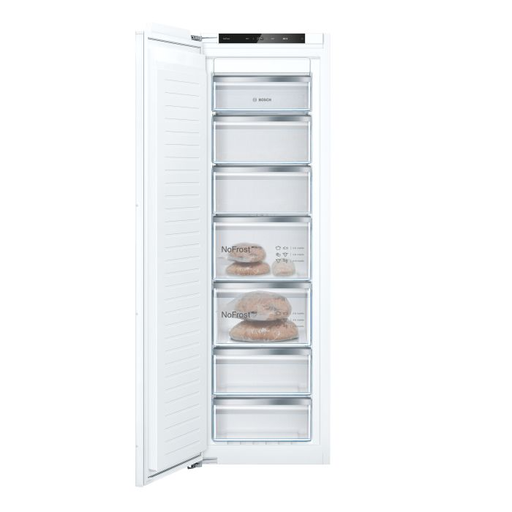
Consider this for separated family portions in a fitted kitchen, provided the cabinet and fixed hinge are compatible.
The product name specifies 212 L, NoFrost and energy class E. Check the cabinet opening and ventilation instructions, and compare freezing capacity and annual energy information if you plan to add large batches regularly.
 No image available
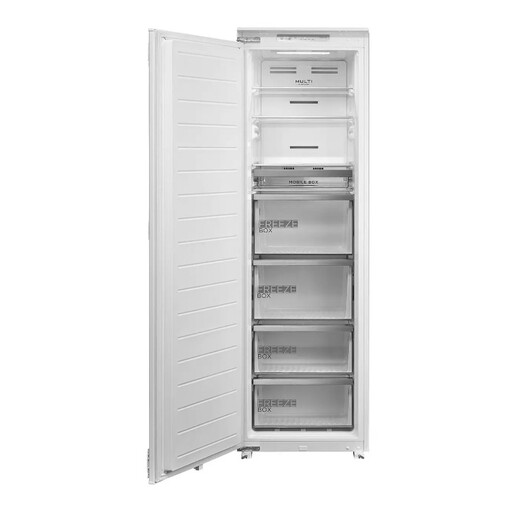
This integrated upright format is worth considering when family portions need organised access in a fitted kitchen.
The product name specifies Total No Frost and energy class E. Confirm sliding-hinge compatibility, cabinet dimensions and ventilation, then check freezing capacity and annual energy information for the exact model.
 No image available
The chest layout suits larger batches when you can provide floor space and room to open the lid.
Manual defrosting is specified, so allow for that upkeep. If the freezer will be kept in an outbuilding, check the exact model’s stated ambient operating conditions against that location.
 No image available
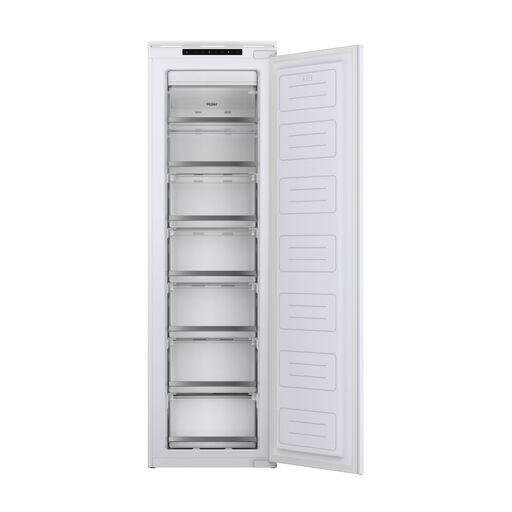
Consider this upright model if separate access to vegetable bags and meal portions matters and your kitchen can accommodate an integrated freezer.
The product name specifies 200 L, Total No Frost and energy class E. Check the sliding hinge, cabinet fit and ventilation; compare freezing capacity and annual energy information if those affect your choice.
 No image available
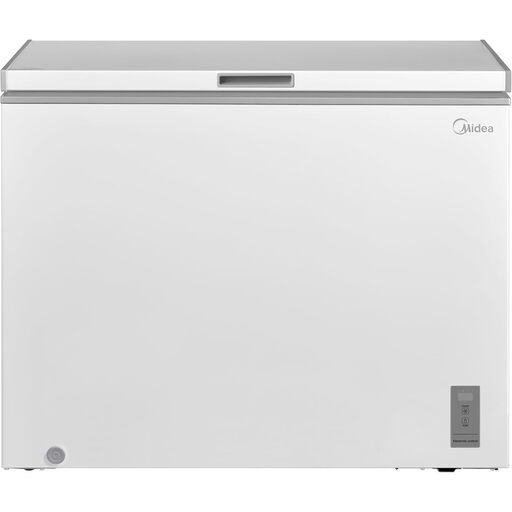
This freestanding chest format is an option for households prioritising room for batches of vegetables and family meals.
The product name specifies energy class E. Check floor space, lid and ventilation clearances, and the exact model’s freezing capacity, annual energy information and defrosting instructions before choosing it.
An upright freezer suits frequent access to separated bags of beans and meal portions; a chest freezer suits larger bulk loads when its footprint and lid clearance fit. Beko’s buying guide describes tall freezers as options for larger quantities and chest freezers as high-capacity household storage.
Yes. In its guidance on batch-cooked baby food, the NHS advises cooling food, ideally within 1–2 hours, before freezing or refrigerating it. Follow food-handling advice appropriate to the meal you have prepared rather than placing a hot batch straight into the freezer.
Cambridge University Hospitals NHS Foundation Trust advises keeping a freezer at or below −18°C in its food-safety guidance for people at increased risk of infection. Follow your appliance manual for its controls and use a freezer thermometer to check the storage temperature.
Compare the energy label and product information for the exact models, preferably alongside their usable capacities. GOV.UK explains energy labelling for products within its scope; a frost-free feature or brand-wide description is not a substitute for the model’s own energy figures.
Electrical Safety First advises placing a freezer near a suitable wall socket rather than using an extension lead, which can be overloaded when used with large appliances. Also follow the freezer’s installation and ventilation instructions.