What matters when choosing?
Start with the space your largest planned dough batch will occupy, then decide how much defrosting work you accept and where the freezer will stand.
| Concern |
What to check |
Who this matters to |
| Fit and door clearance |
Measure height, width and depth, then check the manual’s ventilation requirements and the path of the open door. |
When every centimetre of kitchen space counts, I need the freezer and its open door to fit without blocking the room. Around 42% of consumers would put physical fit first. |
| Batch space and organisation |
Check net volume and whether your largest batch fits in its intended containers, drawers or shelf space. |
If I make several dough portions together, I want to retrieve them without moving everything else in the freezer. Roughly 33% of consumers would prioritise batch space and organisation. |
| Upkeep and location |
Distinguish manual defrost, Low Frost and Frost Free; for an unheated location, check the exact model’s permitted ambient range. |
I may value less defrosting work or need to place the appliance outside the heated kitchen, where its location instructions become decisive. About 25% of consumers would make upkeep or location their primary concern. |
Freezers to consider on Joybuy
These choices cover built-under, integrated and freestanding under-counter freezers. Match the installation format to your kitchen before comparing storage needs; an integrated or built-under model requires a different fit check from a freestanding one.
 No image available
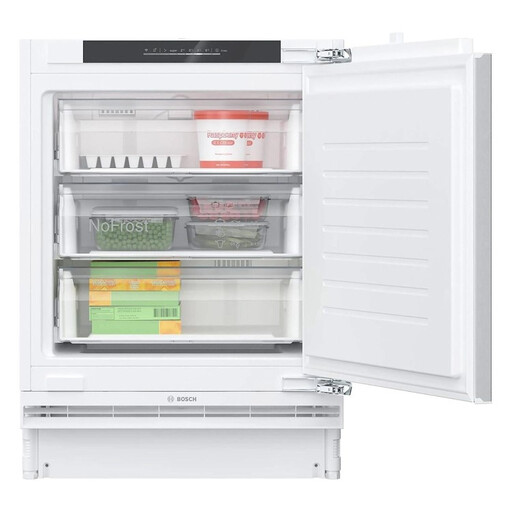
Bosch GUN21VFE0G Series 4 No Frost built-under freezer, white
Consider this model if your kitchen has space for a built-under freezer behind a furniture door. Check the cabinet opening, plinth ventilation and door clearance against its installation instructions before buying.
View on Joybuy
 No image available
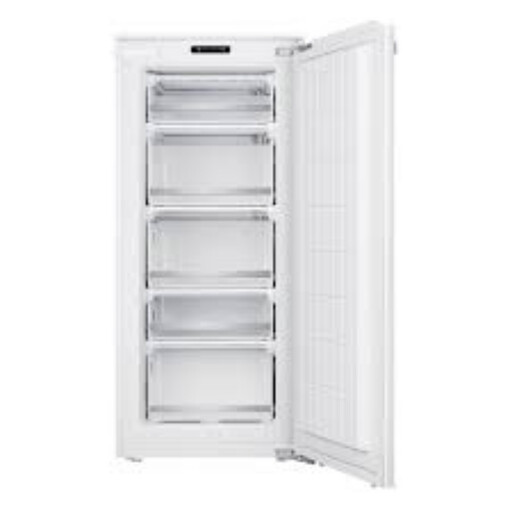
CDA FW582 integrated three-quarter-height freezer, white
Consider this integrated format if compatible cabinetry is available and an under-counter height is not essential. Check the required recess and installation clearances rather than relying on the appliance’s outside dimensions.
View on Joybuy
 No image available
CHiQ JKR90DWE 85 L under-counter freezer, white
This freestanding under-counter model is worth comparing if you need space for several dough portions without fitted cabinetry. Its title states 85 L and 55 cm; check the full installation space and allow for manual defrosting.
View on Joybuy
 No image available
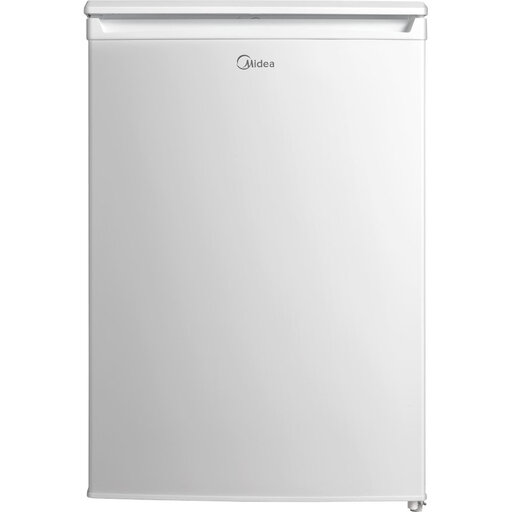
Midea MDRU129FZE01 under-counter freezer, white
Consider this freestanding under-counter model if separate storage for dough portions matters. Confirm the exact capacity before planning batch sizes, check the installation and door clearances, and allow for manual defrosting.
View on Joybuy
Frequently asked questions
How should I measure a small kitchen for a freezer?
Measure the height, width and depth of the intended space, then check what happens when the freezer door is fully open. Allow for sockets, pipework and the ventilation clearances in the exact model’s instructions. The freezer measurement guidance also recommends checking all three dimensions; general guidance does not replace the appliance manual.
Is Frost Free necessary for freezing pizza dough?
No: a manual-defrost freezer can suit occasional small batches if its capacity and placement work for you. Frost Free becomes more relevant if you want to avoid manual defrosting; Beko describes that feature for its UFF4584. Hotpoint’s Low Frost description means reduced ice build-up, not no defrosting.
Can I put a small freezer in an unheated garage?
Only if the exact model’s location instructions and ambient-temperature range permit it. The listing says not to use the Logik LTF33W23 in an unheated area, while Beko and Hotpoint state low-temperature operating capabilities for their named models. Size alone does not establish garage suitability.
What energy information should I compare before buying?
Compare the exact freezer model’s energy class and stated annual electricity consumption alongside its capacity. UK government guidance says in-scope products must carry an accurate energy label, including at the point of sale on a website, and have a product information sheet. Energy class alone does not tell you how much electricity a particular household will use.


