Families taking bread slice by slice
You want to take out only the slices needed while keeping bread separate from everyday frozen food and family-meal portions. Just One Norfolk NHS advises freezing a loaf and defrosting slices as needed.


For frequent access to a few bread slices and separate family-meal portions, start with an upright freezer whose compartments suit the food you store. A chest freezer is worth considering when bulk storage matters more than quick access to individual packs; whichever format you choose, check its capacity, installation space and energy information against your household’s needs.
You want to take out only the slices needed while keeping bread separate from everyday frozen food and family-meal portions. Just One Norfolk NHS advises freezing a loaf and defrosting slices as needed.
You need room for prepared meals or larger grocery shops as well as bread. Check the amount you expect to store at one time, rather than choosing capacity around the loaf alone.
You need an appliance to fit beneath a worktop, inside kitchen cabinetry or in a utility room or garage. The exact model’s installation instructions and permitted room-temperature range matter alongside its storage space.
Decide how much space bread and meals need together, then check whether the appliance’s layout and installation requirements work where you plan to put it.
| Concern | What to check | Who this matters to |
|---|---|---|
| Separate, accessible storage | Compare compartments and whether your bread packaging and meal portions will fit without obstructing access. | If I take out bread daily, I want to reach a few slices without searching through meal packs. Around 36% of consumers would put this kind of organisation first. |
| Capacity for meals | Compare the stated capacity in litres and the internal layout with the loaves, portions and bulky foods you expect to store together. | When I batch-cook or stock up, bread is only a small part of what needs freezing. For around 29% of consumers, enough room for family meals would be the primary concern. |
| Fit and installation | Measure the space and required clearance; for integrated models, confirm the housing and furniture-door hinge system. | I need the freezer to fit my available kitchen space, and an integrated door must work with the existing cabinetry. That fit would come first for around 21% of consumers. |
| Maintenance and location | Check the exact model’s frost-management features and permitted ambient-temperature range, particularly for an unheated room. | If the freezer will go in a cold utility room or I want less manual defrosting, those conditions shape my choice. Around 14% of consumers would prioritise maintenance or location suitability. |
Bread alone may take little space, while meal portions and larger packs can quickly change the capacity you need.
Plan for the greatest amount of bread, meals and other frozen food you expect to keep at once, then compare capacity and compartment layout.
Similar outer dimensions do not establish that the housing, ventilation or furniture-door hinges are compatible.
Check the existing hinge type and measure the housing against the exact model’s installation instructions before ordering.
Permitted ambient temperatures are model-specific; a cold-location claim for one appliance does not apply to another.
Compare the temperature expected in the room with the range on the exact model’s rating plate or in its manual.
An energy class alone does not tell you whether two differently sized appliances provide the storage arrangement your family needs.
Read each model’s energy label and product information sheet alongside its capacity, dimensions and layout. GOV.UK says products covered by energy-labelling rules must have an accurate printed label and a product information sheet.
A reference point for comparing freestanding, integrated and smaller fitted formats in one range.
Relevant when considering an upright freezer and checking whether a named model suits a colder location.
Relevant to a fitted kitchen where an integrated upright freezer is required.
A reference for smaller upright and integrated under-counter formats.
Relevant when a chest freezer is being considered for batch-cooked meals or bulk storage.
These choices focus on integrated and built-under freezers for households keeping sliced bread alongside family meals. Compare their fitted-installation requirements with your kitchen before deciding whether one suits you.
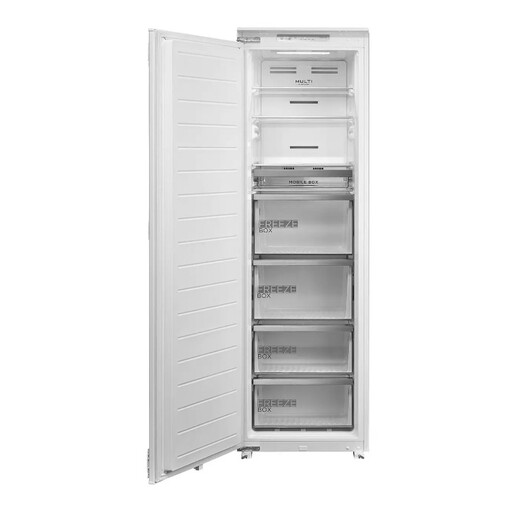 Image unavailable
Consider this for a fitted kitchen where the existing furniture door uses a sliding hinge. The product name specifies Total No Frost and an E energy class; check the housing and ventilation instructions before choosing it.
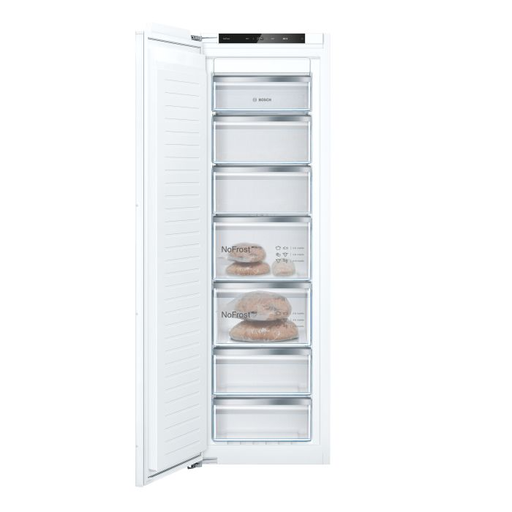 Image unavailable
Consider this when a tall fitted space and fixed furniture-door hinge match your kitchen. Its product name states a 177 cm height, 212 L capacity, NoFrost and an E energy class; confirm the required housing dimensions before ordering.
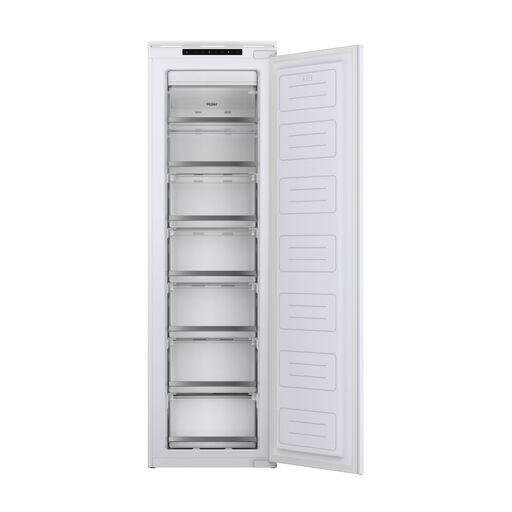 Image unavailable
Consider this for a tall integrated installation with a sliding furniture-door hinge. The product name specifies 177 cm, 200 L, Total No Frost and an E energy class; confirm cabinet fit and whether that capacity covers your meals as well as bread.
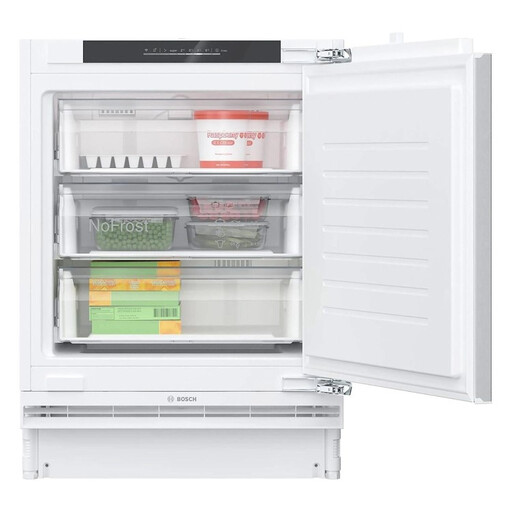 Image unavailable
Consider this when the freezer must fit beneath a worktop. Its product name specifies No Frost, a white finish and an E energy class; check the opening, furniture-door arrangement and storage capacity against your meal plan.
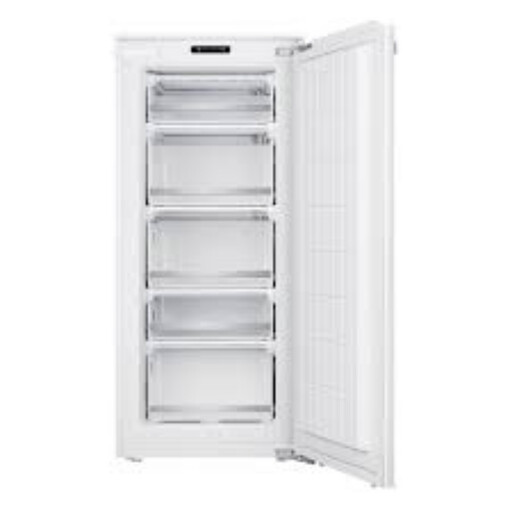 Image unavailable
Consider this for a fitted kitchen where a three-quarter-height appliance is appropriate. The product name specifies an integrated format and white finish; check the housing, furniture-door hinge and usable capacity before deciding.
Yes. Just One Norfolk NHS advises freezing a loaf and defrosting only the slices needed each day. Keep the bread protected and easy to identify among other frozen food.
Follow your appliance instructions; Bosch UK recommends a freezer setting of −18°C. Which? says food needs to be kept below −16°C for preservation, so check the appliance’s setting and storage guidance rather than relying on its display alone.
Choose an upright format if regular access to separately stored bread and meal portions matters most. Consider a chest freezer if bulk storage is your main need and you have space for its width and top-opening lid; plan how you will identify smaller packs.
Do not assume so. Check the exact model’s permitted ambient-temperature range on its rating plate or in its manual, and compare it with the coldest temperature expected in that location.
Compare the energy label and product information sheet for the exact freezers you are considering, alongside capacity and layout. GOV.UK says products covered by energy-labelling rules must be supplied with an accurate printed energy label and a product information sheet; an efficiency class alone does not settle which size or format meets your storage needs.