Regular sauce batch-cookers
If you freeze several labelled portions at a time, compare usable freezer volume, drawer layout and the stated freezing capacity for adding a batch.


For occasional portions of cooled tomato sauce, an under-counter freezer may provide enough storage without taking up much kitchen space. If you freeze several batches regularly, compare tall uprights for accessible drawers or chest freezers for larger-volume storage. Whichever format you choose, check its fit, frozen-compartment capacity and freezing specification; a garage location also requires approval for that exact model.
If you freeze several labelled portions at a time, compare usable freezer volume, drawer layout and the stated freezing capacity for adding a batch.
If you freeze sauce occasionally, an under-counter format may fit the space better. Check its external dimensions against the available gap and its internal space against your containers.
If the freezer will be outside the main kitchen, check the expected ambient temperature against the exact model’s approved operating conditions. Suitability cannot be assumed from its format.
Decide how much sauce you need to store and where the appliance will stand, then compare freezing capacity and day-to-day maintenance on models that meet those requirements.
| Concern | What to check | Who this matters to |
|---|---|---|
| Organised capacity | Compare frozen-compartment litres and whether drawers or baskets fit your portion containers. | If I regularly freeze several meals’ worth of sauce, I need room to separate and find the portions later. Around 36% of consumers put organised capacity first. |
| Freezing and storage | Compare the stated freezing capacity in kg/24 h when adding large batches, and check the appliance’s temperature instructions. | When I portion a batch of cooked sauce, I want to cool it promptly and know the freezer can handle the amount I add. Around 29% of consumers make freezing and storage conditions their primary concern. |
| Fit and placement | Check dimensions and installation clearances; for a fitted kitchen, check hinges, and for an outbuilding, check the model’s approved ambient range. | A limited kitchen gap or a colder outbuilding determines where I can put the freezer. For around 21% of consumers, suitable fit and placement come first. |
| Energy and upkeep | Compare the exact models’ energy labels and distinguish Frost Free or NoFrost from Low Frost. | Once the freezer meets my storage needs, I care most about its energy information and how much frost maintenance it needs. Around 14% of consumers prioritise those ownership considerations. |
A freezer can fit the available gap yet have too little internal space or unsuitable drawers for your sauce containers.
Measure the space and compare the exact model’s frozen-compartment volume and layout. For an integrated replacement, check the cabinet housing and hinge system too.
An appliance’s normal installation conditions do not establish that it can operate in a cold outbuilding.
Check the exact model’s approved ambient-temperature range against the conditions in the intended location, and follow its installation instructions.
Low Frost and Frost Free describe different approaches to ice build-up; Low Frost does not mean that manual defrosting can be ruled out.
Check the model’s defrost specification if avoiding manual ice removal matters to you, and follow its cleaning and maintenance instructions.
Planning to freeze sauce later is not a reason to leave it cooling at room temperature for an extended period.
Portion and cool it promptly before freezing. NHS batch-cooking guidance for baby food advises cooling food ideally within 1 to 2 hours before freezing or refrigerating.
Its UK range includes Frost Free models and selected models intended for colder installation locations.
Its upright freezers include drawer-based options for organising regular batches.
Its UK freezer range spans integrated, under-counter, chest and tall formats.
Its compact under-counter options are relevant when occasional portions must fit into a small kitchen.
These models cover integrated uprights for fitted kitchens, a freestanding tall upright for organised portions and a chest freezer for larger-volume storage. Compare their installation needs and internal space with the way you freeze sauce.
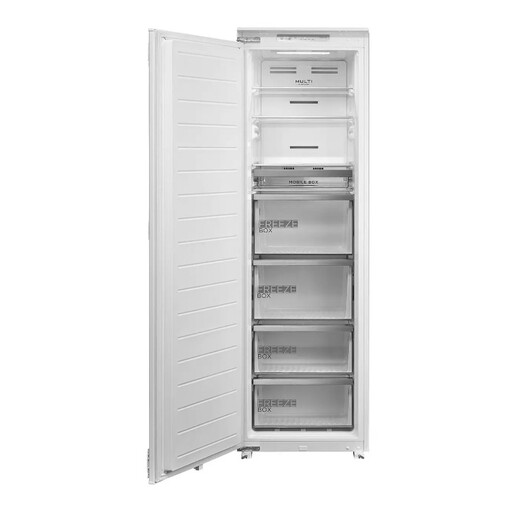 No image available
Consider this integrated model if you want to store sauce portions in a fitted kitchen. It has a sliding hinge, an E energy rating and Total No Frost. Check the cabinet and hinge requirements before buying, and compare its freezing capacity if you add large batches at once.
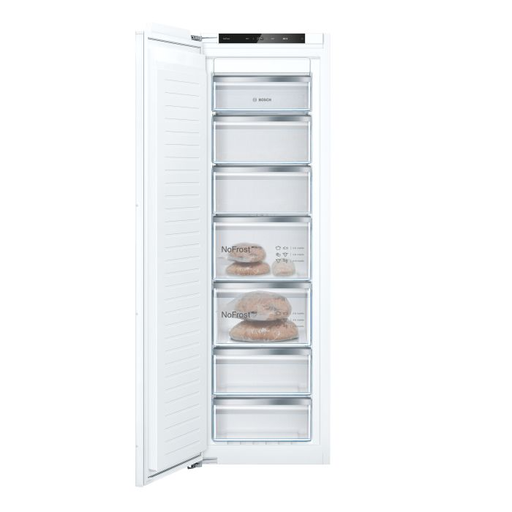 No image available
This integrated upright is an option for keeping regular sauce portions in a fitted kitchen. Its stated capacity is 212 L; it has a fixed hinge, NoFrost and an E energy rating. Check the housing and hinge match, along with the freezing capacity needed for your batch size.
 No image available
Consider the chest format when you have floor space for larger batches of sauce. This freestanding model has a stated 297 L capacity; check how its internal layout will accommodate your portions. Confirm its defrost requirements and the exact model’s ambient-temperature approval before choosing an outbuilding location.
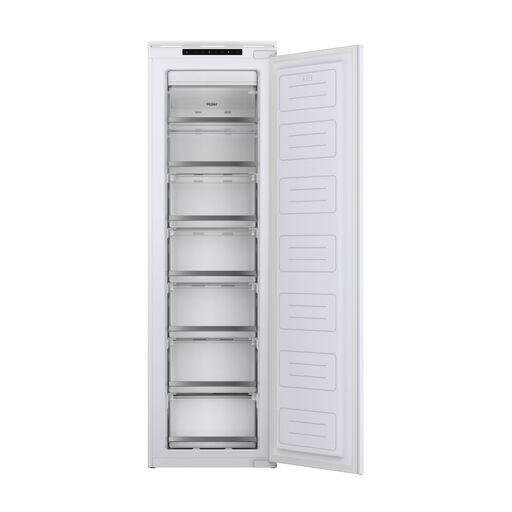 No image available
This upright is another fitted-kitchen option for storing portioned sauce. Its stated capacity is 200 L, and its title specifies a 177 cm height, sliding hinge, Total No Frost and E energy rating. Match the cabinet and hinge arrangement before buying, particularly if replacing an existing appliance.
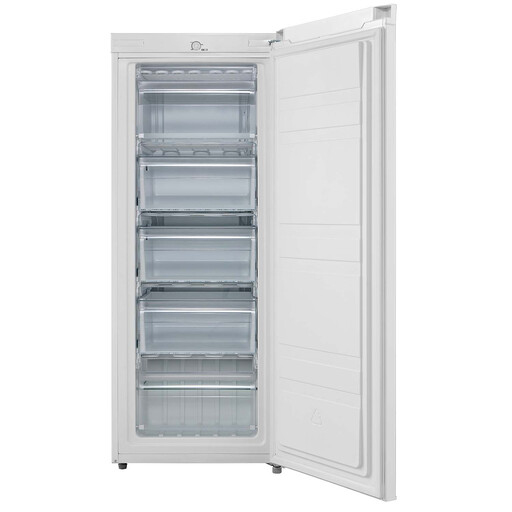 No image available
This freestanding upright may suit consumers who want to organise sauce portions without installing an integrated model. Its title specifies a 160 L capacity, adjustable thermostat, reversible door, four-star freezing rating and E energy rating. Check its dimensions, defrost method and freezing capacity against your space and batch size.
Cool it promptly rather than leaving it at room temperature for an extended period. NHS batch-cooking guidance for baby food advises cooling cooked food ideally within 1 to 2 hours before freezing or refrigerating; portioning the sauce can help it cool through.
Guy’s and St Thomas’ NHS Foundation Trust advises keeping a freezer below −18°C. Follow the appliance instructions and check its temperature indication where one is provided; a freezing-capacity figure in kg/24 h describes a different specification.
No; choose Frost Free or NoFrost if reducing manual ice removal is important to you. Beko and Bosch describe their equipped models as preventing ice build-up, but the feature does not replace prompt cooling, suitable containers or correct freezer storage.
Yes, if the exact model is approved for the ambient temperatures expected there and its installation instructions permit that location. Beko says many Freezer Guard-equipped models can operate down to −15°C; that does not establish suitability for other models or colder conditions.