Regular batch-cook stock makers
If you frequently freeze several portions, you need room to add cooled stock without crowding the food already stored, plus a layout that lets you find older portions.


Choose an upright freezer if you regularly freeze labelled portions of cooled vegetable stock and want easier access to them; consider a chest freezer if storing larger batches matters more and you have room for its lid to open. Before choosing either, check that your containers fit, that the appliance fits its location and, for an unheated outbuilding, that the exact model is rated for the expected ambient temperature.
If you frequently freeze several portions, you need room to add cooled stock without crowding the food already stored, plus a layout that lets you find older portions.
If you freeze a few labelled containers at a time, focus on whether the appliance and your usual containers fit the available kitchen space.
If larger batches will go into an unheated garage or outbuilding, check the exact freezer model’s stated ambient operating range before deciding where to install it.
Choose it when: You freeze meal-sized portions regularly and want drawers or shelves that make dated containers easier to reach.
Allow for: Drawer dimensions that may limit which rigid containers fit, regardless of the stated total volume.
Choose it when: You need a large storage cavity for substantial batches and do not need immediate access to every portion.
Allow for: Floor and lid-opening space, and a way to organise dated portions within the cavity.
| Concern | What to check | Who this matters to |
|---|---|---|
| Adding cooled batches | Check rated freezing capacity in kg/24 h and the instructions for any fast-freeze function. Cool and portion stock before it goes in. | If I regularly add a substantial batch, I want to know how much fresh food the freezer is rated to freeze while other food is stored; around 36% of consumers put adding cooled batches first. |
| Access to portions | Compare your filled containers with drawer, shelf or basket dimensions, not just total litres. | When I freeze several dated portions, I want to retrieve an older one without moving everything else. Around 29% of consumers make portion organisation their main concern. |
| Space and capacity | Measure the appliance location, access route and door or lid clearance; consider how much stock will share space with other frozen food. | If kitchen space is tight or batches are large, I need capacity I can use in a freezer that physically fits; space and capacity are the priority for around 21% of consumers. |
| Maintenance or location | Check the exact model’s defrost arrangement and, for an unheated outbuilding, its stated ambient operating range. | If I want less defrosting work or must use a garage, those conditions decide which model I can consider; they come first for around 14% of consumers. |
Warm food can raise the freezer temperature and affect food already inside. The Food Standards Agency advises cooling food before freezing and dividing it into smaller portions to help it cool.
Cool the stock, transfer it to suitable containers or freezer bags, label the portions and freeze them promptly.
A freezer’s stated volume does not tell you whether your rigid tubs will fit its drawers or whether dated portions will remain accessible.
Measure the containers you normally fill and compare them with the internal layout as well as the appliance’s external dimensions.
Low-ambient operation is model-specific. Beko states that its FNE4545W can operate in ambient temperatures down to -15°C; that figure does not apply to other freezers.
Check the chosen model’s stated minimum ambient temperature and installation conditions against the intended location.
Integrated appliances must fit the housing and use a compatible door arrangement. Sliding and fixed hinges are two different arrangements.
Record the housing dimensions, ventilation requirements and existing hinge type before choosing a replacement.
A mismatch can also mean arranging additional fitting or cabinet work.
A reference point when comparing freestanding freezers for a possible garage or outbuilding location.
A reference point for tall upright storage with compartments for separating stock containers.
A reference point for upright models with storage intended for larger frozen items.
These Joybuy choices cover integrated upright freezers for fitted kitchens and chest freezers for bulk stock storage. Check cabinet and hinge fit for an integrated model, or floor space and lid clearance for a chest model.
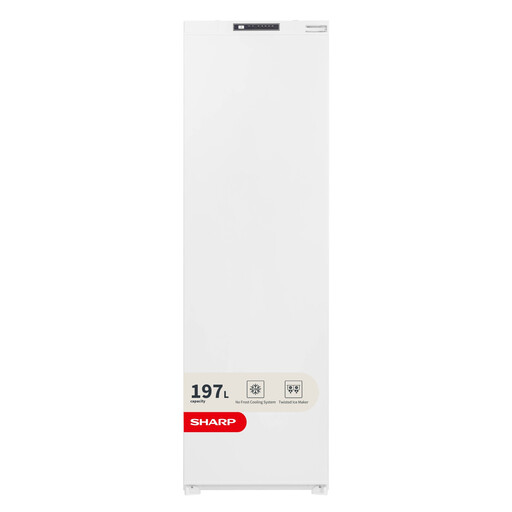 No image available
Consider this E-rated integrated upright if stock portions need to fit within an existing kitchen cabinet. The name gives a 177 × 54 cm size; confirm the full housing dimensions, hinge arrangement and container fit before buying.
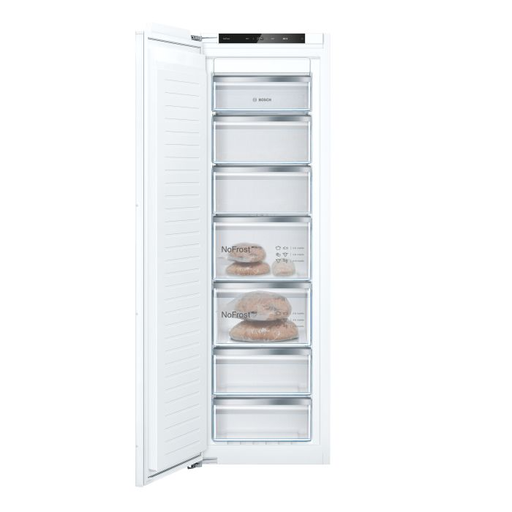 No image available
For a fitted kitchen with a compatible fixed-hinge cabinet, this E-rated, 212 L model lists NoFrost. Check the required housing dimensions and whether your stock containers fit its compartments.
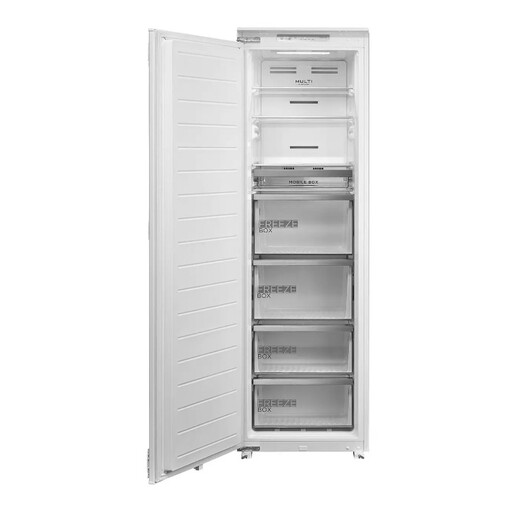 No image available
Consider this E-rated, Total No Frost model if your fitted kitchen uses a sliding-hinge arrangement. Confirm the cabinet dimensions, ventilation requirements and usable space for your portions.
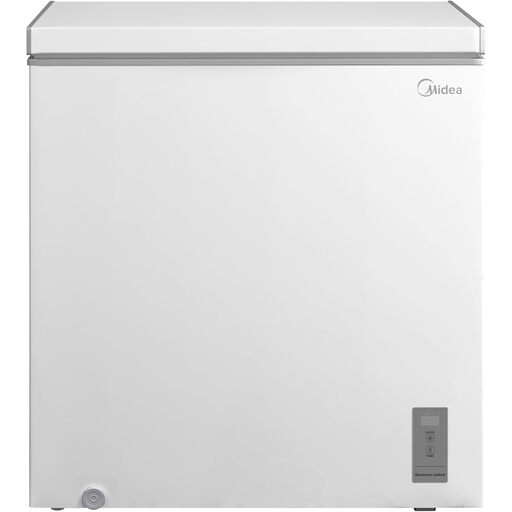 No image available
This E-rated chest format is worth considering when bulk storage takes priority over drawer access. Check whether its internal layout suits your containers and leave enough room to open the lid.
 No image available
Consider this wide chest model if you need space for many stock containers. Measure its intended floor area and lid clearance, and check how you would organise dated portions inside.
Yes, once it has cooled; do not put it in while hot or warm. The Food Standards Agency advises dividing food into smaller portions to help it cool, then freezing it as soon as possible after cooling.
The Food Standards Agency says a household freezer should be around -18°C. Follow the appliance instructions for setting its temperature and check its display or a freezer thermometer where available.
An upright suits regularly accessed, dated portions when its compartments fit your containers. A chest freezer suits bulk storage if you have floor and lid-opening space and can organise portions within its deeper cavity.
No; check the exact model’s stated ambient operating range against the garage conditions. Beko states that its FNE4545W can operate in ambient temperatures down to -15°C, but that does not establish the suitability of another model.