Small-kitchen fruit preservers
If seasonal batches of chopped rhubarb are the main reason for buying a freezer, look for a worktop-height space that still leaves room to use the kitchen and open the appliance door.


If you have a suitable gap beneath a worktop, a freestanding under-counter upright freezer is a practical starting point for storing portions of chopped rhubarb. Choose an integrated model only if the housing and door hinges are compatible, and consider frost-free operation if avoiding manual defrosting matters to you. Before ordering, check the full appliance dimensions, installation clearances and room for the door to open.
If seasonal batches of chopped rhubarb are the main reason for buying a freezer, look for a worktop-height space that still leaves room to use the kitchen and open the appliance door.
If you add frozen fruit and other food regularly, a frost-free model may appeal because it avoids manual ice removal. Beko describes automatic defrosting on its UFF4584; check this feature on the exact model you choose.
If the freezer must sit behind a cabinet door, match it to the housing and hinge arrangement. General guidance advises checking the hinge type when replacing a built-in appliance.
Start with the space available, then decide how you want to store fresh batches and how much defrosting you are willing to do.
| Concern | What to check | Who this matters to |
|---|---|---|
| Fit and door access | Measure the opening in all three dimensions; check the model’s installation clearances and door swing. | In a tight kitchen, I need the freezer to fit without blocking a cupboard or walkway. Around 50% of consumers put fit and access first. |
| Space for rhubarb batches | Compare the exact model’s freezer volume, compartment layout and rated freezing capacity if you plan to add a sizeable fresh batch. | If I freeze seasonal rhubarb in portions, I need enough accessible space for the batch alongside other food. For around 30% of consumers, batch storage is the primary concern. |
| Defrosting and energy information | Identify the defrost system and compare energy labels and annual kWh figures for the models you are considering. | I would rather avoid removing ice by hand, but I also want to compare electricity-use figures before choosing. That is the main concern for around 20% of consumers. |
A freezer that fits across a gap may still be too deep or tall, or leave too little room for its door and required ventilation.
Measure the full opening and compare it with the chosen model’s dimensions and installation instructions. Check the proposed door swing against nearby walls and cabinets.
An integrated appliance needs a suitable housing and furniture-door attachment; matching its external dimensions alone is not enough.
Confirm the housing measurements, hinge type and cabinet-door fitting before ordering. General guidance specifically advises checking hinge compatibility when replacing a built-in freezer.
An incompatible arrangement may also mean cabinet-door, hinge or fitting work.
Frost-free operation addresses manual defrosting; it does not by itself establish how much electricity a particular freezer will use.
Compare the exact models’ energy labels, annual kWh figures and capacities separately from their defrost systems.
Freezers with similar names or dimensions can be different variants, so a familiar-looking listing is not enough to establish an exact match.
Check the full model identifier and the product details for the appliance you intend to order, particularly its dimensions and installation requirements.
Beko has freestanding under-counter models relevant to compact kitchens, including the UFS4584 and the frost-free UFF4584.
The freestanding I55Z1 112W UK is a 54 cm-wide under-counter option for a dedicated freezer space.
The freestanding GTV15NWEBG offers another under-counter size to compare when space is limited.
These choices include freestanding under-counter freezers and models intended for integrated cabinetry. Start with the space and installation type you have, then compare the exact model’s storage layout and defrost system.
 No image available
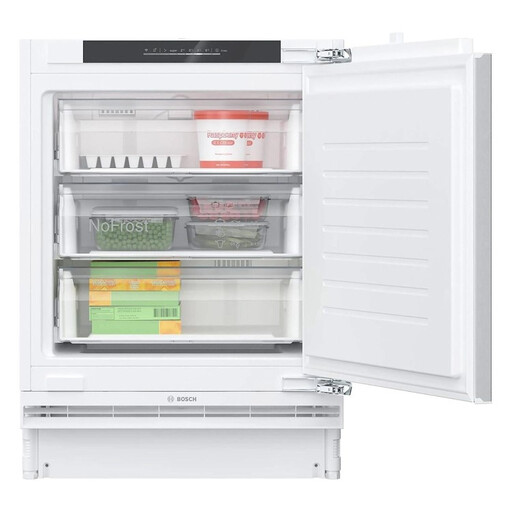
Consider this built-under model if you have suitable integrated cabinetry and want No Frost operation. Confirm the furniture-door arrangement, installation clearances and rated freezing capacity before planning large rhubarb batches.
 No image available
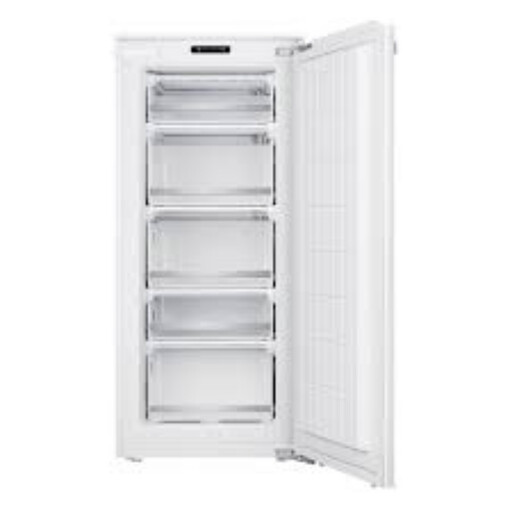
This integrated format is worth considering if your cabinetry can accommodate a three-quarter-height appliance rather than an under-counter one. Check the housing height, cabinet-door hinges and installation instructions before ordering.
 No image available
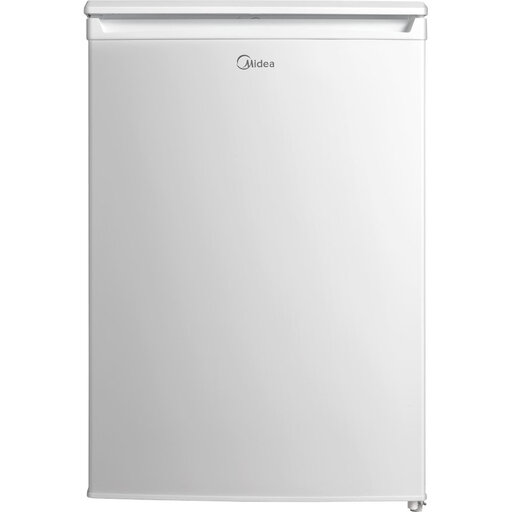
This freestanding model is a candidate for a worktop-height space and dedicated storage for rhubarb portions. Its name specifies 85 L of capacity and a 55 cm width; allow for manual defrosting and check the installation clearances.
 No image available
This freestanding under-counter model is another option for organising frozen portions. Confirm its capacity for this exact variant before comparing storage space, and plan for manual defrosting.
It can be if you have a usable gap beneath a worktop. Measure the full opening and check installation clearances and door movement; a small stated width alone does not establish that the freezer will fit.
Follow the chosen model’s installation instructions for its required clearances. The general guidance suggests about 5 cm behind as a preliminary allowance for pipework or sockets, but that is not a substitute for the manufacturer’s ventilation requirements.
No; frost-free operation is a choice about defrosting effort, not a requirement specific to rhubarb. Beko describes automatic defrosting on its UFF4584, so compare that convenience with the storage space and energy information of the exact models you are considering.
Compare the energy label and annual electricity-consumption figure for each shortlisted model, alongside its freezer volume. Indesit lists 168 kWh a year for the I55Z1 112W UK; that model-specific figure is not a prediction of your household’s electricity use.