
24/7 Customer Support

Free returns

Same-day & Next-day Delivery

Quality Guaranteed

Unlock Your Welcome Offers: FREE Delivery | Up to 80% OFF | Free 30-day JoyPlus trial
Download the APP
Buying a freezer can look straightforward until you compare capacity, dimensions, energy use, installation requirements and storage layouts. A model that appears affordable may be awkward to organise, unsuitable for a cold garage or too large for the available space.
This guide from the Joybuy Product Recommendation Officer explains the practical checks that matter before you buy, followed by Our Top Recommendations for 2026 for different household needs.
A freezer’s advertised litre figure does not tell you whether it will fit through your doorways, beneath a worktop or around existing cabinets. Measure the intended location, including:
For example, a 297-litre chest freezer may provide substantial storage, but its 111.4cm width needs considerably more floor space than an under-counter model measuring approximately 55cm wide.
Cold outbuildings can fall below the operating range specified for an appliance. Standard freezers may not be designed to work reliably in an unheated garage during winter. Look for a clearly stated garage-safe, Winter Guard or low-ambient operating specification, and check the manufacturer’s permitted temperature range.
The Midea MDRC284FZE01 and MDRC345FZE01, for example, are listed as suitable for ambient temperatures down to -18°C. The HISENSE FC386D4AWLE is specified to operate down to -15°C. These details are more useful than a general claim that a freezer is suitable for an outbuilding.
Frost-free freezers can reduce manual defrosting, but they may cost more than simpler manual-defrost models. A chest freezer can offer efficient bulk storage, but items at the bottom may be less accessible than those in drawers. Convertible fridge freezers are flexible, although that flexibility is only valuable if you genuinely need to change modes.
Consider how you shop. Meal preppers may benefit from drawers and transparent compartments, while families buying large joints of meat or bulk packs may prefer the uninterrupted cavity of a chest freezer.
For a small kitchen, flat or student accommodation, small freezers between approximately 80 and 100 litres can provide additional frozen storage without taking over the room. Under-counter upright models such as the CHiQ JKR90DWE offer an 85-litre net capacity, while the Midea MDRU129FZE01 provides an advertised capacity of approximately 86 litres.
For families and freezers for bulk buying, consider models between 180 and 300 litres. Chest freezers such as the CHiQ JKR199DWE, Midea MDRC284FZE01 and HISENSE FC386D4AWLE offer 198, 198 and 297 litres respectively.
Capacity alone is not enough. Look for:
UK appliance energy labels use a scale from A to G. The products listed here are E-rated, but annual electricity consumption still varies by size and design. A larger appliance generally requires more energy to operate than a smaller one, so compare the stated annual kWh figure where available.
The AUCMA 95L Convertible Chest Freezer lists annual consumption of 165 kWh, while the AUCMA 141L model lists 179 kWh. These figures can help you compare models, but your actual cost depends on your electricity tariff, room temperature, usage and ventilation.
Do not use the energy class alone to decide between energy-efficient freezers. A correctly sized appliance that is not overfilled, positioned with adequate ventilation and regularly maintained can be more practical than an oversized unit.
A 4-star freezer rating indicates suitability for freezing fresh food and storing frozen food for longer periods, subject to the manufacturer’s instructions. The CHiQ JKR90DWE and AUCMA convertible models are specified with a 4-star freezing rating.
Manual-defrost freezers require periodic maintenance. Ice build-up reduces available space and can affect efficiency. Defrost the appliance according to its instructions; never chip ice with sharp tools, and disconnect the power before cleaning.
Integrated freezers require additional checks. Confirm the cabinet dimensions, ventilation arrangement, door-fixing system and hinge type before ordering. The Midea MDRE306FGE01D uses a sliding hinge and has a 197-litre net capacity, while the Candy CUS518EWK is a 177cm-tall integrated model with 180 litres of net storage.
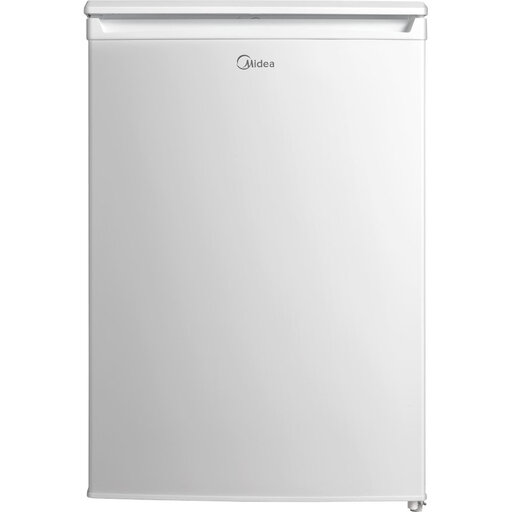
Why This Fits Their Persona: Its 84.5cm height and 55.3cm width make it suitable for smaller kitchens, rented homes, utility rooms or use as a second freezer.
The compact upright layout avoids the deep, difficult-to-reach base associated with some small chest freezers. Its reversible door also helps with tight layouts.
86-litre capacity, three transparent drawers, 39 dB noise level and E energy class.
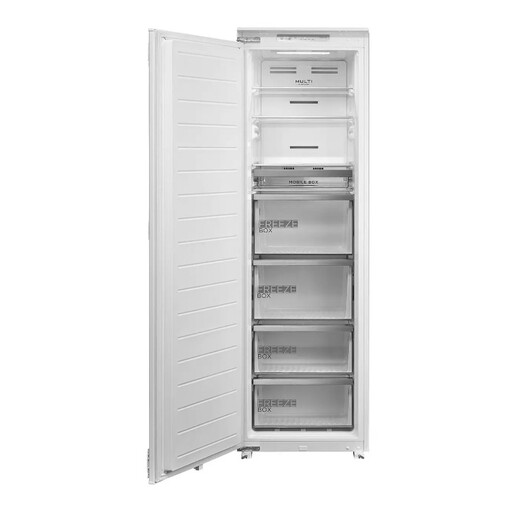
Why This Fits Their Persona: Designed for homeowners planning a seamless fitted kitchen, meal preparation and organised long-term storage.
Its Total No Frost specification addresses the maintenance burden of regular manual defrosting, while the integrated design requires careful cabinet planning rather than guesswork.
197-litre net capacity, Total No Frost, electronic controls, Super Freeze and transparent storage compartments.
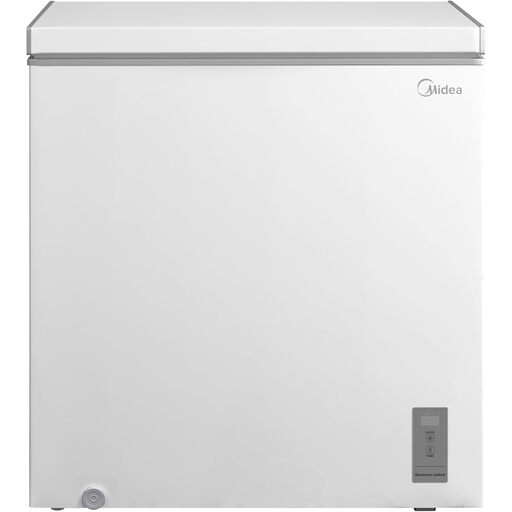
Why This Fits Their Persona: A practical choice for families, bulk buyers and households needing an appliance for a cold garage or outbuilding.
The stated -18°C ambient operating range helps address the risk of placing an unsuitable freezer in an unheated garage. Confirm the installation instructions before use.
198-litre capacity, freezer-to-fridge conversion, Fast Freeze, counterbalanced lid and removable basket.

Why This Fits Their Persona: Its large internal volume is suited to large families, serious bulk buying and storing seasonal produce in a utility room or outbuilding.
Its stated Winter Guard range, two storage baskets and lockable handle address common garage-storage and access concerns. Manual defrosting is still required.
297-litre capacity, operation down to -15°C, Super Freeze, LED controls and up to 40 hours of stated power-failure safe time.
We have compiled a complete, real-time list of products that fully satisfy these strict selection criteria and UK safety regulations.
Before switching on a new freezer:
Some are, but not all. Check the stated ambient operating range. Models such as the Midea MDRC284FZE01 and HISENSE FC386D4AWLE include low-temperature operating specifications, while a standard appliance may require a warmer indoor location.
They can be useful if you want to reduce manual defrosting. However, compare capacity, dimensions, noise and energy information as well as the frost-free feature. A manual-defrost freezer may suit buyers who prioritise a lower purchase price or simpler design.
Lifespan depends on construction, usage, installation, maintenance and operating conditions. Keeping the appliance level, allowing ventilation, avoiding unnecessary door or lid opening and removing ice from manual-defrost models can support reliable operation. Always follow the manufacturer’s care instructions rather than relying on a fixed lifespan estimate.