
24/7 Customer Support

Free returns

Same-day & Next-day Delivery

Quality Guaranteed

Unlock Your Welcome Offers: FREE Delivery | Up to 80% OFF | Free 30-day JoyPlus trial
Download the APP
A freezer can make batch cooking, supermarket bargains and busy family routines easier, but choosing the wrong model can create daily frustrations. A chest freezer may offer impressive capacity but become difficult to organise. An upright freezer can save floor space yet provide less room for bulky items. Meanwhile, attractive claims about energy efficiency, quiet operation or garage suitability do not always tell the full story.
This guide explains the practical specifications to check before buying freezers, with options for flats, family kitchens, utility rooms, garages and heavier domestic use.
A large litre figure does not automatically mean convenient storage. Chest freezers provide an open cavity that suits large joints of meat and bulk purchases, but smaller items can become difficult to find. Upright models usually offer drawers or shelves, making food easier to separate and access.
Always compare:
A 99L freezer with a useful basket and clear storage zones may be more practical than a larger but unstructured compartment.
Cold UK garages and outbuildings can fall below the operating range supported by a standard appliance. A product described as garage safe, winter safe or suitable for outbuildings should state its permitted ambient temperature range.
For example, the Midea chest freezer models listed below specify operation in ambient temperatures down to -18°C. Other appliances may have a narrower range. Check the manufacturer’s instructions before placing any freezer in an unheated space.
Also allow ventilation around the appliance, position it on a level surface and keep it away from damp conditions.
The UK energy label uses an A to G scale, with A representing a higher efficiency class than E. However, the label alone does not tell you the exact annual cost. Electricity tariffs vary and actual consumption depends on room temperature, usage, ventilation and how often the appliance is opened.
Where available, compare the stated annual energy consumption in kWh. Keep the freezer reasonably full without blocking airflow, remove heavy ice build-up from manual-defrost models and avoid placing it beside a radiator or cooker.
A chest freezer is suitable for bulk buyers, families and batch-cookers who need a wide storage cavity. Counter-balanced lids can make loading easier, while removable baskets help keep frequently used items near the top. You will need enough clear floor space to open the lid.
An upright freezer is often easier to organise and can fit into a narrow kitchen or utility-room gap. A tall freezer with transparent drawers allows you to see food categories quickly, although its internal shelves may limit the size of bulky packages.
For a compact kitchen, an under-counter freezer usually measures around worktop height. Check the exact dimensions rather than assuming every unit fits a standard cabinet opening. Freestanding models need ventilation clearance and should not be pushed tightly against surrounding units.
Use your available measurements as a starting point:
Measure width, depth and height, then check door or lid clearance, stair access and delivery routes. An integrated tall freezer also requires compatible cabinet dimensions and suitable door furniture.
A 4 star freezer is designed for long-term frozen-food storage at approximately -18°C or below when correctly operated. It does not remove the need to follow food-safety guidance or the appliance instructions.
Noise is measured in decibels, commonly shown as dB or dB(A). Models listed at 37–42 dB may suit open-plan homes, but perceived sound can vary according to flooring, walls and compressor cycling.
Manual-defrost appliances require periodic defrosting. Do not use sharp tools to remove ice and always unplug the appliance before cleaning or maintenance.

Why This Fits Their Persona: Its 545 mm width and 845 mm height suit smaller kitchens, rented flats and utility rooms where floor space is limited.
The stated 85L net capacity, reversible door and adjustable shelves make the compact format easier to plan around than an unstructured storage box.
39 dB noise level, 4-star freezing rating, white finish and a 2-year manufacturer warranty.
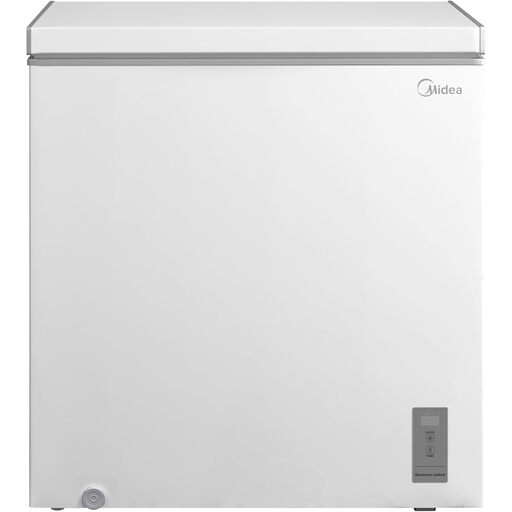
Why This Fits Their Persona: Families and households wanting flexible storage can switch between fridge and freezer modes, while the garage-safe specification supports suitable cold outbuildings.
Its stated -18°C ambient suitability addresses the risk of placing an unsuitable appliance in a cold garage. Confirm installation requirements before use.
198L capacity, 37 dB operation, fast freeze, counter-balanced lid and removable basket.
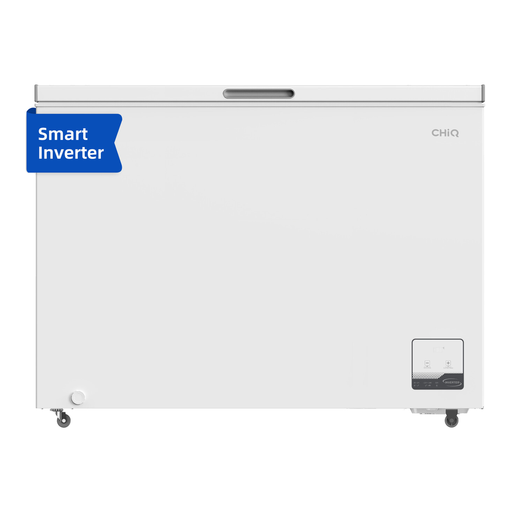
Why This Fits Their Persona: Its 299L cavity is suited to large households, serious bulk buying, batch cooking and small catering operations with sufficient floor space.
The 112.5 cm width is clearly stated, helping buyers check floor space before committing to a large chest freezer.
Digital controls, freezer-to-fridge conversion, -32°C ultra-low freezing function, LED light and counter-balanced lid.
We have compiled a complete, real-time list of products that fully satisfy these strict selection criteria and UK safety regulations.
Service life varies according to build quality, installation, usage and maintenance. Keep ventilation openings clear, avoid overloading, defrost manual models when ice builds up and follow the manufacturer’s care instructions. Warranty length is useful for support but does not guarantee a specific lifespan.
Not necessarily. Running costs depend on the appliance’s annual kWh figure, energy class, room temperature and usage. Compare the energy label and stated consumption for each model rather than choosing based on freezer type alone.
Only if the model’s operating range supports the temperatures in your garage. Look for a clearly stated garage-safe or winter-safe specification, leave the required ventilation clearance and protect the appliance from damp. Always follow the installation instructions supplied with the freezer.