Occasional bakers with little spare floor space
A small tabletop freezer may be enough for modest portions if you can give it a suitable position and accept limited storage and manual defrosting.


A tabletop freezer is worth considering for occasional, portioned biscuit dough if its limited storage is enough and it has a suitable place to stand. For regular batches, a freestanding undercounter freezer offers more storage without taking up worktop space; choose an integrated model only when the cabinet and installation requirements suit your kitchen. Measure the available space, including room for the door to open, before choosing a format.
A small tabletop freezer may be enough for modest portions if you can give it a suitable position and accept limited storage and manual defrosting.
An undercounter freezer is worth considering if you need room to separate dough portions and can accommodate the appliance beneath the worktop.
An integrated undercounter freezer suits a planned fitted-kitchen installation. It is a different fitting decision from placing a freestanding appliance in an open gap.
Consider it: For occasional dough portions when the smallest appliance footprint matters most.
Trade-off: A compact compartment limits how many containers fit at once; the cited LOGIK model needs manual defrosting.
Consider it: For repeated batches when you can spare an under-worktop position but want to keep the worktop clear.
Trade-off: It occupies more floor space than the cited tabletop examples, and defrost features differ by model.
Consider it: When you have compatible fitted cabinetry and want the freezer behind a furniture door.
Trade-off: Cabinet and door-system compatibility matter; Hotpoint describes integrated fitting as typically requiring a professional.
| Concern | What to check | Who this matters to |
|---|---|---|
| Appliance footprint | Measure height, width, depth and door-opening space at the intended position. | When the kitchen is crowded, I need a freezer that fits without sacrificing the space I use to prepare dough. Roughly 46% of consumers put the smallest workable footprint first. |
| Batch storage | Compare freezer volume with the size of your dough containers and check the compartment layout. | If I freeze dough regularly, I want room to keep several portions separate rather than squeeze them into one small compartment. For roughly 36% of consumers, batch storage comes first. |
| Maintenance and location | Check the exact model’s defrost method and permitted ambient-temperature range. | A freezer in an unheated space must be suitable for that location; for indoor use, defrosting effort may matter more. Roughly 18% of consumers prioritise maintenance or placement requirements. |
An undercounter freezer keeps the worktop free but still needs floor depth and space for its door. A tabletop model also needs enough room to open fully.
Measure the intended position in three dimensions, then check the exact model’s door-opening and installation measurements.
The listing states that the LOGIK LTF33W23 tabletop freezer is not designed for outbuildings or unheated areas. Beko and Hotpoint specify operation down to -15°C for particular freestanding undercounter models, not for every model in the format.
If the freezer will be outside a heated kitchen, confirm the permitted ambient-temperature range for the exact appliance.
An integrated freezer needs compatible cabinetry and a suitable furniture-door arrangement; it cannot simply replace a freestanding model in an open gap.
Check the cabinet opening, door system and installation instructions before choosing an integrated model.
Allow for the fitting work an integrated installation may require.
Its freestanding undercounter models provide a reference point for kitchens with an available under-worktop position.
Its cited range illustrates the choice between a freestanding undercounter position and an integrated cabinet installation.
The LTF33W23 is a tabletop reference for occasional dough portions where appliance size takes priority over storage volume.
These models address the under-worktop route for keeping preparation space clear. Compare the built-under model’s cabinet-fitting needs with the freestanding options, then check that the storage arrangement suits your dough containers.
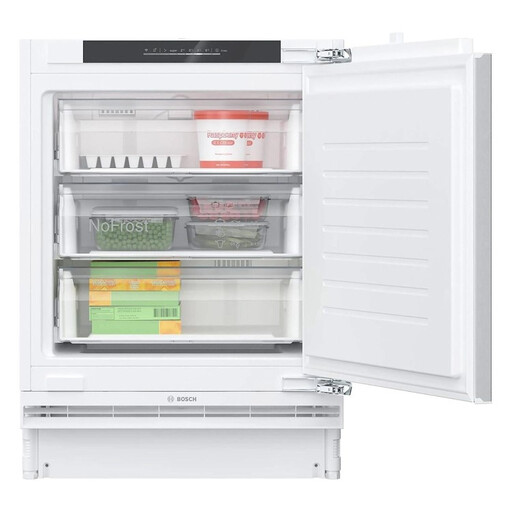 Image unavailable
Consider this built-under model if you have a suitable cabinet position and want to keep the worktop clear.
The product name specifies No Frost. Confirm the cabinet opening, ventilation and furniture-door requirements against the installation instructions before choosing it.
 Image unavailable
This freestanding undercounter option suits a kitchen with an open position beneath the worktop and a need for freezer storage there.
The product name states 85 L and 55 cm. Check its fitting clearances and permitted ambient-temperature range for your intended location.
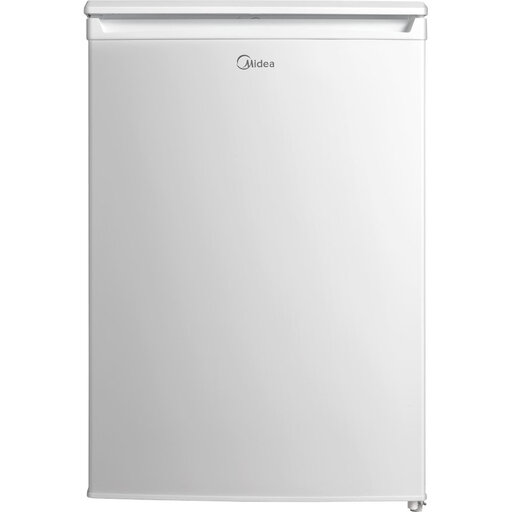 Image unavailable
Consider this freestanding undercounter model if you want to leave the worktop free and have an appropriate position below it.
Confirm the exact model’s usable capacity against your dough containers before buying, along with the space needed for fitting and ventilation.
It can be enough for occasional, portioned batches if your containers fit. The LOGIK LTF33W23 tabletop model is listed at 33 litres; compare your container sizes and the number of batches you plan to store before deciding.
Not every tabletop freezer can. The listing states that the LOGIK LTF33W23 is not designed for outbuildings or unheated areas, so check the permitted ambient-temperature range of any model intended for a garage.
No particular defrost method is required simply because you are storing biscuit dough. Manual defrost may be acceptable if you can manage the maintenance; compare the exact model’s defrost feature rather than assuming it comes with a tabletop or undercounter format.