Small-kitchen herb preservers
If you freeze labelled herb portions in a tight kitchen, prioritise accessible storage, appliance dimensions and enough clearance to open the door. Compact under-counter models differ from larger upright formats.


For occasional portions of chopped herbs, start by assessing the freezer compartment you already have or a compact under-counter freezer. If herbs share space with regular batch cooking, an upright freezer offers drawer-based organisation; a chest freezer makes more sense for larger stores, while an integrated model requires a matching cabinet and door system. Check usable capacity, access, energy information and the stated operating conditions before choosing.
The amount of food stored alongside the herbs—and where the appliance will stand—matters more than herb portions alone.
If you freeze labelled herb portions in a tight kitchen, prioritise accessible storage, appliance dimensions and enough clearance to open the door. Compact under-counter models differ from larger upright formats.
If herbs share freezer space with prepared meals or vegetables, compare compartment layouts and capacity for all the food you intend to store. Bosch lists flexible storage on selected models, but the arrangement depends on the exact appliance.
If the freezer will stand outside a heated kitchen, check the exact model’s stated ambient operating range. Beko limits its low-temperature FreezerGuard claims to selected appliances, not every freezer in its range.
Choose the storage format around how often you retrieve small portions, then check whether the appliance fits its intended location.
Choose it when: Herbs are a small part of your frozen food and kitchen space is limited.
Trade-off: Check that its compartments also accommodate the other food you plan to freeze.
Choose it when: You regularly freeze herbs alongside meals or other portions and want drawer-based access.
Trade-off: It needs sufficient height and may provide more capacity than herb-only storage warrants.
Choose it when: Herbs are part of a larger stock of frozen food or a bulk harvest.
Trade-off: Small portions need a planned place near the top so they are not buried.
Choose it when: You have a suitable kitchen housing and want the freezer behind a furniture door.
Trade-off: The cabinet opening, ventilation and hinge arrangement must match the chosen model.
| Concern | What to check | Who this matters to |
|---|---|---|
| Finding small portions | Check drawer or shelf layout and whether your labelled containers will remain easy to reach. | I want to find the right herbs without moving larger packs each time. Around 40% of consumers would put access to small portions first. |
| Fit and capacity | Measure the intended space and door clearance; compare litre capacity with everything else you freeze. | A compact kitchen leaves little room, but I still need space for my usual frozen food. For around 30% of consumers, fitting sufficient capacity into the available space would be the primary concern. |
| Upkeep and energy use | Compare energy information for similarly sized appliances and check the model’s defrosting method. | I would rather know how much electricity the freezer uses and whether I will need to defrost it manually. That would come first for around 20% of consumers. |
| Outbuilding use | Check the exact model’s ambient operating range and installation instructions for the intended location. | My garage can get cold, so I need a freezer specified for that environment. Around 10% of consumers would make suitable outbuilding operation their main priority. |
Small bags of chopped herbs can be difficult to retrieve when stored beneath larger items.
Reserve an accessible basket or labelled container for herbs, or consider a drawer-based freezer if you take out small portions frequently.
Beko’s stated low-ambient capability applies to selected FreezerGuard models; freezer format or brand alone does not establish suitability.
Compare the exact appliance’s stated ambient range with the conditions in its intended location before installation.
A similar-looking appliance may not fit the existing housing or furniture-door hinges.
Measure the cabinet opening and check ventilation and hinge requirements against the installation instructions.
An incompatible fit can also mean adjusting cabinetry or changing the installation plan.
An energy class alone does not tell you how the electricity use of differently sized freezers compares. Energy Saving Trust advises using the label’s energy and performance information.
Compare appliances that meet a similar storage need, then read their energy information alongside capacity and noise details.
Capacity you will not use still forms part of an appliance that runs continuously.
These ranges illustrate features worth checking on individual models, not features shared by every appliance from a brand.
Beko offers under-counter, tall and chest freezers, including selected freestanding FreezerGuard models aimed at low-ambient locations.
Bosch is relevant when comparing freestanding storage with an integrated freezer designed for a particular kitchen housing.
Hotpoint lists frost-free upright, chest, freestanding and built-in freezer options for comparing formats.
These Joybuy options span built-in storage for compatible kitchens, a compact freestanding freezer and a chest freezer for larger quantities. Choose by the space you have and what you store alongside chopped herbs.
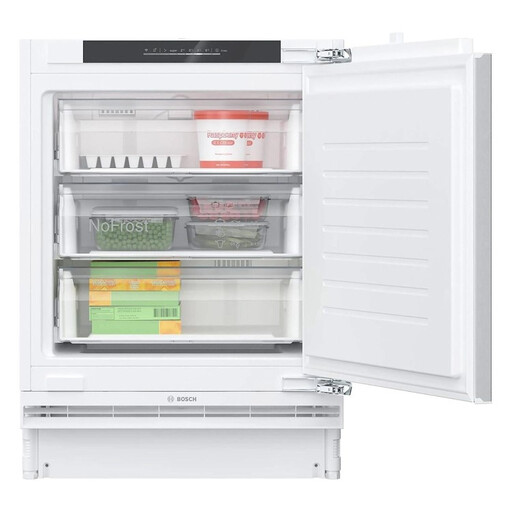 No image available
Consider this built-under model when you have a suitable kitchen opening and want freezer storage behind a furniture door.
The product name specifies NoFrost and energy class E. Check the cabinet opening, ventilation and furniture-door arrangement against the installation instructions; use the energy label when comparing electricity use.
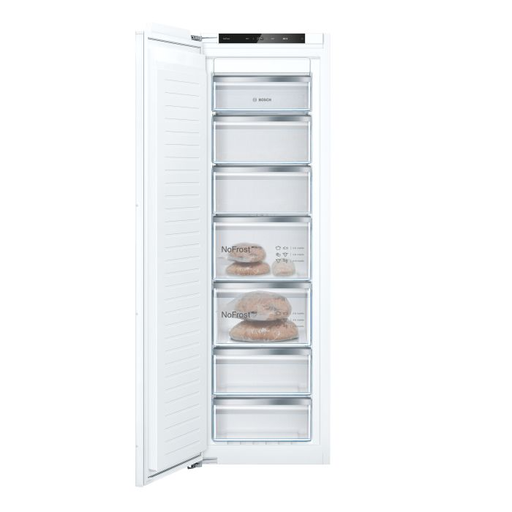 No image available
Consider its larger capacity if chopped herbs share space with regular batches of other frozen food and you have compatible tall housing.
Bosch lists 212 litres of frozen-compartment volume and NoFrost for this model. The product name specifies a fixed hinge and energy class E; confirm the housing and door arrangement against its installation instructions.
 No image available
This is an integrated format to consider when an existing kitchen cabinet calls for a three-quarter-height freezer.
Confirm the installation dimensions, ventilation and furniture-door hinge requirements before treating it as a replacement for another built-in model.
 No image available
Consider this freestanding under-counter format when herbs and other small frozen items need a compact place in the kitchen.
The product name specifies 85 L, 55 cm and energy class E. Check its full dimensions and internal arrangement for your containers, and confirm the defrosting method before choosing it.
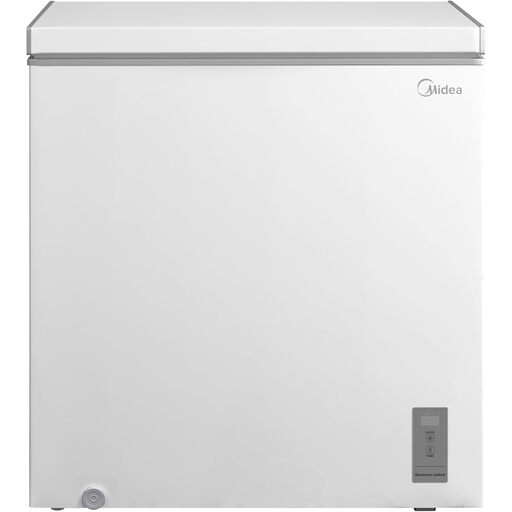 No image available
Consider this chest format when chopped herbs are part of a larger quantity of food to freeze; keep small portions in clearly labelled, accessible containers.
The product name specifies 198 L and energy class E. If you intend to use it in an outbuilding, check the model’s ambient operating range in its installation documentation rather than assuming the location is suitable.
Not necessarily: if the freezer compartment you already have accommodates your herb portions and other food, a separate appliance may add more capacity than you need. If space is tight, compare compact models by their usable layout and dimensions before considering a larger format.
No, frost-free operation is a maintenance feature rather than a requirement for herb portions. Hotpoint describes its frost-free technology as preventing ice build-up; check whether the particular freezer you are considering includes it and compare its other relevant features.
No: suitability depends on the exact appliance’s stated ambient operating conditions. Beko says its selected FreezerGuard models can operate at low ambient temperatures, with its CF4308 chest freezer specified down to -15°C; check the instructions for any model and location you are considering.
Match the new appliance to the cabinet opening, ventilation requirements and furniture-door hinge arrangement. Bosch’s GIN81VEE0G is a flat-hinge built-in model, which illustrates why matching the format alone is not enough to establish compatibility.
Compare the label information alongside capacity for models that meet a similar storage need. Energy Saving Trust explains that appliance ratings run from A to G and that labels provide information on energy use, noise and performance; an energy class by itself does not describe the whole appliance.