
24/7 Customer Support

Free returns

Same-day & Next-day Delivery

Quality Guaranteed

Unlock Your Welcome Offers: FREE Delivery | Up to 80% OFF | Free 30-day JoyPlus trial
Download the APP
A French press coffee maker can produce full-bodied coffee without pods, paper filters or complicated machinery. Yet choosing the wrong size or material can quickly turn an enjoyable manual coffee brewing routine into a frustrating daily task.
Before buying, look beyond polished product photos and phrases such as “premium quality”. Three common traps deserve particular attention:
A 1 litre French press is generally suitable for sharing at home, serving several smaller cups or preparing coffee for an office kitchen. Check the manufacturer’s cup measurement rather than relying on the number in the product title.
For one person, a small French press around 350ml may reduce waste and avoid leaving brewed coffee standing. For couples or households with different preferences, a 1-litre model offers more flexibility, although it takes up more cupboard space.
A glass French press made with heat-resistant borosilicate glass allows you to monitor steeping and coffee colour. Glass does not provide the same insulation as a double-wall design, and it should be checked regularly for chips or cracks.
A stainless steel French press is more resistant to breakage and is practical for busy kitchens, offices and travel. The Bodum COLUMBIA, for example, uses double-wall stainless steel construction and is specified to keep coffee hot for up to two hours. Treat this as a design feature rather than a guarantee of a particular drinking temperature, as room temperature and starting water temperature also affect heat loss.
Most cafetieres use a metal mesh plunger, meaning there is no need for paper filters or plastic capsules. This leaves more natural coffee oils in the drink, but some fine sediment may remain.
Use coarse-ground coffee. Fine grounds can clog the mesh and make plunging difficult. A typical French press process is:
A French press and a stovetop moka pot, sometimes called an Italian coffee maker, create noticeably different drinks. A French press uses immersion brewing for a fuller, softer cup, while a moka pot uses hob pressure to create concentrated coffee suitable for serving in smaller amounts.
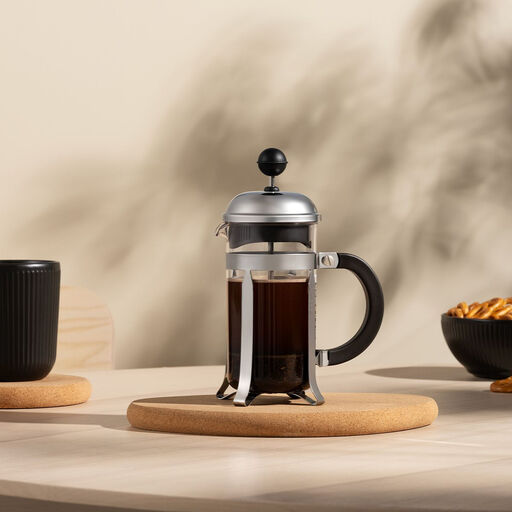
Why This Fits Their Persona: Its 350ml capacity suits solo drinkers, smaller kitchens and anyone who wants to brew one serving without regularly storing leftover coffee.
The clearly stated 350ml size avoids the common mistake of buying a large cafetiere for a single coffee routine.
Heat-resistant borosilicate glass, stainless steel plunger and dishwasher-safe components are specified.
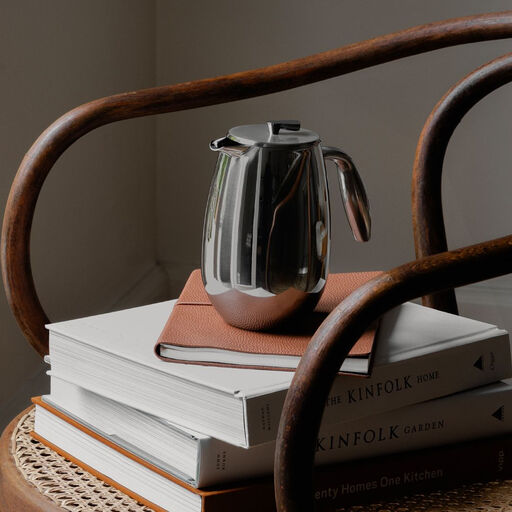
Why This Fits Their Persona: It is designed for drinkers who value heat retention, a metal exterior and a substantial 1-litre capacity for home or office use.
Its double-wall stainless steel specification addresses the assumption that every French press cools at the same rate as a glass model.
Double-wall stainless steel body; silicone and mesh plunger; listed as dishwasher safe.
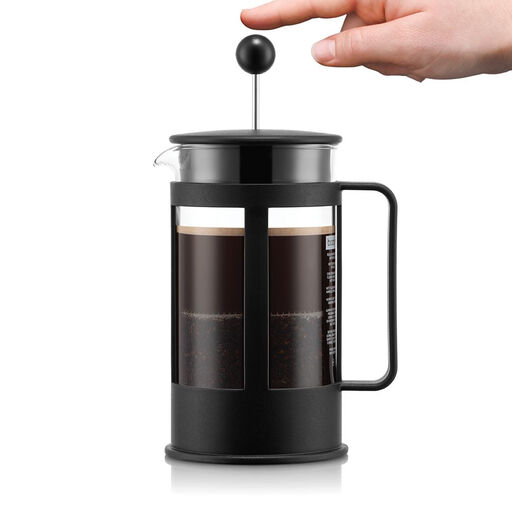
Why This Fits Their Persona: The 1-litre format works for households, shared workspaces and regular drinkers who prepare several small cups at once.
The product information states both 1 litre and 8 European cups, making the serving calculation more transparent.
Borosilicate glass carafe; reusable stainless steel three-part mesh filter; several components are dishwasher safe.
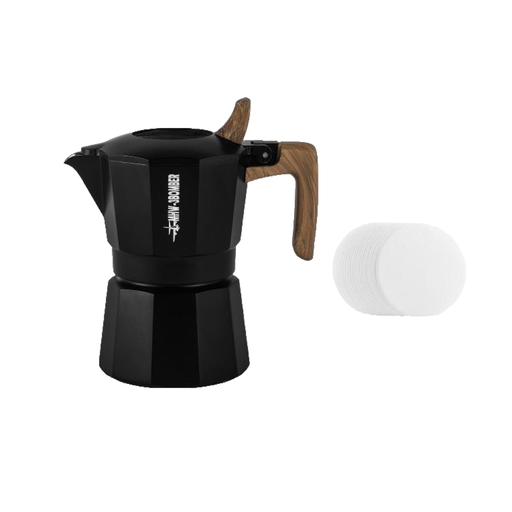
Why This Fits Their Persona: Campers and travellers wanting concentrated Italian-style coffee may prefer a compact 100ml or 180ml hob-top brewer instead of carrying a large glass cafetiere.
Its stated capacities and compact dimensions help avoid buying a bulky brewer for single or double servings. It also requires hand washing, which should be planned for outdoor use.
Aluminium alloy, ABS and silicone construction; dual-valve design; listed for gas, electric and compatible induction hobs.
Choose a French press if you want a straightforward immersion method, a larger batch and coffee with noticeable body. It is also a practical choice for environmentally conscious households because the metal filter is reusable and does not require capsules.
Choose a moka pot if you prefer concentrated coffee, smaller servings and hob-top brewing. Check your hob before ordering, particularly with induction models. The MHW-3BOMBER pot must not be used in a microwave or oven, should not be filled above the safety valve and needs to be handled with oven gloves.
For a broader selection of durable metal designs, browse the stainless steel cafetieres category.
We have compiled a complete, real-time list of products that fully satisfy these strict selection criteria and UK safety regulations.
A practical starting point is one rounded teaspoon per small cup, using coarse-ground coffee. Adjust the quantity to taste, but avoid fine grounds because they can pass through or clog the mesh filter.
Service life depends on handling, cleaning and replacement parts. Stainless steel frames can tolerate everyday use, while glass carafes need protection from knocks and sudden temperature changes. Stop using any cafetiere with cracked or chipped glass, and check seals and mesh components periodically.
The running cost depends mainly on the coffee you buy and the amount of hot water used. A French press does not require capsules or disposable paper filters, so it can reduce consumable waste. Its manual design also avoids dedicated pods, although you still need an appropriate kettle or hob and regular cleaning.