Lunch builders
You want pasta as the base of a lunch to which you can add vegetables and a protein food. Plain pasta gives you control over those additions and the sauce.


Choose plain chilled fresh pasta if you want to decide which vegetables, sauce and protein food go into your lunch. With filled pasta, check the filling, nutrition panel and allergens on the exact pack. If fibre is your priority, compare labels with wholewheat dried pasta; the NHS recommends choosing higher-fibre or wholegrain varieties.
You want pasta as the base of a lunch to which you can add vegetables and a protein food. Plain pasta gives you control over those additions and the sauce.
You want to know how long a chilled pasta takes to cook and whether you can use the pack within its storage and date instructions. Tesco’s fresh egg linguine, for example, lists different cooking times from chilled and frozen.
You need to distinguish plain egg pasta from filled or free-from products. Check the specific pack for ingredients and allergens rather than relying on the name of a range.
Start with the lunch you intend to make, then check the pasta’s ingredients, cooking instructions and storage requirements.
| Concern | What to check | Who this matters to |
|---|---|---|
| Lunch composition | Choose a plain shape if you want to add your own sauce, vegetables and protein food. Check the amount you plan to serve. | If I want to choose the vegetables and protein food myself, plain pasta leaves room for those additions; about 38% of consumers put lunch composition first. |
| Preparation and storage | Read the cooking instructions for chilled or frozen pasta, along with the use-by date and opened-pack directions. | When lunch has to fit a short break, I need a pack I can cook and use within its date instructions; about 37% of consumers make preparation and storage their main concern. |
| Dietary fit | Read the exact pack’s ingredients and allergen declaration. If fibre matters to you, compare figures stated on the same per-100g basis. | If I avoid an ingredient or want to compare fibre, the exact product matters more than the word ‘fresh’; about 25% of consumers put dietary fit first. |
Fresh describes the format, not its fibre content or the composition of the finished lunch. The NHS recommends higher-fibre or wholegrain pasta varieties.
Compare the ingredients and nutrition panels if fibre is a priority. Decide separately what sauce, vegetables and protein food you will add.
Tesco’s cited fresh penne contains wheat and egg, while fillings and alternative recipes can bring different ingredients. A range label cannot establish suitability for every product in it.
For an allergy or strict dietary requirement, check the ingredient and allergen declaration on the exact pack before buying and preparing it.
Fresh pasta needs the storage and use-by instructions on its pack followed; opened-pack directions can differ between products.
Plan how many lunches you will make, check the date and freeze the pasta only if that pack permits it.
A pack that cannot be used within its stated time limits may go to waste.
Per-100g values, serving figures and cooked-weight figures describe different amounts. Pack sizes also vary between plain and filled pasta.
Compare products using the same stated basis, then consider the amount of pasta, sauce and sides you expect to eat.
Tesco’s chilled fresh egg pasta includes plain shapes for lunches where you choose the sauce and additions.
Sainsbury's lists plain fresh egg pasta alongside filled and free-from options.
M&S lists unfilled fresh pasta, filled pasta and plant-based or Made Without options.
Barilla’s wholewheat dried pasta is an alternative when choosing wholegrain pasta matters more than buying fresh.
Dolmio is a sauce option to consider alongside plain pasta, rather than a fresh-pasta range.
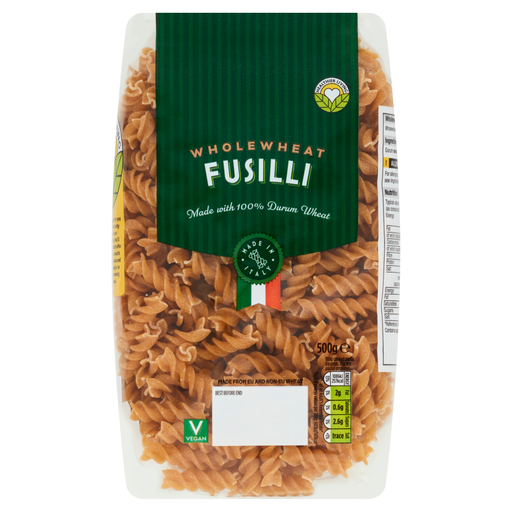
This wholewheat dried fusilli is for shoppers considering an alternative to chilled fresh pasta. It is not a filled or quick-cooking fresh-pasta selection.
 No image available
Consider this dried pasta if you want to compare a wholewheat base with chilled fresh pasta and add your own sauce and sides. Check the current pack’s cooking instructions and per-100g nutrition figures before comparing it with another product.
No. Freshness does not tell you the pasta’s fibre content or what else is in the meal. Check the pasta and sauce, then decide which vegetables and protein food to serve with them; the NHS also recommends choosing higher-fibre or wholegrain starchy foods.
Check the current ingredient and allergen information for the exact product. Tesco’s cited fresh penne contains wheat and egg, and a filled or free-from product may have a different recipe; its range name is not a substitute for the pack declaration.
Freeze it only if the particular pack permits this, and follow its date and preparation directions. For example, M&S instructs shoppers to freeze its cited fresh spaghetti by the date mark and use it within one month.
Follow the opened-pack instruction and use-by date on the product you bought. M&S says to eat its cited fresh spaghetti within three days of opening; do not assume the same period applies to another pasta.