
24/7 Customer Support

Free returns

Same-day & Next-day Delivery

Quality Guaranteed

Unlock Your Welcome Offers: FREE Delivery | Up to 80% OFF | Free 30-day JoyPlus trial
Download the APP
Choosing a freshwater fishing rod can look straightforward until you compare rod length, materials, sections and intended species. Marketing language often makes similar-looking products appear suitable for every situation, yet a rod designed for light lure work may feel unsuitable when casting heavier tackle or fishing in exposed coastal conditions.
This guide highlights the practical details UK anglers should check before buying, whether you are looking for a freshwater lure rod, a sea bass fishing rod, a sea bream fishing rod or a versatile saltwater fishing rod.
A rod labelled for both freshwater and saltwater fishing may offer useful versatility, but this does not automatically mean it is suitable for every lure, line or target species. Bass fishing from the shore, bream fishing from a boat and lure fishing in a small lake can require different handling characteristics.
Before purchasing, check the product listing for:
If these details are missing, contact the seller before ordering rather than relying on the product title alone.
A carbon fishing rod may be promoted as lightweight or responsive, but the word “carbon” alone does not tell you how the rod will perform. Construction, taper, guides, reel-seat design and intended line rating also affect how it handles.
A lightweight rod can be convenient for long sessions, but it may not be the appropriate choice for heavy rigs, strong currents or larger fish. Treat the material as one part of the specification, not as a complete performance guarantee.
A one-piece rod may offer a continuous blank, but it can be inconvenient to carry on UK public transport or store at home. A two-piece fishing rod separates for easier transport, although you should check the joint regularly and assemble it correctly before casting.
Never force the sections together or twist them aggressively. After use, particularly near salt water, rinse accessible areas with fresh water and allow the rod to dry before storage.
Length affects casting reach, control and portability. Longer rods can be useful when fishing from a beach, pier or open bank, while shorter options may be easier to manoeuvre around vegetation, narrow swims or small boats.
For a general-purpose freshwater setup, consider where you fish most often rather than choosing based only on maximum length. A rod that is awkward to carry or use in your regular swim may provide less practical value than a more compact design.
Action describes how much of the rod bends under load. A faster action generally bends closer to the tip, while a slower action distributes the bend further down the blank. Power refers to the rod’s resistance to bending, such as light, medium or heavy.
The lure or casting rating is especially important. Use lures within the stated range where possible. A lure that is too heavy can place unnecessary strain on the rod during casting, while a lure that is too light may be difficult to cast accurately.
For a freshwater lure rod, match the rating to your usual soft plastics, plugs or spinners. For a sea bass fishing rod or sea bream fishing rod, consider the additional weight of leads, rigs and baited setups.
A two-piece design is useful for transport, but inspect the ferrule joint for cracks, looseness or unusual movement. Guides should be aligned and free from visible damage, as a rough or chipped guide can affect the line.
For any rod used as a saltwater fishing rod, maintenance is essential. Rinse the rod after coastal use, wipe it with a soft cloth and store it in a dry place. Avoid assuming that a rod described as suitable for saltwater is maintenance-free.
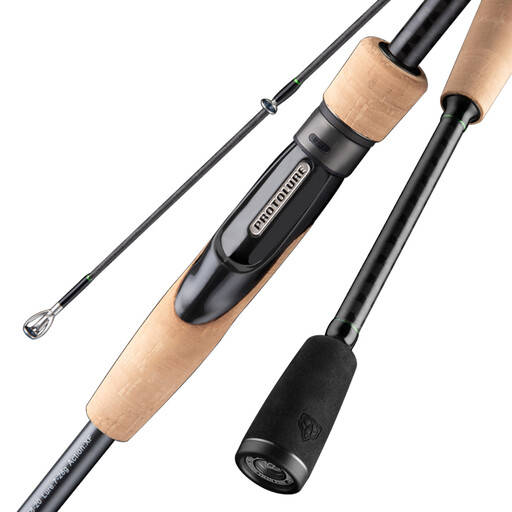
Why This Fits Their Persona: The product title identifies it as a two-section rod for both freshwater and saltwater fishing, making it a practical starting point for anglers exploring different venues.
Its listed two-section construction addresses the transport problem. Check the lure rating and rod length before buying to confirm it matches your regular tackle.
Two-section format; product title specifies freshwater and saltwater use.
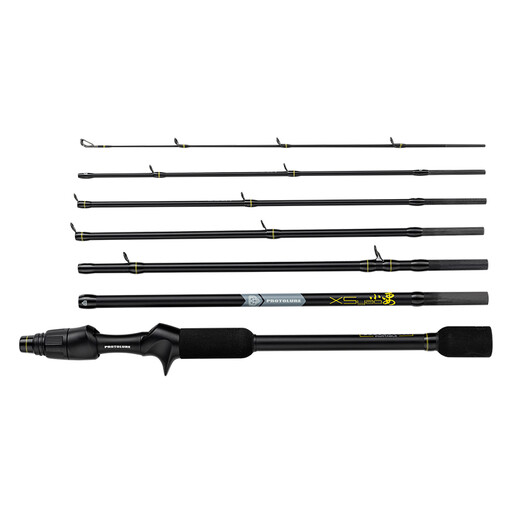
Why This Fits Their Persona: Anglers prioritising a carbon construction may prefer a rod specifically titled for bass and freshwater lure fishing rather than a general-purpose model.
It avoids relying on a vague all-purpose label by identifying carbon construction and freshwater lure use. Confirm the blank specification and lure range on the product page.
Carbon construction is specified; intended for bass and freshwater lure fishing.
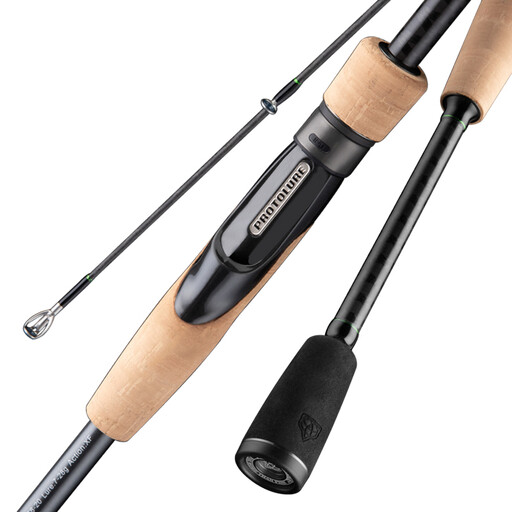
Why This Fits Their Persona: This option is aimed at anglers who want a rod identified for sea bream fishing while retaining freshwater and saltwater versatility.
The stated two-piece design helps with storage and transport, while the named use case makes comparison easier. Check whether its casting range suits your intended rigs.
Two-piece construction; product title identifies sea bream, freshwater and saltwater suitability.
We have compiled a complete, real-time list of products that fully satisfy these strict selection criteria and UK safety regulations.
There is no single suitable length for every angler. Consider your fishing location, transport needs and target species first. A shorter rod can be easier around overgrown banks, while a longer model may help with casting distance in open areas. Always compare the stated rod length with your storage space and intended tackle.
Only if the product is specifically listed as suitable for saltwater use. Even then, rinse it with fresh water after every coastal session and dry it before storage. Salt residue can affect guides, joints and reel fittings over time.