People storing cooked leftovers
If cooked beetroot shares a fridge with raw ingredients, you need space for a covered container away from possible raw-food drips, as well as a fridge you can keep at the right temperature.


You do not need a specialist fridge for cooked beetroot if your existing fridge stays between 0°C and 5°C and has room for a covered container without restricting airflow. If you need another appliance, choose its size and format around your containers and kitchen space, then compare annual energy use as well as capacity.
If cooked beetroot shares a fridge with raw ingredients, you need space for a covered container away from possible raw-food drips, as well as a fridge you can keep at the right temperature.
A compact fridge has to accommodate your usual lidded tubs or bowls without being packed so tightly that air cannot circulate. Internal shelf spacing matters alongside the appliance’s outside dimensions.
Preparing several portions at once increases the need for usable chilled space. If you plan to keep portions beyond the usual leftover period, freezer space may also affect which appliance format you choose.
Check whether your current fridge can hold the right temperature and fit a covered container before replacing it. If it cannot, decide how much chilled and frozen space you need, then check whether a freestanding or integrated appliance fits your kitchen.
| Concern | What to check | Who this matters to |
|---|---|---|
| Safe chilling | Check the fridge temperature with a thermometer: Food Standards Scotland advises 0°C to 5°C. Leave room for air to circulate. | If I store cooked beetroot alongside other food, I want to know it stays properly chilled rather than trusting a numbered dial. Around 40% of consumers put safe chilling first. |
| Container space | Measure your lidded containers and check the exact model’s internal shelf clearance and adjustable-shelf layout. | When kitchen space is tight, my covered tubs still need to fit without crowding the fridge. For around 30% of consumers, usable container space is the primary concern. |
| Kitchen fit and energy use | Check placement or cabinet-niche requirements, then compare capacity and annual kWh for appliances of a similar type. | If I batch-cook, I need an appliance that fits my kitchen without choosing more capacity than I will use. Kitchen fit and ongoing electricity use come first for around 30% of consumers. |
Fresh-produce features do not replace the rules for cooked food. Food Standards Scotland advises eating leftovers within two days.
Cool cooked beetroot promptly, store it covered in a fridge kept between 0°C and 5°C, and note when it was cooked.
Headline capacity cannot tell you whether your lidded container fits between the shelves. Crowding the interior also restricts airflow.
Measure the containers you use and compare them with the exact model’s shelf arrangement and usable internal space.
An A-to-G energy class does not, by itself, show how much electricity a particular appliance uses. The Energy Saving Trust advises considering energy-use information alongside the rating.
Compare annual kWh and capacity between appliances of a similar type, and choose storage volume that suits your household.
A larger-than-needed appliance can add to electricity use over its lifetime.
An integrated appliance must work with the existing cabinet space and door arrangement; its overall height alone does not establish that it will fit.
Check the exact model’s required niche dimensions, hinge arrangement and installation instructions against your kitchen before ordering.
A reference point for compact freestanding refrigeration, including the UR4584 under-counter model.
Relevant when comparing freestanding and built-in formats or considering fresh-food storage compartments.
Relevant to shoppers also considering dedicated conditions for fresh fruit and vegetables.
A reference point for fitted kitchens where an integrated fridge-freezer is being considered.
These options cover freestanding fridges and fridge-freezers as well as integrated fridge-freezers. For cooked beetroot, check temperature with a fridge thermometer and compare each appliance’s actual shelf space with your covered containers; an integrated model also needs a compatible kitchen niche.
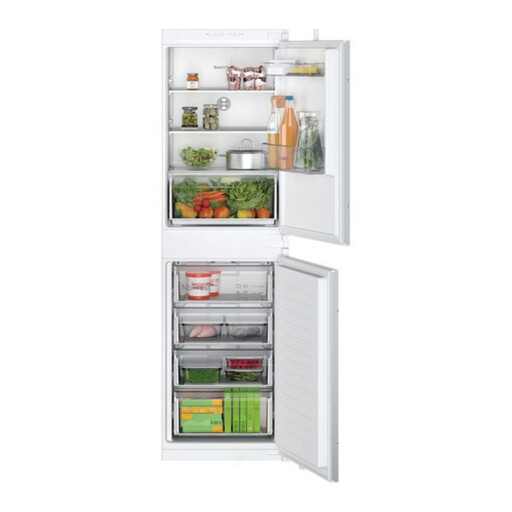 No image available
Consider this model for chilled containers and frozen portions if your fitted kitchen can accommodate it.
The product name specifies a 249 L capacity, frost-free design, sliding hinge and E energy class. Confirm the required niche and shelf clearance for your containers before ordering.
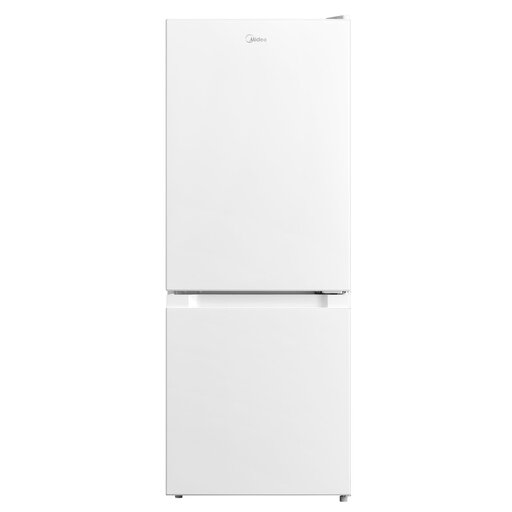 No image available
This freestanding format is worth considering when you need both chilled and frozen storage but have limited height.
The product name gives a 123 cm height and E energy class. Measure the full placement area and check internal shelf clearance against your covered tubs.
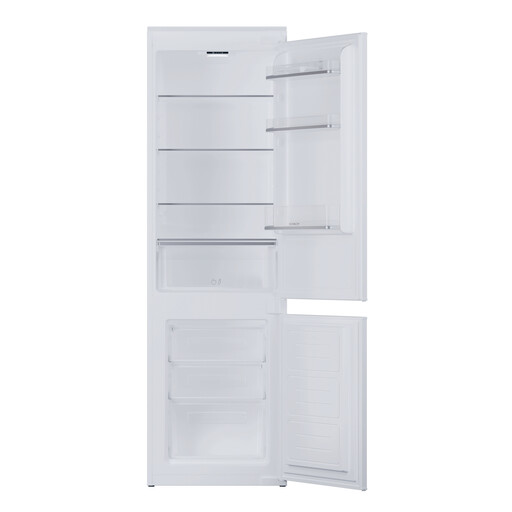 No image available
Consider this model if a compatible fitted-kitchen space is available and you want both chilled and frozen storage.
The product name specifies 262 L total capacity, a 70/30 split, low-frost design and E energy class. Check the niche, door fitting and internal shelf spacing for your containers.
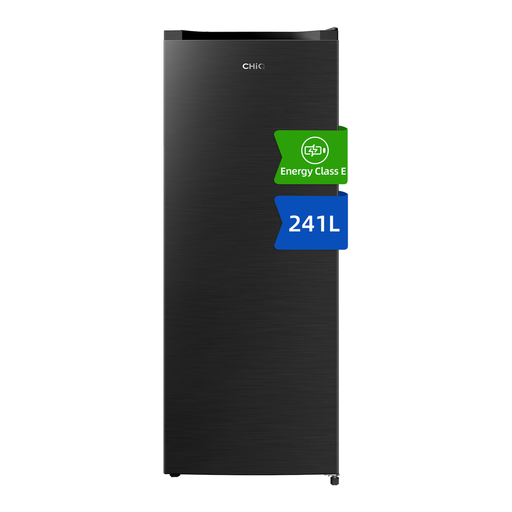 No image available
A larder fridge suits a household seeking chilled space without adding a freezer section for portions.
The product name specifies a 54 cm width, 1.44 m height and E energy class. Check the full installation space and whether your covered containers fit the interior.
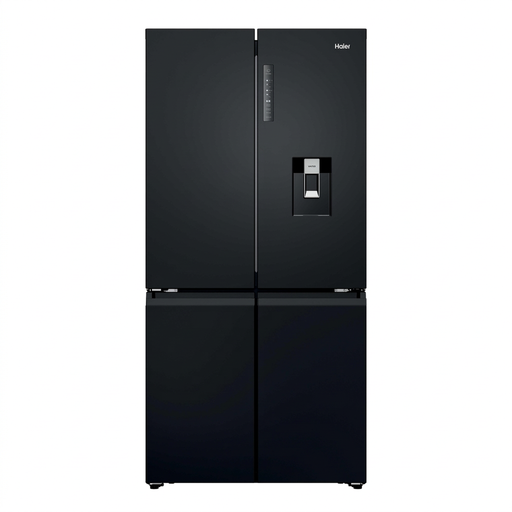 No image available
Consider this freestanding format if regular batch cooking calls for substantial chilled and frozen storage and your kitchen has enough space.
The product name specifies 649 L total capacity. Check doorway access, placement clearances and container fit, and compare annual energy use with appliances of a similar type and size.
Keep the fridge between 0°C and 5°C, as Food Standards Scotland advises, and check it regularly with a thermometer. A numbered dial does not necessarily show the temperature in Celsius.
Food Standards Scotland advises eating leftovers within two days. Cool cooked beetroot promptly before refrigerating it rather than leaving it at room temperature for more than 1–2 hours.
No special drawer is necessary: store cooled beetroot in a covered container where it stays chilled and protected from raw-food drips. Features intended for fresh produce do not extend the usual storage period for cooked leftovers.
Freezing is an option for cooked-beetroot portions you do not plan to eat within two days. Food Standards Scotland advises defrosting food in the fridge; freezing pauses bacterial growth rather than killing all bacteria.
Compare annual energy consumption alongside capacity and the A-to-G energy class, preferably between appliances of a similar type. The Energy Saving Trust also identifies noise information as useful when comparing appliance labels.