Households with occasional leftovers
If you cook pasta occasionally, look for room for one or two covered containers and check that the fridge stays within the 0°C–5°C range advised by Food Standards Scotland.


Choose a fridge or fridge-freezer that can maintain 0°C–5°C, has accessible chilled space for covered portions and fits your kitchen. GOV.UK advises chilling cooked leftovers promptly and eating them within two days or freezing them; extra capacity or a freshness drawer does not replace those steps.
If you cook pasta occasionally, look for room for one or two covered containers and check that the fridge stays within the 0°C–5°C range advised by Food Standards Scotland.
Several portions need accessible shelf space. Adjustable shelves can help accommodate containers, while a freezer gives you somewhere to put portions you will not eat within the two-day period advised by GOV.UK.
Before choosing chilled capacity, check the cabinet opening, hinge arrangement and appliance dimensions. Integrated fridge-freezers with similar-looking fronts are not necessarily interchangeable.
Start with safe chilling and the space your containers occupy, then choose a freestanding or integrated appliance that fits. Compare running and maintenance features among models that meet those needs.
| Concern | What to check | Who this matters to |
|---|---|---|
| Safe chilling and storage time | Check that the fridge can maintain 0°C–5°C and leave room to check its temperature with a thermometer. Consider a freezer if portions will not be eaten within two days. | If I keep cooked pasta for later, I need to know it is chilled promptly and kept at the right temperature. Around 36% of consumers put safe chilling and storage time first. |
| Usable chilled space | Compare fresh-food volume separately from total volume, and check shelf adjustment and clearance against your usual containers. | When I divide a large batch into portions, I need the containers to fit without crowding the fridge. For around 29% of consumers, usable chilled space is the primary concern. |
| Kitchen and cabinet fit | Measure the installation space and delivery route. For an integrated model, check the cabinet opening and hinge type as well. | If I am replacing a fitted appliance, the new fridge must work with my cabinet and door arrangement. Kitchen fit comes first for around 21% of consumers. |
| Energy and maintenance | Compare the individual model’s energy information and check whether its freezer requires manual defrosting. | Once a fridge meets my storage and fit needs, I want to weigh its running requirements against freezer upkeep. Around 14% of consumers make these their main priority. |
A dial setting is not necessarily a reading in °C. Food Standards Scotland advises keeping the fridge between 0°C and 5°C and checking it with a thermometer.
Check the actual temperature after installation and regularly during use, particularly after a power interruption or a change in how full the fridge is.
Total capacity includes freezer space. Beko lists 271L total volume but 193L fresh-food volume for its BCSM473, making the chilled figure more useful when planning space for pasta containers.
Compare fresh-food volume and check whether the shelves leave enough clearance for the containers you use.
Bosch specifies a flat hinge for the KIN86VFE0G, while Beko specifies sliding hinges for the BCSM473. Similar appliance dimensions do not make those installations interchangeable.
Record the cabinet opening, existing hinge arrangement, appliance dimensions and delivery access before ordering.
A mismatch can mean additional cabinet or installation work.
A larger cabinet or a no-frost freezer cannot compensate for leaving cooked food out too long. GOV.UK advises refrigerating cooled leftovers within one to two hours and eating them within two days or freezing them.
Plan how you will portion and chill a batch before choosing convenience features.
Bosch is relevant when comparing integrated fridge-freezers with clearly specified dimensions and separate chilled and frozen volumes.
Beko is relevant to fitted-kitchen buyers checking fresh-food space and shelving on individual integrated models.
Samsung lists several fridge-freezer formats, including larger French-door and side-by-side appliances.
These integrated and freestanding appliances offer different ways to accommodate chilled leftovers. Compare their installation requirements and container space, and check that your chosen fridge can maintain 0°C–5°C.
 No image available
Consider this for chilled containers and a freezer option in a fitted kitchen, provided the cabinet and hinge arrangement are compatible.
The product name specifies a 70/30 layout and frost-free design. Check container clearance and temperature control before choosing it for cooked leftovers.
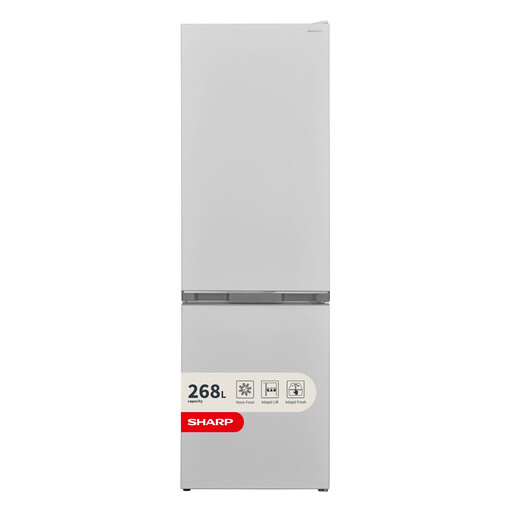 No image available
This freestanding fridge-freezer is a possibility for routine leftovers when its shelves accommodate your containers and it fits the available space.
Its product name states a 170 × 54 cm size and an E energy rating. Check the full dimensions and temperature control; NanoFrost should not be treated as a promise that the freezer never needs defrosting.
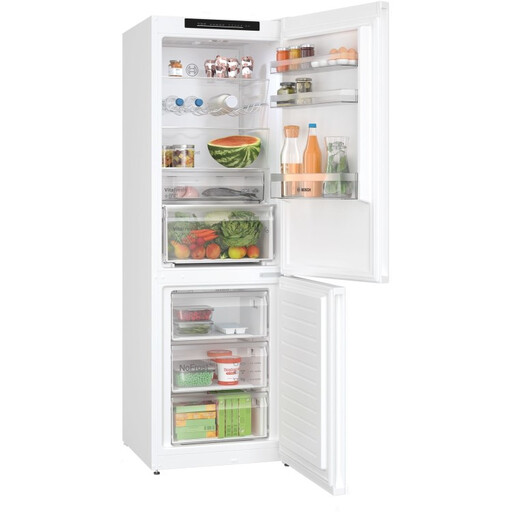 No image available
Consider this freestanding model if you need fridge and freezer storage and have room for a taller appliance.
Its product name states 186 cm height, 60 cm width and a D energy rating. Check delivery access, shelf clearance for your containers and whether the fridge maintains 0°C–5°C.
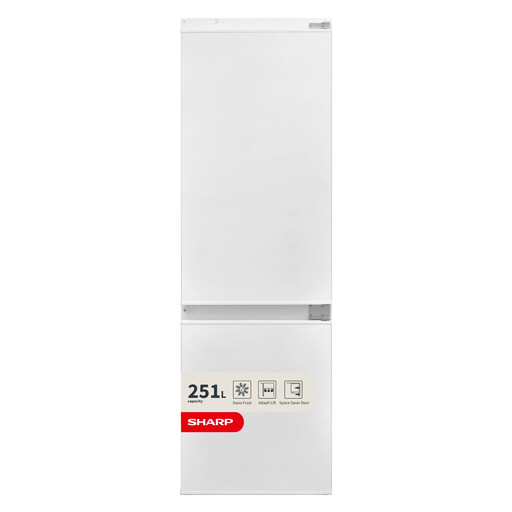 No image available
This model may suit portioned leftovers in a fitted kitchen if its cabinet opening and sliding-hinge arrangement match yours.
Its product name states a 177 × 54 cm size and an E energy rating. Confirm the full installation dimensions, container clearance and chilled temperature control before ordering.
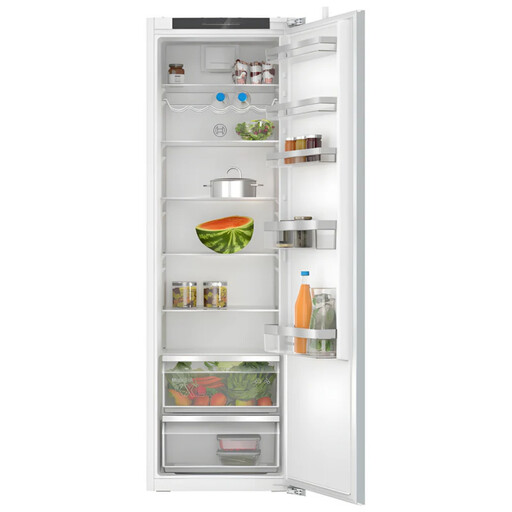 No image available
Consider this dedicated chilled-storage option for a compatible fitted kitchen if you have another way to freeze portions you cannot eat within two days.
Its product name states 319L capacity, a sliding hinge and an E energy rating. It is a larder fridge without a freezer; check cabinet fit, container clearance and temperature control.
Keep the fridge between 0°C and 5°C, as advised by Food Standards Scotland. Check the actual temperature with a fridge thermometer rather than treating a numbered control dial as a reading in °C.
Use properly cooled and refrigerated cooked pasta within two days, or freeze it if you will not eat it in that time. This follows GOV.UK guidance for cooked leftovers, not a longer pasta-specific storage period.
Let it cool, but put it in the fridge within one to two hours, following GOV.UK leftover guidance. Dividing a large batch into smaller portions helps it cool more quickly.
No special drawer is needed to follow the cited UK leftover guidance. Prioritise prompt cooling, a fridge temperature of 0°C–5°C, room for covered containers and the two-day window for eating or freezing leftovers.