For grapes, start with a compact fridge whose stated temperature control reaches 0°C, rather than choosing a smaller thermoelectric cooler solely because it fits. Grapes from California identifies about −1 to 0°C and high humidity as ideal commercial storage conditions, but a fridge’s stated setting does not establish the temperature throughout its cabinet. A 43-litre tabletop model is a useful starting point for a tight counter; consider a larger fridge only if its depth, height, ventilation clearance and door swing fit your space.
Who this choice suits
Grape buyers with a small counter
If you want chilled space for a few grape punnets without giving up much worktop, assess the dimensions of a compact tabletop fridge before its capacity. Russell Hobbs lists 43-litre models measuring 47.2 cm wide and 45 cm deep.
Households storing more than grapes
If several grape packs must share space with other chilled food, shelf arrangement and door access may justify a larger cabinet. The Russell Hobbs 66-litre and Logik 67-litre models both have a stated depth of 51 cm, so that extra room needs a deeper installation space.
Shoppers placing a cooler in a quiet room
If a bedroom or home office is the intended location, compare stated noise as well as size. Russell Hobbs lists its 17-litre thermoelectric cooler at 26 dB, but its stated 5–18°C range is less closely aligned with the grape-storage temperature identified by Grapes from California.
What matters when choosing
Check the temperature range for grape storage, then measure the complete installation space—not just the patch of worktop beneath the fridge. If the appliance will sit where you work or sleep, include noise and socket placement in the decision.
| Concern |
What to check |
Who this matters to |
| Grape-storage temperature |
Compare the exact model’s stated control range with the roughly −1 to 0°C commercial storage condition identified by Grapes from California; check the installed fridge with a thermometer. |
If I am storing grapes rather than mainly chilling drinks, I want the cabinet temperature to be suitable where the fruit actually sits. Around 46% of consumers put grape-storage temperature first. |
| Worktop fit and capacity |
Measure width, depth, height, ventilation clearance and door-opening space; then assess how many packs the shelves can hold. |
When preparation space is scarce but several punnets need chilling, I have to balance room inside the fridge against room left on the counter. For around 36% of consumers, that fit-and-capacity balance comes first. |
| Quiet-room placement |
Compare stated noise figures and the exact model’s energy label; plan for a nearby wall socket and the airflow required by its instructions. |
If the appliance will be near my desk or bed, its operating noise and practical placement matter more to me than extra shelves. Around 18% of consumers prioritise quiet-room use and installation. |
Buying pitfalls
-
Choosing the smallest cooler just because it fits
Russell Hobbs states that its 17-litre thermoelectric cooler operates from 5 to 18°C. Its small footprint does not make that range as closely aligned with the commercial grape-storage condition identified by Grapes from California as a model with a stated 0°C setting.
Compare the temperature range of the exact model before letting its dimensions decide the purchase.
-
Comparing capacity without measuring the space
The reviewed 66–67-litre fridges are narrower than the Russell Hobbs 43-litre model but are 51 cm deep rather than 45 cm. A larger fridge could fit by width yet take too much counter depth or height.
Measure the usable surface and space above it, then allow for the model’s specified ventilation clearance, cable route and door swing.
-
Squeezing the fridge in beside an extension lead
Electrical Safety First advises placing a fridge close to a wall socket, avoiding an extension lead and leaving space for air circulation. A position that fits the cabinet but blocks its ventilation is not a suitable installation.
Plan the socket and airflow before ordering, and follow the exact model’s installation instructions.
-
Assuming a dial setting describes conditions beside the grapes
A stated control range or fruit-and-veg feature does not tell you the temperature at every shelf position. Grapes from California also advises keeping grapes away from direct cooling airflow to limit dehydration.
After installation, use a fridge thermometer where the grape packs will sit and leave room for air to circulate.
Brands to consider for compact fridges
Russell Hobbs
The cited Russell Hobbs range includes 43-litre and 66-litre manually controlled tabletop fridges and a smaller 17-litre thermoelectric cooler.
- Russell Hobbs states a 0–8°C control range for both reviewed tabletop fridges; each also has a reversible door and adjustable feet.
- The 17-litre cooler has a stated 5–18°C range. The larger 66-litre fridge needs 51 cm of counter depth, compared with 45 cm for the reviewed 43-litre model.
Logik
The Logik LTT68S23 is a 67-litre mini fridge to assess when several grape packs must share space with other chilled food.
- The listed specification covers two shelves, a reversible door and a fruit-and-veg freshness feature for this model.
- Its listed 64 cm height and 51 cm depth need checking against overhead and counter clearance; the listing says it is not suitable for an unheated outbuilding.
Abode
The Abode ATTF0E1W is a 43-litre option with a listed 49.2 × 47.2 × 45 cm height, width and depth.
- The listed specification covers a removable wire shelf, reversible door and adjustable feet, which are useful features to assess for placing the fridge and arranging packs.
- Check this model’s temperature settings for your intended storage rather than assuming they match another 43-litre fridge. The listing describes it as unsuitable for an unheated outbuilding.
Joybuy product choices
These choices take two different approaches to limited worktop space: a small countertop fridge and a larger fridge intended to sit beneath the worktop. Check the temperature and installation requirements of the individual model before using either for grapes.
 No image available
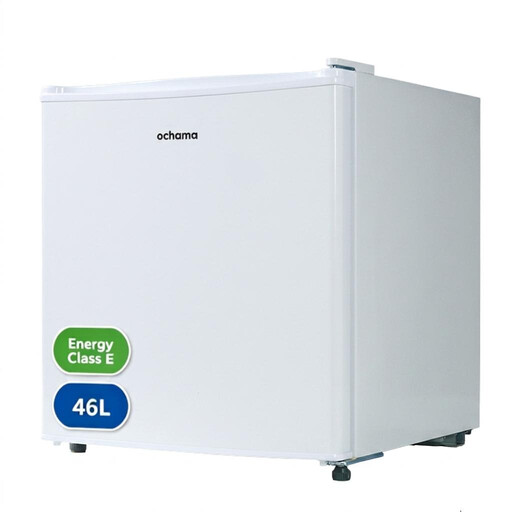
Ochama 46 L Counter-Top Refrigerator, White
Consider this countertop model if you have space for a small dedicated fridge and want to keep grape packs separate from other food.
Its product name states a 46 L capacity and a 2–8°C refrigeration range. That stated minimum is above the roughly −1 to 0°C commercial grape-storage condition identified by Grapes from California; check the temperature beside the grapes with a thermometer.
Measure the intended position and check the installation instructions for ventilation and door-opening clearance.
View on Joybuy
 No image available
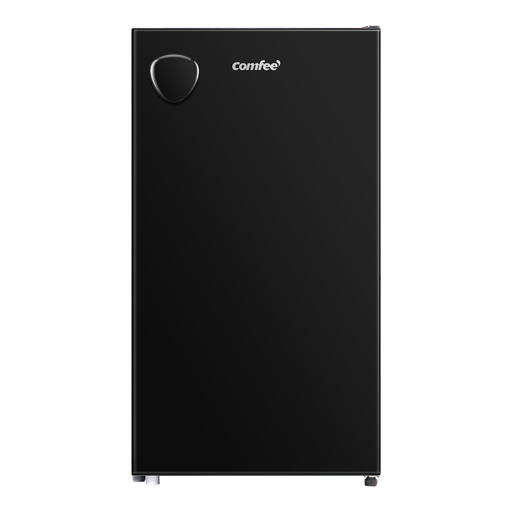
COMFEE' RCD92BL2UKY(E) 88 L Under-Counter Fridge, Black
Consider this under-counter model if keeping the worktop clear matters more than having a small cabinet and you have a suitable space beneath it.
Its product name specifies an adjustable thermostat, reversible door and removable glass shelves. Check the exact model’s temperature range and measure the under-counter space, including ventilation and door clearance, before choosing it for grapes.
Check the cooler-box instructions separately from the main fridge compartment when deciding where to store food.
View on Joybuy
Questions about grape storage
What temperature should I look for when storing fresh grapes?
Look for a fridge with a stated range close to the intended storage temperature, then check the temperature where the grapes sit. Grapes from California identifies 30–32°F, about −1 to 0°C, and 90–95% relative humidity as ideal commercial storage conditions; a domestic fridge’s dial alone cannot establish those conditions throughout its cabinet.
Where should grape packs go inside a tabletop fridge?
Place them where air can circulate without putting them directly in the cooling airflow. Grapes from California cautions that direct airflow can accelerate dehydration; avoid over-stacking the packs or letting the grapes contact water or ice.
Can a tabletop fridge go on any spare counter?
Only if the position also meets the model’s installation requirements. Electrical Safety First advises using a nearby wall socket rather than an extension lead and leaving room for air circulation; check the manual’s clearances and make sure the door can open.
Should I compare energy labels on compact fridges?
Yes—compare the current energy label and product information for the exact models you are considering. GOV.UK states that in-scope refrigerating appliances must display an energy label at the point of sale and have a product information sheet; an energy class alone does not tell you your household’s electricity use.


