Families who freeze in batches
If you portion blanched carrots and prepared meals regularly, focus on frozen-compartment litres and whether the drawers accommodate your usual bags or containers. Freezing performance matters when you add a new batch.


For regular batches of blanched carrots and family meals, choose by usable freezer space rather than total appliance capacity. A 50/50 or freezer-heavy layout deserves consideration when frozen storage matters as much as fridge space; a 60/40 or 70/30 layout may suit a household that mainly stores fresh food. Check the exact model’s freezer litres, drawer layout, installation requirements and energy-label information before deciding.
If you portion blanched carrots and prepared meals regularly, focus on frozen-compartment litres and whether the drawers accommodate your usual bags or containers. Freezing performance matters when you add a new batch.
If freezing carrots and leftovers is occasional, compare fridge-led layouts with the actual freezer-litre figure. A large total capacity does not tell you how much room is available for frozen portions.
An integrated fridge-freezer must suit the existing cabinet opening, ventilation arrangement and door fittings. Check those requirements alongside freezer capacity before choosing a replacement.
For a household freezing blanched carrots alongside family meals, start with the space available for portions, then consider how the appliance handles new batches and whether it fits the kitchen.
| Concern | What to check | Who this matters to |
|---|---|---|
| Usable freezer space | Compare frozen-compartment litres and the drawer layout with your usual portion sizes; do not rely on total litres or the stated split alone. | If I freeze carrots and family meals regularly, I need room to organise portions without displacing other frozen food. Around 42% of consumers would put usable freezer space first. |
| Freezing and upkeep | Check for a freezer-specific rapid-freeze function and independent freezing tests where available; confirm Frost Free or No Frost on the exact model. | When I add a fresh batch, I want to assess how promptly it freezes without overlooking food already stored. Around 33% of consumers would make freezing performance and food protection their primary concern. |
| Fit and energy use | Measure the installation space and door clearance; compare annual energy use and capacity on labels for similar appliances. | If a replacement has to fit a particular kitchen space, I need the doors to work freely and enough room for ventilation, while keeping energy use in mind. Around 25% of consumers would prioritise fit and ongoing energy use. |
A large total-litre figure can still leave limited space for carrots, meals and other frozen shopping if most of the capacity belongs to the fridge.
Compare the frozen-compartment figure and check whether your usual bags or containers fit the freezer drawers.
Frost Free or No Frost addresses ice build-up and defrosting; the feature alone does not establish how quickly an appliance freezes a new batch.
Check freezing-performance evidence separately, along with any freezer-specific rapid-freeze function and the stated frozen capacity.
An appliance can fit between cabinets yet lack space to open fully or meet its ventilation requirements.
Measure height, width, depth and the access route, then follow the exact model’s installation instructions for clearances and door operation.
The A-to-G rating does not replace a comparison of energy use and storage volume for appliances of a similar type and size.
Use the label’s energy-use figure alongside the freezer capacity you need. Energy Saving Trust identifies energy use, noise and performance information as parts of appliance labelling.
Relevant when comparing freestanding or integrated models with particular freezer capacities and frost-management features.
Relevant when comparing specified Frost Free models and their installation conditions.
Relevant as a freestanding, fridge-led option to compare against your required freezer space.
These fridge-freezers cover freestanding, wider and integrated layouts. Compare each model’s freezer space and fitting requirements against your usual carrot portions and family meals; a frost-free feature does not replace that check.
 No image available
For regular family batches, compare the freezer drawers with your usual portion containers or bags.
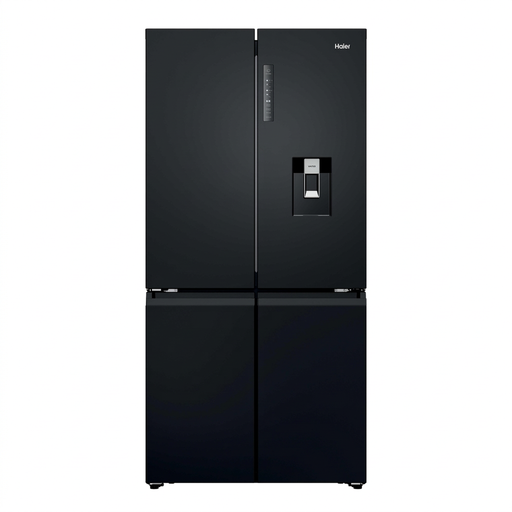
Freestanding four-door fridge-freezer with 649 L total capacity. Check its installation space and door clearance.
 No image available
For storing family portions, check how its freezer shelves or drawers accommodate the way you pack a batch.
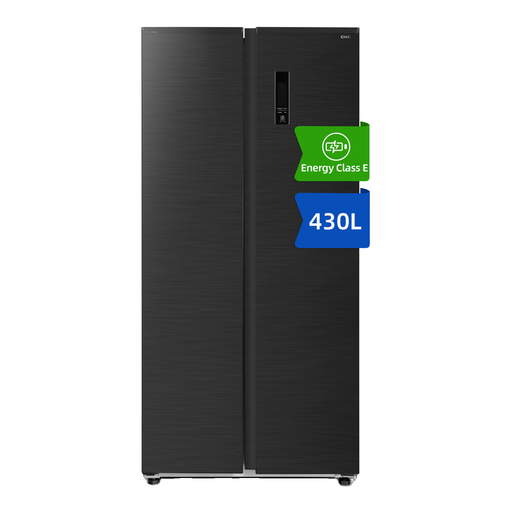
84 cm-wide side-by-side fridge-freezer with No Frost and an E energy rating. Check freezer-specific freezing performance if you regularly add fresh batches.
 No image available
Consider this model for a fitted kitchen only after checking that its freezer space suits your usual batches.
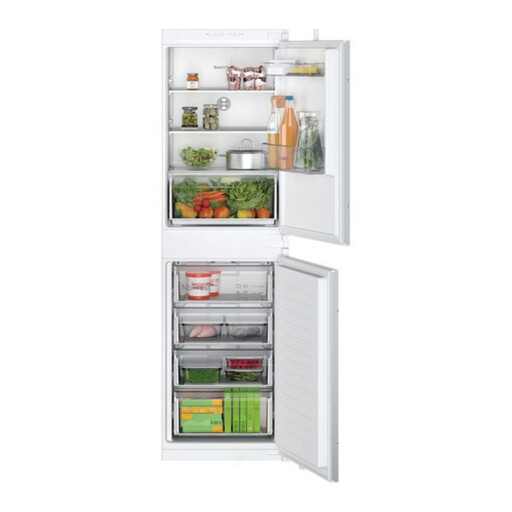
177 cm-high integrated 50/50 fridge-freezer with Frost Free, a sliding hinge and an E energy rating. Confirm the cabinet opening, hinge arrangement and ventilation requirements against its installation instructions.
 No image available
For a narrower kitchen space, check whether the freezer accommodates your routine shopping as well as prepared carrots and meals.
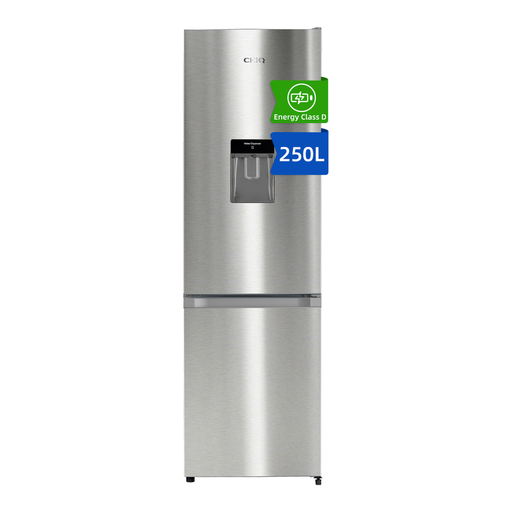
54 cm-wide, 181 cm-high freestanding fridge-freezer with Total No Frost, a water dispenser and a D energy rating. Check door clearance and the exact model’s installation requirements.
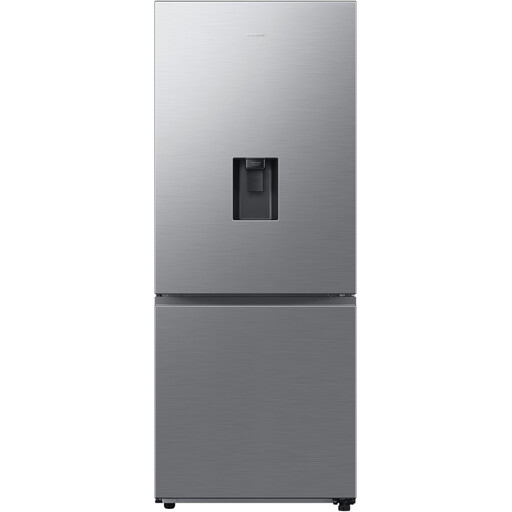 No image available
For a household storing fresh food alongside frozen family portions, compare the freezer layout with your usual batch size.
75 cm-class fridge-freezer with an E energy rating. Check the full appliance dimensions and freezer-specific freezing performance before choosing it for frequent batches.
No: the deciding figures are frozen-compartment litres and usable drawer space, not the split name alone. 50/50 means equal-height doors and 70/30 a taller fridge with a shorter freezer; compare the exact capacities if your household also needs substantial fresh-food storage.
No. Frost Free or No Frost reduces defrosting work, while a freezer-specific rapid-freeze function is intended for adding new food. If freezing a prepared batch promptly is important, check the exact model’s function and independent freezing-performance results where available.
The label helps you compare energy use as well as the A-to-G rating. Energy Saving Trust also identifies noise and performance information on appliance labels; compare models of a similar type and size alongside the frozen capacity your household needs.
Follow the installation instructions for the exact model, including ventilation and door-opening requirements. General measurement guidance advises about 5 cm behind and 2 cm at either side for airflow, but a model’s own instructions take priority.
Check your retailer’s take-back arrangements and your council’s current collection or recycling-centre options before ordering. Fridge-freezers fall under the UK Waste Electrical and Electronic Equipment framework described by GOV.UK; available services and any collection charges depend on the provider and location.