Slice-by-slice bread users
If you take out only the slices you need, accessible freezer storage may matter more than a large overall appliance capacity. Love Food Hate Waste advises freezing bread sliced for this purpose.


A 50/50 fridge-freezer is a sensible starting point if you regularly freeze sliced bread but still need room for chilled groceries. Compare the freezer’s stated capacity and access with your usual food storage, then check the appliance’s dimensions, defrosting features and annual electricity use. A larger or drawer-led design is worth considering when those details suit your kitchen and the amount you freeze.
If you take out only the slices you need, accessible freezer storage may matter more than a large overall appliance capacity. Love Food Hate Waste advises freezing bread sliced for this purpose.
If bread shares the freezer with batch-cooked meals or other groceries, compare frozen-compartment capacity as well as the fridge/freezer split. Bosch describes 50/50, 60/40 and 70/30 layouts, which allocate space differently.
If kitchen width is limited and you want to avoid routine manual defrosting, assess the appliance dimensions, freezer access and the exact model’s frost-free features together.
Think about what else you freeze alongside bread before weighing kitchen fit, defrosting and electricity use.
| Concern | What to check | Who this matters to |
|---|---|---|
| Freezer space and organisation | Compare frozen-compartment litres and the drawer or shelf layout; check that a bread bag fits. | I need room for sliced bread without burying other frozen food. Around 36% of consumers would put organised freezer space first. |
| Kitchen fit and access | Measure the appliance space and delivery route, including room to open doors and drawers. | My kitchen has limited space, and I need to reach the bread easily. For around 29% of consumers, fit and access would be the primary concern. |
| Defrosting and larger freezer loads | Check whether the exact model is frost-free and, if you freeze several loaves at once, whether it has a fast-freeze setting. | I want less ice build-up or a convenient setting when adding a larger load. Around 21% of consumers would prioritise those features. |
| Electricity use and temperature | Compare annual kWh on the energy label and follow the appliance instructions for freezer temperature. | Because the appliance runs continuously, I want to compare its electricity use and set it appropriately. Around 14% of consumers would make these checks their first priority. |
Energy Saving Trust recommends looking at annual kWh alongside the A–G rating when comparing appliances. Food Standards Scotland advises keeping a freezer at around −18°C.
Total litres include chilled space, so they do not show how much room is available in the freezer. Fridge/freezer splits also allocate space differently.
Compare frozen-compartment litres and the internal drawer or shelf layout, particularly if you store other frozen food beside bread.
The A–G class does not state an appliance’s annual electricity use. Energy Saving Trust advises checking the yearly kWh figure, especially when comparing different sizes.
Read annual kWh alongside the label class and choose chilled and frozen capacity that suits your household.
Suitability for low ambient temperatures depends on the exact appliance and its stated operating conditions; a frost-free label does not establish it.
Check the model’s installation guidance against the temperatures expected at its intended location before ordering.
If a new fridge-freezer replaces an existing one, the old appliance still needs a suitable removal route.
Check the retailer’s collection terms or your local authority’s accepted disposal route in advance.
Bosch describes fridge-freezers in several fridge/freezer splits, including 50/50, 60/40 and 70/30 layouts.
Beko offers fridge-freezers for consumers considering larger frozen-food storage.
Hotpoint lists the HPKH 1261 XBR4UK as a No Frost 50/50 fridge-freezer.
These models offer different ways to accommodate frozen bread: integrated 50/50 appliances for fitted kitchens and narrower freestanding designs with freezer drawers. Compare their freezer space and installation requirements against what else you need to store.
 No image available
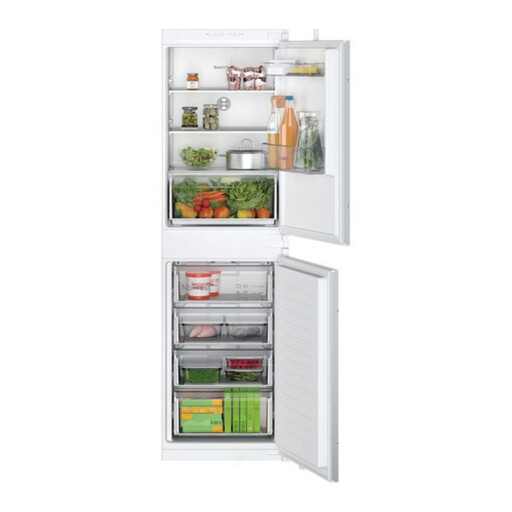
Consider this 50/50 layout if you freeze bread regularly while keeping a similar allocation for chilled food. The title specifies a 177 cm integrated appliance, 249 L total capacity, frost-free operation, a sliding hinge and energy class E.
Check the cabinet opening and hinge requirements, as well as the freezer’s stated capacity and internal space for your bread packaging.
 No image available
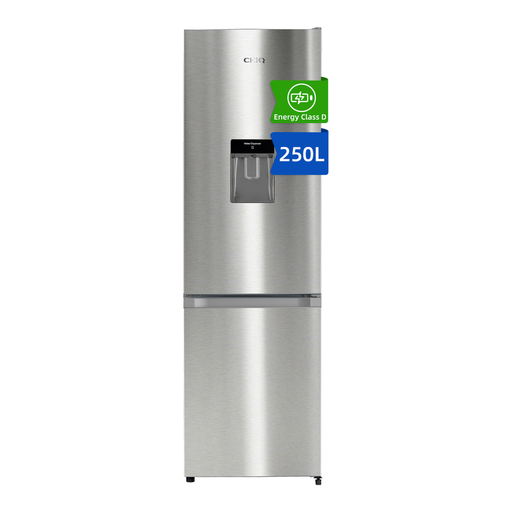
Consider this model where a narrower appliance and organised freezer access are priorities. Its title states a 54 cm width, 181 cm height, 250 L total capacity, Total No Frost, a water dispenser and energy class D.
Measure the full installation space and check the freezer’s internal dimensions against the bread bags you use.
 No image available
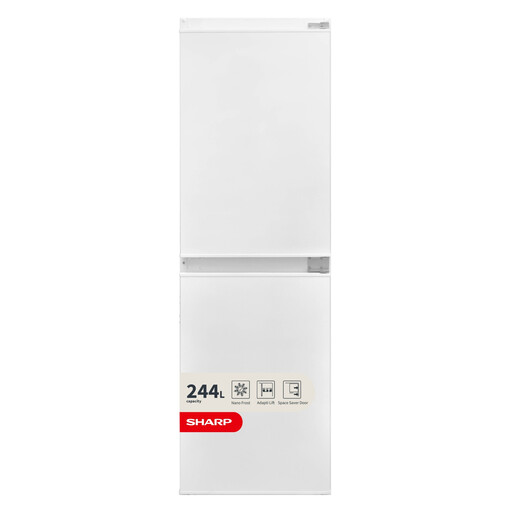
This 50/50 model is an option for a fitted kitchen where bread and other frozen food need dedicated space. Its title specifies an integrated 177 × 54 cm appliance, NanoFrost and energy class E.
Check the cabinet and hinge requirements, freezer dimensions and defrosting instructions; do not assume NanoFrost means frost-free.
 No image available
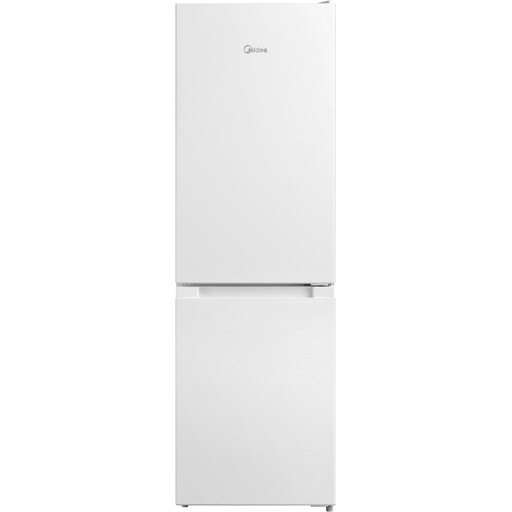
Consider this model if kitchen width is a firm constraint and you freeze smaller amounts of bread. Its title specifies a 50 cm width, 173 L total capacity and energy class E.
Check the freezer compartment’s capacity and internal dimensions against your other frozen groceries, and confirm the model’s defrosting requirements.
 No image available
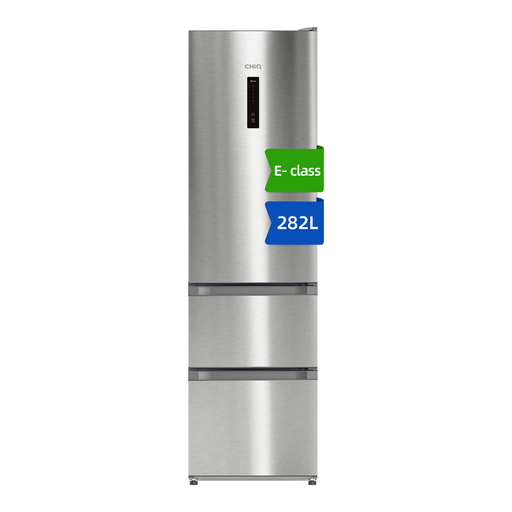
The drawer-led layout may suit frequent access to individual frozen portions in a narrower kitchen. Its title specifies a 54 cm width, 282 L total capacity, No Frost operation and energy class E; the Joybuy product description also describes pull-out freezer drawers.
Check the freezer compartment’s own capacity and drawer dimensions rather than judging bread storage by total litres.
Yes, if you want to remove only the portions you need. Love Food Hate Waste advises freezing bread sliced; keep it sealed and follow any instructions on the packaging.
Food Standards Scotland advises keeping a freezer at around −18°C. Follow your appliance instructions when setting and checking its temperature.
No. Frost-free describes the appliance’s approach to ice build-up, not a replacement for packaging bread. Bosch describes its NoFrost system as circulating dry cold air to prevent ice formation.
Compare the annual kWh figures on their energy labels, while accounting for the capacity you need. Energy Saving Trust notes that the A–G class alone does not show the full difference in electricity use between appliances of different sizes.
Choose a model only if its stated ambient operating range covers the conditions in that garage. Check the exact fridge-freezer’s installation guidance rather than assuming its brand or frost-free feature establishes suitability.