
24/7 Customer Support

Free returns

Same-day & Next-day Delivery

Quality Guaranteed

Unlock Your Welcome Offers: FREE Delivery | Up to 80% OFF | Free 30-day JoyPlus trial
Download the APP
Choosing a new fridge freezer can feel overwhelming. It's one of the few appliances in your home that runs 24/7, and making the wrong choice can lead to years of frustration, wasted food and high energy bills. As the Joybuy Product Recommendation Officer, my role is to help you navigate the market and identify the key features that genuinely matter for your household, steering you clear of common purchasing traps.
Before you start browsing, be aware of these three frequent pitfalls that catch UK buyers out:
To ensure your new appliance is a perfect fit for your home, focus on these non-negotiable factors.
The single most important step is measuring your available space. Remember to leave at least 5cm of clearance around the back, sides and top for ventilation. Without this, the compressor can overheat, reducing efficiency and shortening the appliance's life.
Capacity is measured in litres. As a general guide:
The UK's energy label system was updated to a simpler A-G scale. Most older A+, A++, and A+++ models now fall into the C, D or E categories. For a modern energy efficient fridge freezer, aiming for a D rating or higher is a sound investment. These models often feature advanced inverter compressors, which are not only more efficient but also run much more quietly than older types.
Beyond the basics, consider these features that offer real-world benefits:
Instead of a generic list, we have matched specific models to the households they are designed to serve.
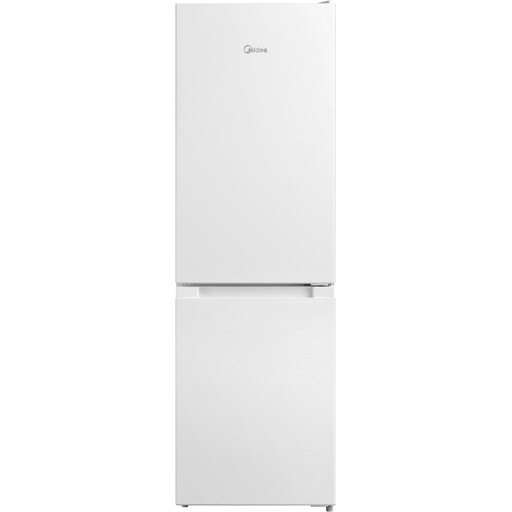
Why This Fits Their Persona: This model is purpose-built for the reality of many UK homes where space is a premium. It is ideal for galley kitchens, city flats, or as a secondary unit in a utility room where a standard appliance simply will not fit.
It directly solves the 'Capacity vs. Footprint' illusion. By focusing on a 50cm wide frame, its entire design is optimised to provide a practical 173L capacity without any wasted external bulk.
Its key advantage is its placement flexibility. The ultra-compact dimensions and a reversible door mean it can be installed almost anywhere, regardless of your kitchen's layout.
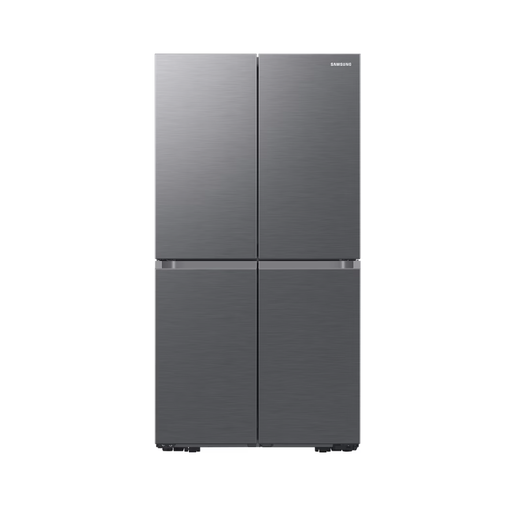
Why This Fits Their Persona: For a large family, food storage is a constant challenge. This French door fridge freezer offers a massive 649L capacity to handle big weekly shops, while its multi-door layout makes it easy for everyone to find what they need without letting all the cold air out.
It avoids the 'No Frost' deception with its All-Around Cooling system, which circulates air evenly to every shelf, maintaining a consistent temperature and preventing fresh food from drying out. SpaceMax technology also provides its large capacity in a more streamlined footprint.
The internal 1.4L Autofill Water Pitcher is a standout feature. It automatically refills with filtered water and can be infused with fruit, offering a convenient and stylish refreshment solution without the need for plumbing.
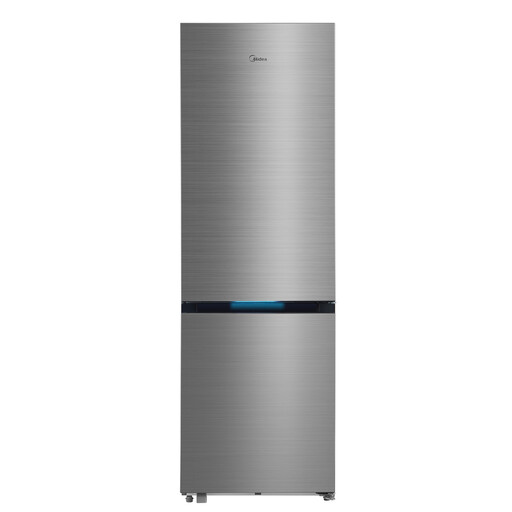
Why This Fits Their Persona: This model is for the savvy homeowner who prioritises long-term value. It combines a generous 400L capacity within a standard 60cm width, but its main appeal is its focus on low running costs and quiet operation, perfect for open-plan living.
It directly counters the 'Energy Label Gamble'. Its highly efficient C Energy Rating ensures low electricity consumption. The advanced Total No Frost system with a Metal Cooling plate also provides superior, stable cooling, avoiding the pitfalls of basic no-frost systems.
Its ultra-quiet 35dB operation is a significant benefit, making it one of the quietest appliances in its class. The combination of high efficiency and low noise makes it an excellent long-term investment for any home.
We have compiled a complete, real-time list of products that fully satisfy these strict selection criteria and UK safety regulations.
For any freestanding fridge freezer, proper ventilation is crucial for efficiency and longevity. As a rule of thumb, you should aim to leave a gap of at least 5cm (2 inches) at the back, top and on both sides. This allows air to circulate freely and helps the compressor dissipate heat effectively.
Not necessarily. While the technology itself requires energy to operate, a freezer that is heavy with ice forces the compressor to work much harder to maintain its temperature. A no frost fridge freezer prevents this build-up, ensuring the appliance runs at optimal efficiency. Modern, energy efficient fridge freezer models with inverter compressors are often more economical to run over the long term, regardless of their frost-free status.
The typical lifespan of a modern fridge freezer is between 10 and 15 years. However, this can vary based on the brand, how it is used and how well it is maintained. You can help extend its life by regularly cleaning the interior and door seals, and most importantly, ensuring it always has adequate ventilation space to prevent the compressor from overworking.