
24/7 Customer Support

Free returns

Same-day & Next-day Delivery

Quality Guaranteed

Unlock Your Welcome Offers: FREE Delivery | Up to 80% OFF | Free 30-day JoyPlus trial
Download the APP
A new fridge freezer is a significant purchase for any UK household. It's an appliance you'll rely on every day for a decade or more. Yet, navigating the market can feel overwhelming, with a dizzying array of features, sizes and marketing claims. It's easy to end up with a model that looks great in the showroom but becomes a daily frustration in your kitchen.
As the Joybuy Product Recommendation Officer, my role is to help you sidestep these common issues. We'll look past the showroom shine and focus on the practical details that determine whether a fridge freezer is a helpful addition to your home or a source of constant annoyance. Let's break down the three most common purchasing pitfalls and how to avoid them.
The "Usable Capacity" Illusion: A model might boast a huge litre capacity, but this figure often refers to the gross internal volume, not the actual usable space. Once you account for bulky water tanks, oversized ice makers and awkward shelf layouts, the space for your weekly shop can shrink dramatically. Don't be swayed by the number on the tag; look at the internal layout and consider how it fits your family's groceries.
The "Low Maintenance" Myth: Many shoppers are drawn to terms like "Low Frost," assuming it means no manual defrosting. In reality, "Low Frost" systems only reduce ice build-up compared to older static models. You will still need to defrost the freezer periodically. For true convenience, you need a no frost fridge freezer (often labelled "Total No Frost"), which circulates dry air to prevent ice from forming in the first place.
Paying for Impractical "Smart" Features: While some smart features offer genuine benefits, like energy management modes that reduce running costs, others are little more than gimmicks. Ask yourself if you will genuinely use a fridge with a built-in tablet to browse recipes or if your money is better spent on superior cooling technology, a more efficient compressor or a better internal build quality.
To make a confident choice, focus on these non-negotiable parameters. Getting these right is more important than any single feature.
Measuring your kitchen gap is the first step, but it's not the only one.
Your fridge freezer runs 24/7, making its energy consumption a key factor in your household bills.
Consider your household's eating habits.
Based on these practical criteria, here are some models suited to different UK household needs.
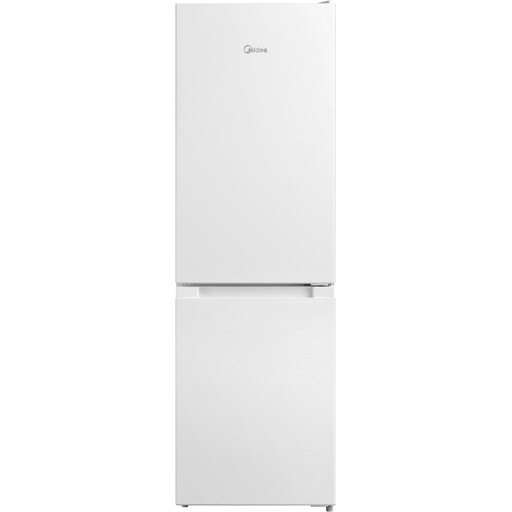
Why This Fits Their Persona: Perfect for studio flats, galley kitchens or student accommodation where space is at a premium. Its ultra-compact 50cm wide frame fits into tight gaps, while the 173L capacity is ample for one or two people. The reversible door adds crucial layout flexibility.
It uses Low Frost technology, a practical compromise that significantly reduces the frequency of defrosting compared to basic static models, avoiding the "low maintenance" myth without the cost of a full No Frost system.
Its main advantage is the space-saving footprint. It provides separate fridge and freezer compartments in a form factor that fits where standard appliances cannot. The internal layout with adjustable shelves is practical for its size.
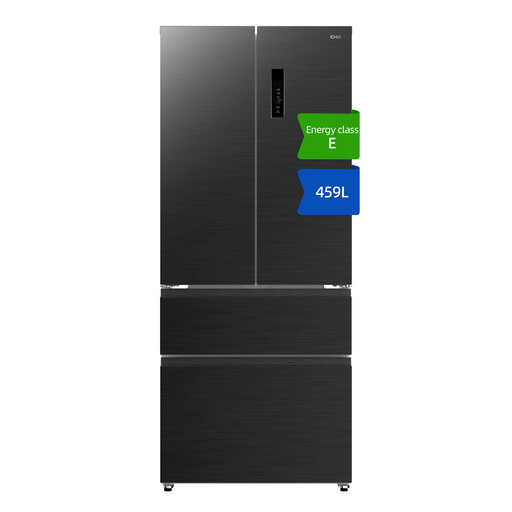
Why This Fits Their Persona: This model offers a large capacity fridge freezer (459L) in a stylish French door format. The black fridge freezer finish is modern and its clever 600mm slim depth allows it to sit flush with standard UK kitchen cabinets, providing a high-end, built-in look without the cost.
It sidesteps the capacity illusion by offering a highly organised interior with a dedicated 'Care+ Space' compartment. This provides flexible, usable storage rather than just a large, empty box. The Total No Frost system ensures zero time is wasted on defrosting.
The Dual Smart Inverter system ensures it is a very quiet fridge freezer (37dB), ideal for busy family homes. The combination of a large, flexible capacity and a slim, flush-fit depth is a major design advantage.
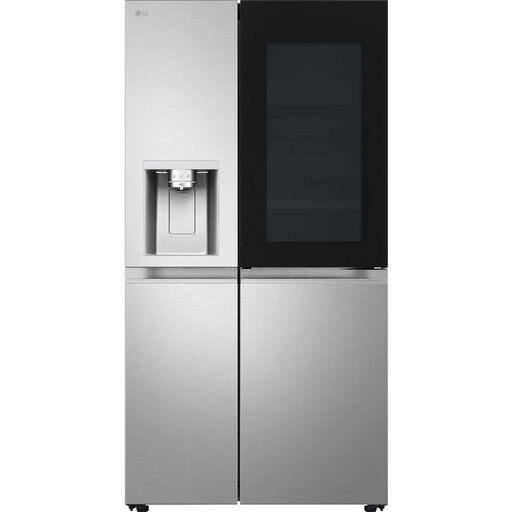
Why This Fits Their Persona: This premium American style fridge freezer is for those who want cutting-edge technology that serves a real purpose. The huge 635L capacity is perfect for entertaining and the plumbed fridge freezer with water dispenser provides instant chilled water and ice.
It avoids the "gimmicky smart feature" trap. The InstaView door has a tangible benefit: you can see inside without opening the door, reducing cold air loss and saving energy. The UVnano tech, which cleans the water dispenser nozzle, is another practical, hygiene-focused innovation.
Its advanced cooling systems (LINEARCooling and DoorCooling+) maintain exceptionally stable temperatures to keep food fresher for longer. At just 36dB, it is one of the quietest large-capacity models available, making it perfect for open-plan kitchens.
We have compiled a complete, real-time list of products that fully satisfy these strict selection criteria and UK safety regulations.
'Low Frost' technology uses hidden evaporator coils to significantly reduce the speed of ice formation in the freezer compared to older static models. You will still need to manually defrost it, but much less frequently (perhaps once a year). 'Total No Frost' actively circulates cold, dry air to prevent any ice from building up at all, meaning you will never have to defrost the appliance.
This depends heavily on the appliance's size, age and energy efficiency rating. As of 2026, a new, medium-sized fridge freezer with a D or E rating might cost between ?60 and ?90 per year to run. Opting for a model with a better energy rating (e.g., C or B) could lower this cost, providing long-term savings that offset a higher purchase price. Some smart models also have AI energy modes that can further reduce consumption.
A well-maintained fridge freezer from a reputable brand should last between 10 and 15 years. The lifespan is influenced by the quality of the compressor, proper ventilation and regular cleaning of components like door seals and condenser coils (if accessible). Following the manufacturer's installation and maintenance guidance is the key to maximising its operational life.