
24/7 Customer Support

Free returns

Same-day & Next-day Delivery

Quality Guaranteed

Unlock Your Welcome Offers: FREE Delivery | Up to 80% OFF | Free 30-day JoyPlus trial
Download the APP
Choosing a new fridge freezer can feel overwhelming. It's a major purchase and the centrepiece of your kitchen, but the market is flooded with technical jargon and features that sound impressive but often fail to deliver. As a Joybuy Product Recommendation Officer, my role is to help you see past the marketing jargon and focus on what truly matters for your home.
Many shoppers fall into common traps that lead to disappointment. Before you start browsing, be aware of these frequent pitfalls:
To make a confident choice, focus on these three non-negotiable parameters. Getting them right is the key to finding an appliance that fits your home and lifestyle perfectly.
The first step is always to measure. But don't just measure the gap in your kitchen. You must also measure every doorway, hallway and staircase the appliance will need to pass through on delivery day.
This is where you can avoid the "frost-free" trap. Understanding the different systems is crucial for managing your expectations and maintenance workload.
A fridge freezer runs 24/7, so its efficiency has a direct impact on your electricity bill.
Based on these practical criteria, we've matched several models to different UK household needs.
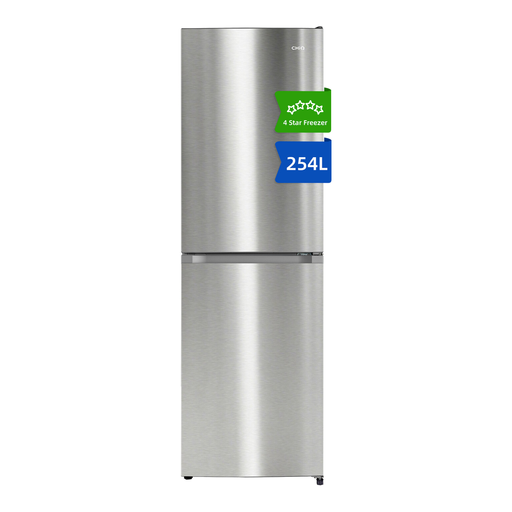
Why This Fits Their Persona: This model is ideal for those with limited space. Its slimline fridge freezer width of 54cm fits into non-standard gaps common in flats and galley kitchens, while its 176cm height provides a generous 254L capacity.
It's transparent about its Low Frost technology. This isn't a Total No Frost model, but for its price and compact size, it offers a practical compromise, saving you from the disappointment of expecting a fully frost-free experience at this price point.
Excellent space optimisation with a narrow footprint. The reversible door offers great installation flexibility for tight corners.
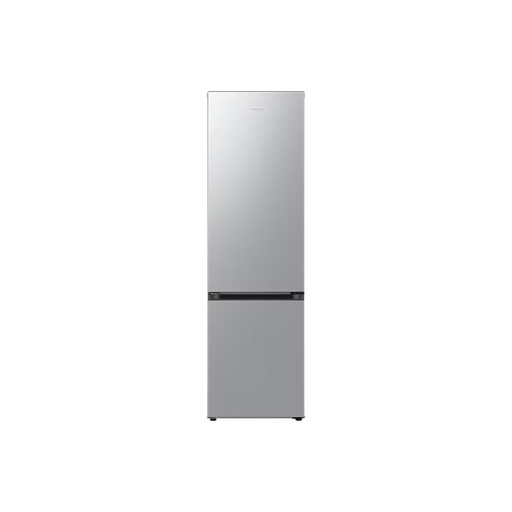
Why This Fits Their Persona: This tall fridge freezer uses SpaceMax technology to fit a huge 390L capacity into a standard 60cm fridge freezer width, solving the capacity vs. footprint dilemma for families. It's a true all-rounder.
It features genuinely useful smart technology. The SmartThings AI Energy Mode optimises compressor speed based on your usage, helping to lower bills. This is a practical application of smart tech, not a gimmick. It is also a Total No Frost model.
Massive capacity in a standard width and ultra-quiet operation at just 35dB, making it perfect for open-plan kitchen-diners.
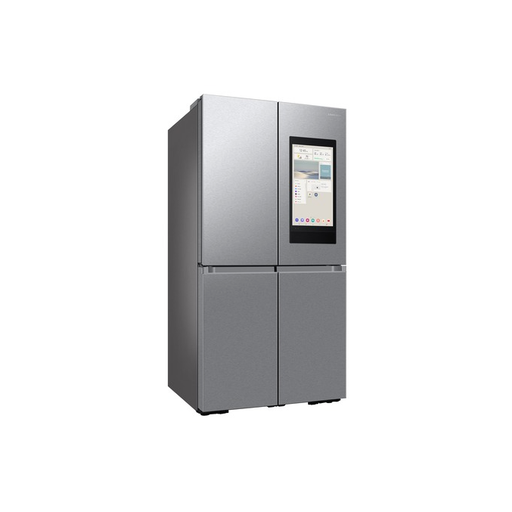
Why This Fits Their Persona: For those who want their kitchen to be a high-tech hub, this premium American fridge freezer is more than just a cooling appliance. Its huge 646L capacity and flexible zones are perfect for large families and frequent entertainers.
While packed with smart features, they are genuinely useful for its target user. The ability to see inside the fridge from a smartphone at the supermarket or use the integrated family calendar justifies the cost for a highly connected household. It's a purposeful upgrade, not a gimmick.
The plumbed Beverage Centre and Dual Auto Ice Maker provide instant refreshment, while the Cool Select+ Zone offers incredible storage flexibility, converting from freezer to fridge as needed.
We have compiled a complete, real-time list of products that fully satisfy these strict selection criteria and UK safety regulations.
This is critical for efficiency and lifespan. Most manufacturers recommend leaving a gap of at least 5cm (2 inches) at the back and sides, and 10cm (4 inches) at the top. This allows air to circulate freely around the condenser coils, preventing the compressor from overworking. Always check the specific model's installation manual for precise measurements.
The numbers refer to the ratio of fridge space to freezer space. A 70/30 fridge freezer gives you 70% fridge capacity and 30% freezer capacity, making it ideal for households that buy a lot of fresh food. A 50/50 split offers equal space for both and is better suited to those who rely heavily on frozen meals and bulk-buying frozen goods.
Running costs vary significantly based on the appliance's size, age and energy rating. As of 2026, a new, moderately sized fridge freezer with an E rating might cost between ?60-?90 per year to run. Opting for a model with a C or D rating could reduce this cost, offering long-term savings that offset a higher initial purchase price. Features like SmartThings AI Energy Mode can further optimise consumption based on your habits.