
24/7 Customer Support

Free returns

Same-day & Next-day Delivery

Quality Guaranteed

Unlock Your Welcome Offers: FREE Delivery | Up to 80% OFF | Free 30-day JoyPlus trial
Download the APP
A fridge freezer is the unsung workhorse of the modern British kitchen. It runs 24/7, preserving your food and forming the hub of daily family life. Yet, when it comes to buying a new one, it’s easy to get lost in a sea of marketing jargon and features that sound impressive but offer little real-world value. Many households end up with an appliance that’s too big, too small or too expensive to run.
As a Joybuy Product Recommendation Officer, my role is to help you sidestep these common issues. We’ll focus on the practical realities of UK homes, cutting through the jargon to identify what truly matters. Before you spend your hard-earned money, be aware of these frequent purchasing pitfalls:
To make a confident choice, you need to look past the showroom shine and focus on three non-negotiable parameters.
This is more than just width. For any freestanding fridge freezer, you must account for three measurements:
You also need to choose a type that suits your space and lifestyle. A tall larder fridge offers maximum fresh food space if you have a separate chest freezer, while a classic top-or-bottom freezer model is a versatile choice for most homes.
Capacity is measured in litres (L) and gives a clear indication of how much you can store.
The layout is just as important. An American-style fridge freezer offers a vertical split, which is great for organising, while a French door fridge freezer provides wide, uninterrupted fridge shelves, perfect for storing large platters or pizza boxes.
This directly impacts your food's freshness and your electricity bill.
Finally, check the energy label. Since 2021, appliances in the UK are rated from A (most efficient) to G (least efficient). A model with a better energy rating may have a higher initial cost but can lead to significant savings on your energy bills over the appliance's lifetime. For open-plan living, also look for a quiet fridge freezer with a noise rating below 40dB.
Based on these practical criteria, we've matched several models to common UK household needs.
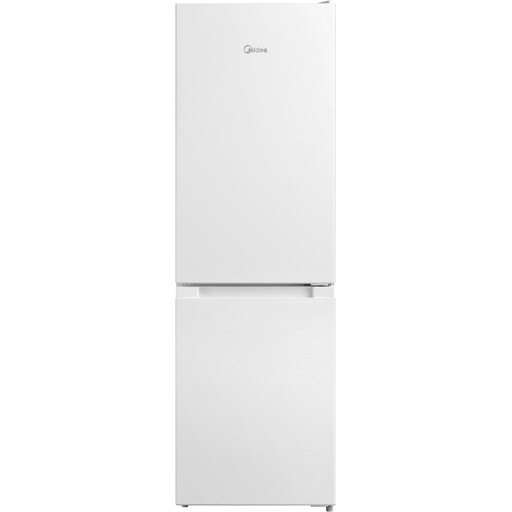
Why This Fits Their Persona: Ideal for those in flats, galley kitchens or with tight budgets. Its ultra-compact 50cm width is specifically designed to fit into non-standard gaps where a typical 60cm appliance won't go. The 173L capacity is ample for an individual or a couple.
It directly solves the "Measurement Mistake." The slimline design and reversible door provide maximum installation flexibility, preventing issues with door swing and fitting into tight spaces common in UK homes.
Space-saving 50cm width fits smaller kitchen gaps. Features adjustable shelves and a crisper drawer for practical, organised storage.
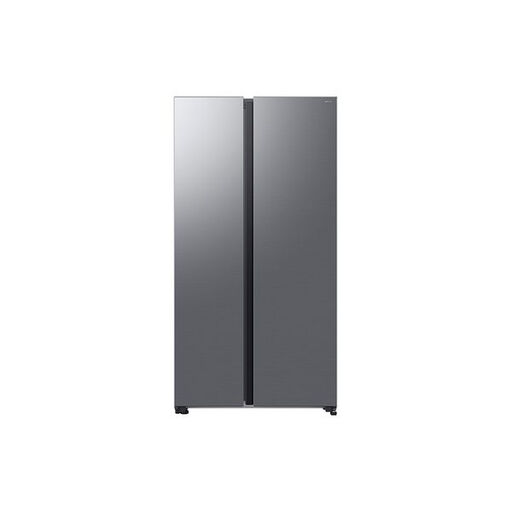
Why This Fits Their Persona: For large households that do big weekly shops. The colossal 652L capacity, enabled by SpaceMax thin-wall technology, provides enormous storage without an oversized external footprint. It's built for convenience and volume.
It avoids the "Smart Surcharge" by offering a genuinely useful AI Energy Mode via the SmartThings app, which can help reduce running costs. It also has Total No Frost technology, saving families the chore of manual defrosting.
Massive 652L capacity holds the largest grocery shops. Twin Cooling Plus prevents odours mixing and keeps food fresher for longer.
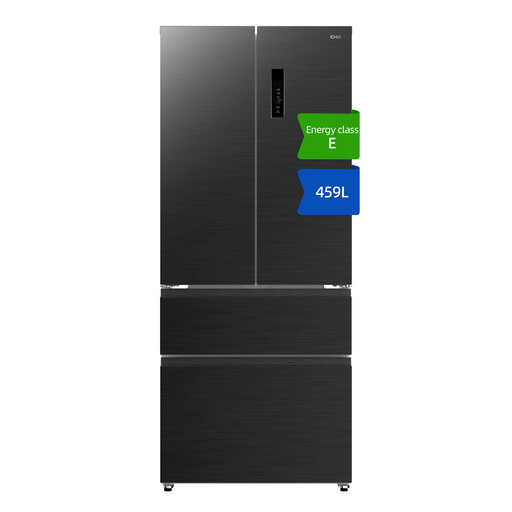
Why This Fits Their Persona: For those who value kitchen aesthetics and advanced features. The stylish black fridge freezer finish and 4-door design make a statement. Its KITFit Pro 600mm depth allows it to sit flush with cabinetry for a sleek, integrated look that is highly sought-after in modern kitchen design.
This model focuses on practical high-end features, not gimmicks. The Care+ Space with triple temperature modes offers genuine food preservation benefits, while the Total No Frost system and quiet 37dB operation enhance daily living.
Slim 600mm depth for a flush, built-in look. Features flexible temperature zones and a super-quiet Dual Smart Inverter system.
We have compiled a complete, real-time list of products that fully satisfy these strict selection criteria and UK safety regulations.
Always check the specific model's user manual, but a general rule for most freestanding appliances in the UK is to leave at least 5cm (2 inches) of clearance at the back, on both sides and 10cm (4 inches) at the top. This space is essential for the condenser coils to dissipate heat effectively. Blocking this airflow will force the appliance to work harder, increasing energy consumption and potentially leading to premature failure.
The running cost depends entirely on the appliance's energy efficiency rating and your electricity tariff. The new A-G energy labels provide a clear indication of annual energy consumption in kilowatt-hours (kWh). For example, a C-rated American-style model might use around 250 kWh/year, while an E-rated slimline model might use about 220 kWh/year. You can multiply the kWh figure by your electricity rate (pence per kWh) to estimate the annual cost. Investing in a more efficient model can often save you a considerable amount over the appliance's 10-15 year lifespan.
This comes down to convenience and kitchen layout. A plumbed dispenser offers a continuous supply of chilled water and ice without ever needing to be refilled. However, it must be installed near a mains water pipe, which can restrict placement and may require a professional plumber. A non-plumbed fridge freezer with water dispenser offers far more flexibility as it can be placed anywhere. It uses an internal, refillable water tank. This is a more practical choice for many renters or for kitchens where a water line isn't easily accessible.