
24/7 Customer Support

Free returns

Same-day & Next-day Delivery

Quality Guaranteed

Unlock Your Welcome Offers: FREE Delivery | Up to 80% OFF | Free 30-day JoyPlus trial
Download the APP
Buying a fridge or freezer for a UK home involves more than comparing litre capacity and appearance. A model that looks suitable online may not fit through a doorway, open correctly beside a wall or provide the freezer space your household needs.
The most common buying mistakes usually come from three areas:
Measure the available height, width and depth, including skirting boards, worktops and nearby cabinets. Then check the product’s recommended clearance. Refrigerators need airflow around the compressor and condenser; placing one tightly against a wall can affect cooling performance.
Consider the route into the property too. Measure doorways, staircases and lift interiors if you live in a flat. A reversible door can make a major difference in a small kitchen, but check whether the hinge can be changed before installation.
For example, compact fridge freezers range from slim 47 cm-wide models to 54 cm-wide units. American-style fridge freezers and French door fridge freezers can provide much more storage, but their width, depth and door clearance need careful planning. A four-door fridge freezer may also require more space in front of the appliance for drawers to open fully.
Look at net capacity, rather than relying only on external dimensions. A tall, narrow appliance can offer more usable storage than a wider model with a complicated internal structure.
As a general guide:
Check the arrangement of shelves, crisper drawers and freezer drawers. Transparent freezer drawers can make stock easier to identify, while adjustable glass shelves help accommodate tall bottles and large containers.
Frost-free fridge freezers reduce the need for manual defrosting, while low-frost fridge freezers generally reduce ice accumulation compared with conventional static systems. Neither feature removes the need to follow the manufacturer’s cleaning and maintenance instructions.
Noise is measured in decibels, or dB. Models listed at around 35–41 dB may be more suitable for open-plan kitchens, bedrooms or offices, although the sound can vary during compressor cycles.
The energy label should be checked alongside annual energy consumption in kWh. An E rating is within the current A–G scale and is commonly found across many UK appliances. It does not, by itself, predict the exact cost of operating the appliance, as your electricity tariff determines the final bill.
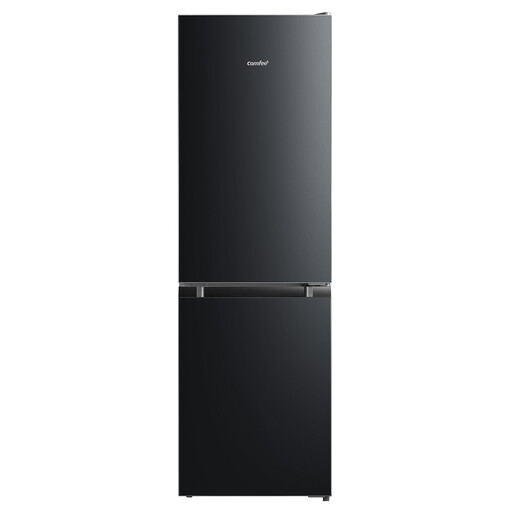
Why This Fits Their Persona: Its 50 cm width and 150 cm height suit smaller UK kitchens, rental properties and households of around two to three people.
The 174-litre net capacity is stated as 115 litres of fridge space and 59 litres of freezer space, avoiding vague capacity descriptions. Low Frost is clearly specified rather than being presented as frost free.
39 dB operation, reversible door, adjustable glass shelves and three freezer drawers.
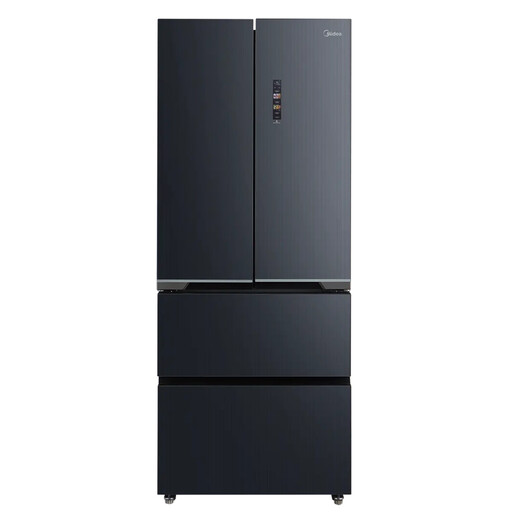
Why This Fits Their Persona: This suits households wanting large-capacity American-style storage while keeping depth to 60 cm and width to 75.3 cm.
The specification separates 276 litres of fridge capacity from 159 litres of freezer capacity and identifies Total No Frost, rather than leaving the defrost system unclear.
435-litre capacity, 35 dB noise level, XL crisper and separate freezer drawers.
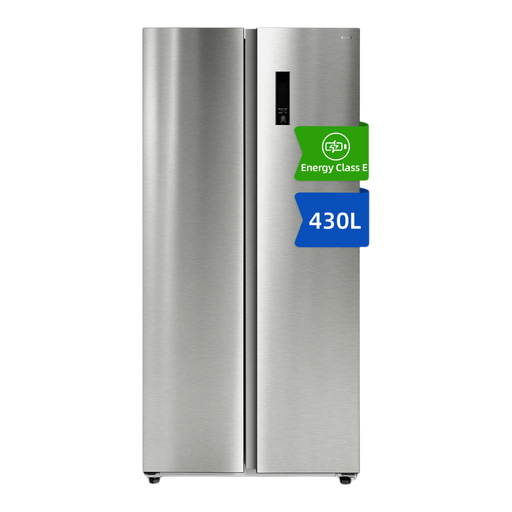
Why This Fits Their Persona: Its 261-litre fridge and 169-litre freezer compartments provide organised storage for larger families, bulk shoppers and hospitality-style food preparation.
The 430-litre capacity, 83.9 cm width and 41 dB noise level are stated clearly, helping buyers assess whether the appliance suits their room before purchase.
Frost-free cooling, Multi Airflow, six adjustable shelves and Power Freeze.
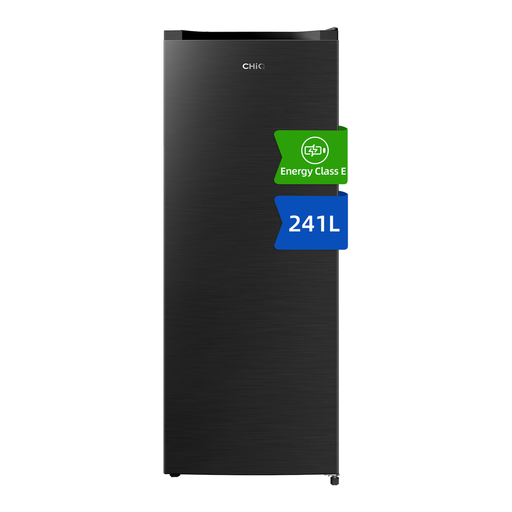
Why This Fits Their Persona: A dedicated larder fridge suits cooks and families who need substantial fresh-food storage and already have a separate freezer.
There is no hidden freezer compartment taking up chilled storage: the product is specified as an all-fridge model with 241 litres of capacity.
54 cm width, reversible door, adjustable glass shelves and dedicated salad crisper.
We have compiled a complete, real-time list of products that fully satisfy these strict selection criteria and UK safety regulations.
Before switching on a new appliance, keep it upright for the period stated in the manual, particularly after transport. Allow sufficient ventilation at the rear and avoid placing the unit next to a radiator, cooker or direct sunlight.
Use a correctly earthed mains socket and avoid unsuitable extension leads or multi-way adaptors. Once powered, allow the appliance to cool before loading it with food. Do not block air vents, overload shelves or use sharp tools to remove ice.
Mini fridges are usually intended for drinks, snacks, skincare or overflow storage. Thermoelectric models may cool below room temperature but generally cannot freeze food. For regular fresh and frozen food storage, choose a compact fridge freezer or undercounter refrigerator with the required compartments.
The exact clearance depends on the manufacturer’s instructions. Check the product manual and installation guidance rather than assuming that an appliance can sit flush against the wall. Allow room for ventilation, door opening and cleaning access.
Cooling technology is only one factor. Compare the appliance’s annual kWh consumption, capacity and energy label. A larger frost-free model may use more electricity overall than a smaller low-frost appliance, even when both carry the same E rating.