
24/7 Customer Support

Free returns

Same-day & Next-day Delivery

Quality Guaranteed

Unlock Your Welcome Offers: FREE Delivery | Up to 80% OFF | Free 30-day JoyPlus trial
Download the APP
A fridge freezer is a long-term household purchase, but product listings can make comparison unnecessarily difficult. Large capacity figures may hide a narrow freezer, “frost free” may refer to only one compartment, and an attractive price may exclude the installation requirements your kitchen needs.
The most common buying traps are:
Manufacturers quote net capacity in litres, which is more useful than external dimensions alone. A 70/30 fridge freezer typically provides more fresh-food storage, making it suitable for couples, families and households that buy fresh ingredients regularly. A 60/40 layout may be more practical if you freeze batch-cooked meals, meat or bulk purchases.
As a general guide, compact models around 170–200 litres can suit one or two people, while 250–300 litres may be more comfortable for a couple or small family. Large capacity fridge freezers above 500 litres require considerably more floor space and may be excessive for a smaller household.
Measure the available space at floor level, worktop height and door height. Check height, width and depth, including handles and hinges. Also measure hallways, staircases and doorways before ordering.
A freestanding fridge freezer needs air circulation around the appliance as specified by the manufacturer. An integrated fridge freezer needs a compatible housing unit and the correct hinge system. Sliding hinges and fixed hinges are not automatically interchangeable, so check the existing cabinet before selecting a replacement.
American fridge freezers and French door fridge freezers need additional width for delivery, door opening and access to drawers. For example, a side-by-side model measuring around 91 cm wide will not fit a standard 60 cm appliance gap.
The UK energy label uses classes from A to G, with A being the highest class on the current scale. Compare the stated annual electricity consumption in kWh per year, rather than relying on the letter alone. Actual running costs depend on your tariff, room temperature, loading and usage.
A low frost fridge freezer reduces ice formation but may still need occasional manual defrosting. A Total No Frost fridge freezer circulates cooled air to help prevent frost build-up in the specified compartments. Also check the noise rating: models around 35–41 dB(A) are worth considering for open-plan kitchens, although placement and room acoustics affect how noise is perceived.
Smart functions can be useful, but Wi-Fi, app controls and energy monitoring should be treated as optional conveniences rather than substitutes for suitable capacity, installation and efficiency.
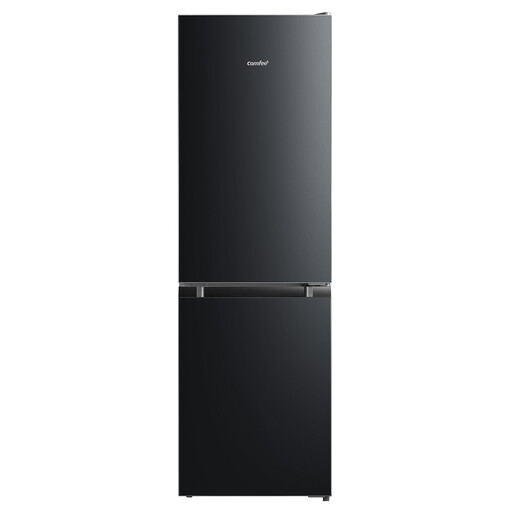
Why This Fits Their Persona: Its 50 cm width and 150 cm height make it suitable for smaller kitchens, flats and households of two to three people.
The listing states Low Frost rather than Total No Frost, so maintenance expectations are clearer before purchase.
174-litre capacity, reversible door, 4-star freezer and stated 39 dB noise level.
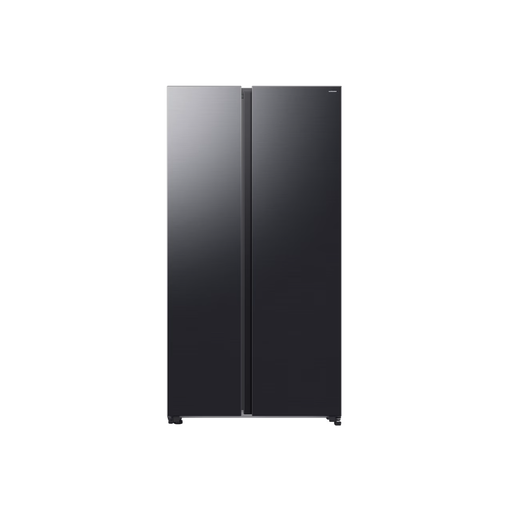
Why This Fits Their Persona: The side-by-side layout and smart functions suit larger households wanting substantial storage and connected controls.
The 652-litre capacity and 912 mm width are clearly stated, helping buyers check whether the appliance suits their kitchen before ordering.
Class C energy rating, Wi-Fi connectivity, Smart Conversion modes and a non-plumbed dispenser.
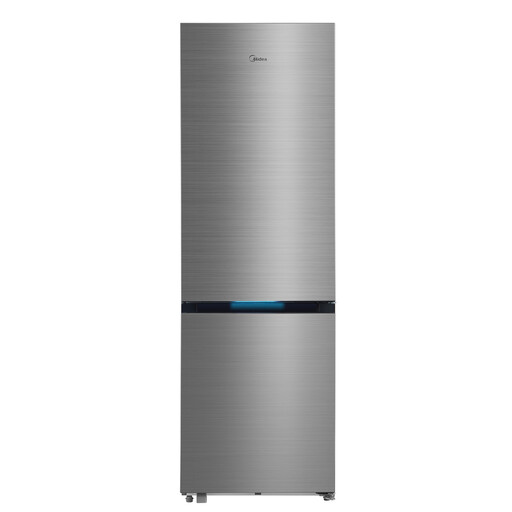
Why This Fits Their Persona: It combines a standard-width footprint with 400 litres of storage, making it suitable for families managing larger weekly shops.
The product specifies Total No Frost for both compartments, along with separate 270-litre fridge and 130-litre freezer capacities.
400-litre net capacity, 35 dB noise level, Class C rating and adjustable internal storage.
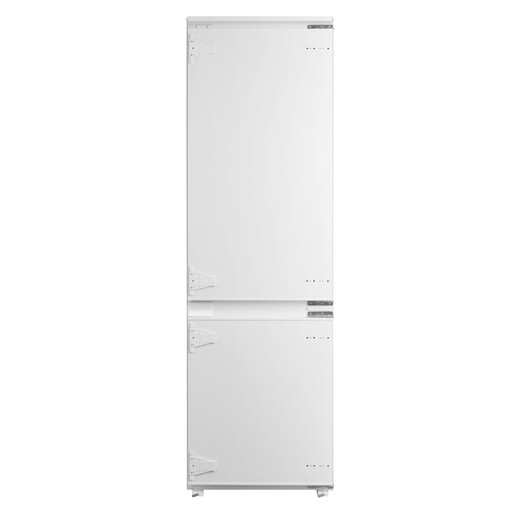
Why This Fits Their Persona: Its 54 cm width, sliding hinge and built-in design suit homeowners replacing an integrated appliance during a kitchen renovation.
The listing identifies Low Frost rather than implying zero maintenance, and gives the niche dimensions and sliding-hinge arrangement.
271-litre capacity, 70/30 layout, Fast Freeze function and stated 38 dB operation.
We have compiled a complete, real-time list of products that fully satisfy these strict selection criteria and UK safety regulations.
Follow the manufacturer’s installation instructions because clearance varies by model. Freestanding appliances commonly require space around the sides, rear and top for ventilation. Integrated models need the correct cabinet ventilation route and niche measurements.
They can reduce routine maintenance by helping prevent frost build-up in the specified compartments. However, buyers should still clean door seals, keep vents clear and follow the care instructions. A Low Frost model may cost less but normally requires occasional defrosting.
Running cost depends on the appliance’s annual kWh figure and your electricity tariff. Multiply the stated annual kWh by your price per kWh for an estimate. Actual use may vary with room temperature, door openings, food loading and settings.