
24/7 Customer Support

Free returns

Same-day & Next-day Delivery

Quality Guaranteed

Unlock Your Welcome Offers: FREE Delivery | Up to 80% OFF | Free 30-day JoyPlus trial
Download the APP
Replacing a fridge freezer is rarely as simple as choosing the largest capacity within budget. A model that looks suitable online may fail to fit through a doorway, leave insufficient ventilation or offer the wrong balance of fridge and freezer space.
The most common buying mistakes are easy to overlook:
For a freestanding fridge freezer, record the available height, width and depth, then check the manufacturer’s ventilation guidance. A 50cm or 55cm model may be more suitable for a galley kitchen or compact flat than a standard 60cm appliance.
Remember to measure:
A narrow fridge freezer or slimline fridge freezer can provide useful storage without blocking walkways. For example, a 50cm-wide appliance may fit a gap where a conventional model cannot.
For a fitted kitchen, check the housing dimensions and hinge system, not just the appliance’s external measurements. An integrated fridge freezer or built-in fridge freezer must match the cabinet height, depth and door-fixing arrangement. Sliding hinges and fixed hinges are not interchangeable without checking compatibility.
Total litres provide a useful starting point, but the split between compartments matters more for everyday use.
A 50/50 fridge freezer gives roughly equal fridge and freezer space, which can suit households that batch-cook or keep substantial frozen stocks. Models with a larger fridge section may be more practical for couples who buy fresh food frequently. American fridge freezers offer significantly more capacity, but they require generous floor space and may be difficult to manoeuvre into smaller kitchens.
As a general guide:
Check the stated net capacity, as this reflects usable internal storage more closely than gross capacity.
A Total No Frost fridge freezer circulates cold air to help prevent frost and ice build-up. This reduces the need for manual defrosting and can keep drawers easier to open. A low frost fridge freezer reduces ice formation compared with conventional static cooling, but occasional defrosting may still be required.
Other practical features include:
For an energy-efficient fridge freezer, compare the energy class, annual kWh information and capacity together. An appliance with a larger internal volume may naturally use more electricity overall, even if it carries the same label class as a smaller model.
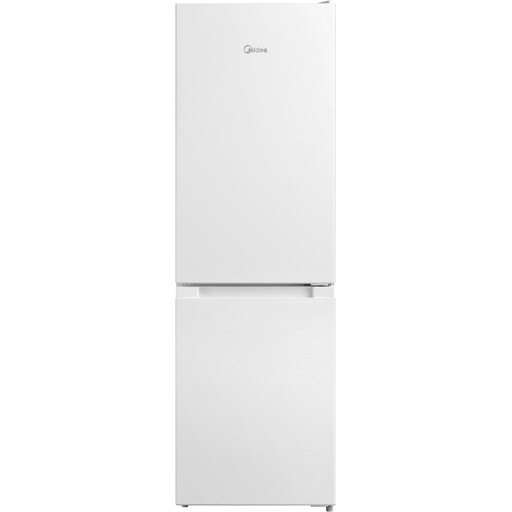
Why This Fits Their Persona: Its 50cm width suits smaller UK kitchens, rented homes and utility rooms where standard-width appliances may not fit.
The compact dimensions are stated clearly, and its reversible door helps avoid awkward opening arrangements.
173-litre capacity, LED interior lighting, transparent freezer drawers and an E energy class.
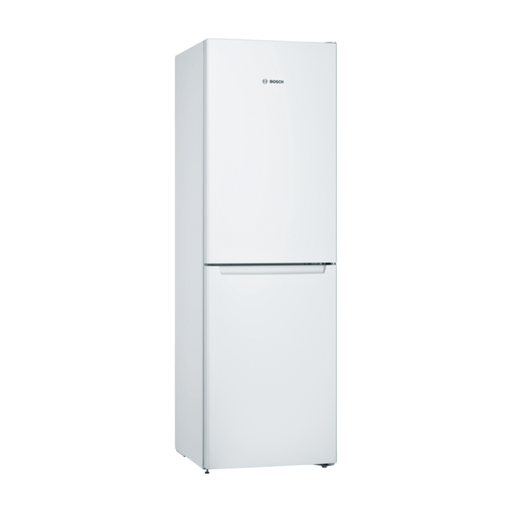
Why This Fits Their Persona: A conventional 60cm format and 300-litre capacity provide a practical fit for family kitchens requiring balanced fresh and frozen storage.
Its Total No Frost system addresses the maintenance burden associated with conventional freezer compartments.
300-litre total capacity, 50/50 split, MultiAirflow cooling, SuperFreezing and a stated 42 dBA noise level.
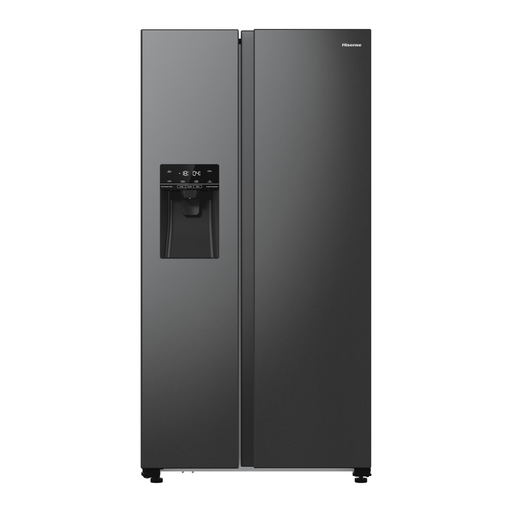
Why This Fits Their Persona: Its 535-litre capacity is suited to larger households, frequent bulk shopping and homes with sufficient space for an American-style appliance.
The dispenser requirement is explicit: it must be connected to a mains water supply, avoiding confusion over refillable versus plumbed systems.
535-litre capacity, Total No Frost, cubed and crushed ice, chilled water and a stated 41 dB noise level.
We have compiled a complete, real-time list of products that fully satisfy these strict selection criteria and UK safety regulations.
The required clearance varies by model. Follow the manufacturer’s installation instructions rather than assuming a standard gap. Integrated appliances depend on correctly ventilated cabinetry, while freestanding models commonly need space around the back and sides.
Lifespan depends on usage, maintenance, installation and component reliability. Keeping ventilation clear, avoiding overloading, cleaning door seals and maintaining suitable temperatures can support dependable operation. Always check the warranty terms, registration requirements and whether parts or labour are covered.