
24/7 Customer Support

Free returns

Same-day & Next-day Delivery

Quality Guaranteed

Unlock Your Welcome Offers: FREE Delivery | Up to 80% OFF | Free 30-day JoyPlus trial
Download the APP
Choosing between fridges and fridge freezers is not simply a matter of picking the largest capacity or the lowest advertised price. A compact kitchen may need an under-counter fridge, while a busy family could require a French door fridge freezer with separate freezer drawers. Tenants, students, landlords and office users may also prioritise reversible doors, low noise or straightforward installation.
The right choice depends on your available space, food-shopping habits and tolerance for maintenance. Before comparing models, watch out for these common buying pitfalls.
A fridge or fridge freezer may fit between two cabinets but still be difficult to install or use. Check the full height, width and depth, including handles and door clearance. Measure the route into the property as well as the final position: doorways, staircases and lift dimensions can all create problems.
Ventilation space is also important. Follow the manufacturer’s instructions for clearance at the rear, sides and top. Blocking air vents can affect cooling performance and energy use.
A No Frost fridge freezer circulates cold air to reduce frost formation across the relevant compartments, usually removing the need for routine manual defrosting. Low Frost technology reduces ice build-up but may still require occasional defrosting.
For example, the Midea MDRB202FGE01 uses Low Frost technology, whereas several larger multi-door models in this guide use Total No Frost. Neither description should be treated as interchangeable when comparing maintenance requirements.
UK appliances use the A to G energy label, with A generally indicating lower energy consumption under the label’s test conditions. However, actual running costs depend on the appliance’s annual kWh figure, size, room temperature, usage and ventilation.
A smaller E-rated fridge may use less electricity overall than a much larger appliance with a higher rating. Compare the annual kWh consumption shown on the product specification rather than relying on the letter alone.
Total litres do not tell the whole story. A 250-litre fridge freezer may divide storage into 180 litres of fridge space and 70 litres of freezer space, while another model with the same total capacity may have a different balance.
Consider how you shop:
Look at shelf adjustability, salad drawers, door bins and freezer drawer design. Transparent drawers can make stored food easier to identify and organise.
Check the appliance dimensions against the available gap, but also confirm:
A 54cm-wide appliance may suit a narrow kitchen, but a 75cm- or 84cm-wide American-style model needs a more generous installation area. Integrated fridge freezers also require compatible cabinet dimensions and the correct sliding or fixed hinge arrangement.
Static cooling, Low Frost, Total No Frost and fan-assisted systems have different maintenance and operating characteristics. A No Frost fridge freezer can reduce manual defrosting, while Multi Air Flow systems distribute chilled air through multiple vents.
Noise is measured in decibels, or dB. Models rated around 35–41 dB may be more suitable for open-plan kitchens, bedrooms or studio flats, although the perceived sound can vary with flooring, installation and compressor cycles.
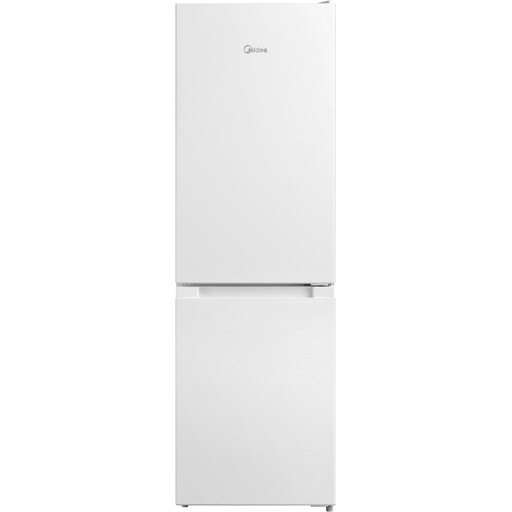
Why This Fits Their Persona: Its 50cm width and 173-litre capacity suit smaller households, galley kitchens, utility rooms and rented accommodation where space is limited.
The listed dimensions, 121-litre fridge section and 52-litre freezer section make the storage split clear before purchase. Its reversible door helps with awkward layouts.
50cm width; adjustable glass shelves; transparent freezer drawers; E energy class; 40 dB noise rating.
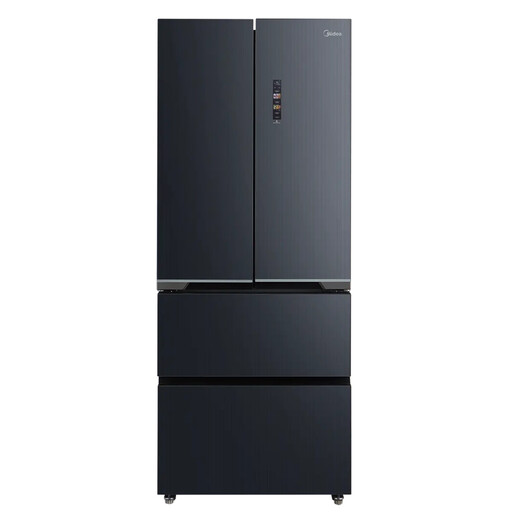
Why This Fits Their Persona: Households wanting large storage with a 60cm depth and 753mm width may find its French door layout easier to integrate than wider American-style designs.
Its listed 435-litre capacity is separated into 276 litres of fridge space and 159 litres of freezer space. Total No Frost is specified rather than implied.
35 dB noise level; external electronic display; separate freezer drawers; 600mm depth; 285 kWh annual consumption.
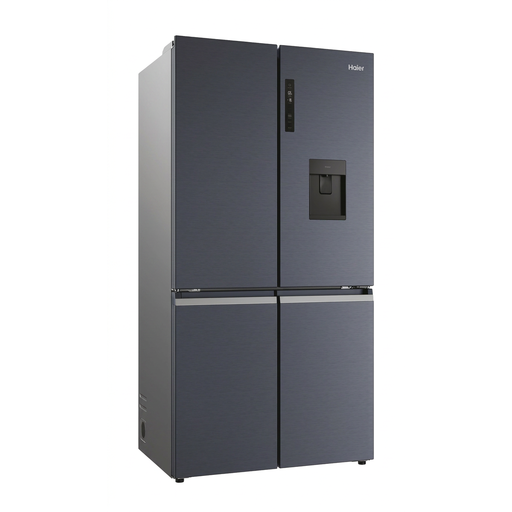
Why This Fits Their Persona: Its 528-litre capacity is intended for large households that buy in bulk and need separate, organised refrigerator and freezer storage.
The specification states a 908mm width, 648mm depth and 120kg product weight, helping buyers check floor space and delivery access before ordering.
351-litre fridge capacity; 174-litre freezer capacity; Total No Frost; water dispenser; 39 dB operation.
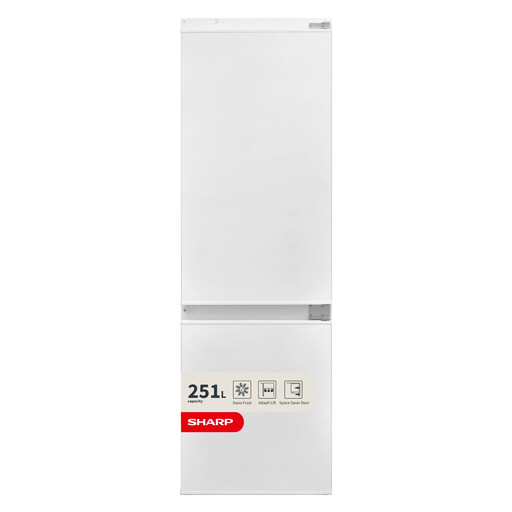
Why This Fits Their Persona: Designed for homeowners or landlords planning a fitted kitchen, this integrated model sits behind a cabinet door for a consistent finish.
The product is identified as integrated, with dimensions of 1776 x 540 x 545mm and a sliding hinge. Confirm cabinet compatibility before installation.
181-litre fridge section; 70-litre freezer; NanoFrost; reversible door; 38 dB noise rating.
We have compiled a complete, real-time list of products that fully satisfy these strict selection criteria and UK safety regulations.
Before switching on, follow the supplied manual and allow the appliance to stand upright for the stated settling period, particularly if it has been transported on its side. Level the feet, keep ventilation openings clear and avoid placing the appliance beside a cooker, radiator or direct sunlight.
Do not overload shelves or block internal vents. Keep the door seal clean and check that the door closes fully. These simple steps can support consistent cooling and help prevent unnecessary energy use.
Lifespan varies with build quality, installation, usage and maintenance. Keeping ventilation clear, cleaning door seals and responding promptly to unusual noises or temperature changes can help protect the appliance. Always check the manufacturer’s warranty and registration requirements.
Not automatically. No Frost systems can reduce manual defrosting and help maintain usable freezer space, but running costs depend on the appliance’s annual kWh consumption, size and energy class. Compare the energy label figures between similar-capacity models.
An under-counter fridge can be suitable for one person, a couple, an office or supplementary storage. Models such as the Sharp SJ-UE121M4B-EN provide 122 litres of total capacity with a small icebox. If you need regular frozen-food storage, a compact fridge freezer may be more practical.