
24/7 Customer Support

Free returns

Same-day & Next-day Delivery

Quality Guaranteed

Unlock Your Welcome Offers: FREE Delivery | Up to 80% OFF | Free 30-day JoyPlus trial
Download the APP
Buying a fridge freezer is rarely as simple as choosing the largest capacity within budget. A model can look suitable online yet fail to fit through a doorway, leave insufficient clearance for ventilation or provide the wrong balance of chilled and frozen storage.
The same applies to mini fridges, drinks refrigerators and American-style appliances. Marketing often highlights impressive features while leaving practical limitations in the small print. Before choosing, check the dimensions, cooling system, energy label, noise level and the way you actually store food.
A stated width is not the complete installation requirement. You also need to allow for depth, door opening, ventilation and delivery access. Check:
A slimline fridge freezer may fit a narrow kitchen but still be too deep for a compact galley layout. Likewise, an American fridge freezer can require considerably more delivery clearance than its product width suggests.
A no frost fridge freezer circulates cold air to help prevent frost and ice accumulation, reducing the need for manual defrosting. It still requires cleaning, clear air vents and a properly sealed door.
A low frost fridge freezer reduces ice build-up compared with conventional static cooling, but periodic defrosting may still be necessary. Choosing between the two should depend on your maintenance preferences and budget, rather than the label alone.
UK refrigeration appliances use the A to G energy-efficiency scale. The rating is useful for comparison, but annual energy consumption in kWh gives a more practical indication of likely electricity use. Compare models with similar capacity and layout, as a smaller E-rated appliance may use less electricity overall than a much larger appliance with the same rating.
Total litres do not tell you how usable the interior will be. Look separately at fridge and freezer capacity, then consider the layout:
For example, the CHiQ 250L model divides storage into 180L of fridge space and 70L of freezer space, while the Midea 435L French door model provides 276L for fresh food and 159L for frozen items.
Measure width, height and depth in centimetres, and compare them with the product dimensions rather than relying on category descriptions such as “compact”. A 47cm-wide model can be useful for a small flat, while a 60cm-wide French door fridge freezer may provide more capacity without the full footprint of a large side-by-side appliance.
Ventilation is also important. Follow the manufacturer’s clearance instructions, keep air vents unobstructed and avoid placing the appliance next to a radiator, oven or strong direct sunlight.
Total No Frost can reduce manual defrosting. Low Frost can reduce, but not necessarily eliminate, ice accumulation. Inverter systems may adjust cooling output according to demand, while multi-air-flow systems distribute cold air around the compartment.
For open-plan kitchens, bedrooms or study areas, check the stated noise level. The products below range from 35dB to 39dB where a specification is provided. Useful features can include reversible doors, adjustable shelves, transparent freezer drawers, external controls and non-plumbed water dispensers. Choose features that solve a genuine daily need rather than paying for functions that will rarely be used.

Why This Fits Their Persona: Its 47cm width and 144cm height suit students, couples and renters working with limited kitchen space.
The published measurements help buyers check a genuinely narrow footprint rather than relying on a vague compact label. Low Frost also sets realistic maintenance expectations.
157L total capacity, three freezer drawers, reversible door, E energy rating and stated 39dB noise level.
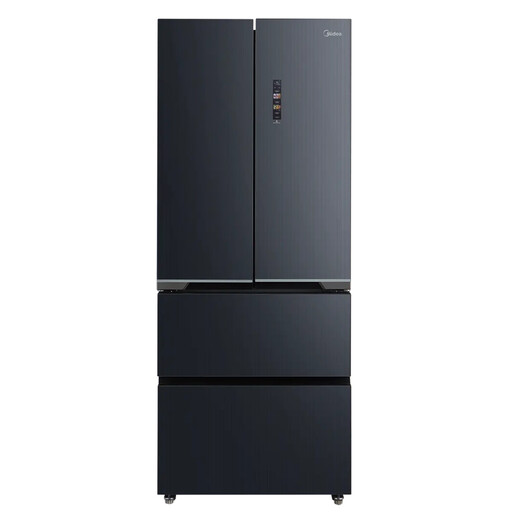
Why This Fits Their Persona: It suits larger households wanting American-style capacity while keeping depth to 600mm and width to 753mm.
Its listed dimensions make it easier to assess against standard-depth cabinetry, while Total No Frost avoids the expectation of frequent manual defrosting.
435L capacity, 35dB noise level, Total No Frost, external electronic display and XL crisper.
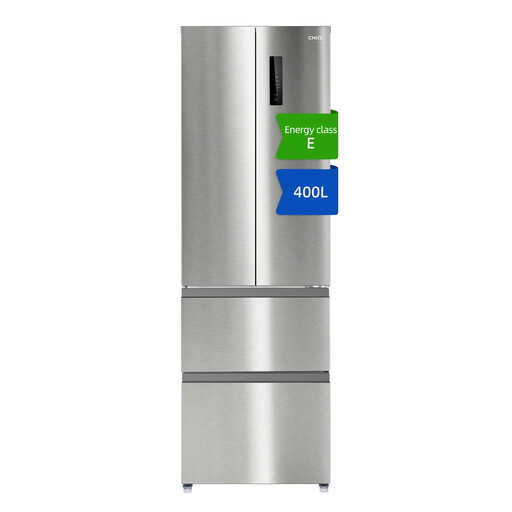
Why This Fits Their Persona: Its 400L layout works for home cooks, batch-preparers and households that need accessible fresh and frozen storage.
The 60cm width is stated clearly, and the two freezer drawers provide a more structured alternative to one deep, difficult-to-sort compartment.
400L capacity, Total No Frost, 37dB operation, Care+ Space modes and direct-access freezer drawers.
We have compiled a complete, real-time list of products that fully satisfy these strict selection criteria and UK safety regulations.
The required clearance varies by model, so follow the installation instructions supplied with the appliance. As a general principle, do not block rear or side vents, keep the appliance level and leave enough space for heat to disperse. Check these requirements before placing it inside a tight cabinet gap.
They can be suitable for households that want to reduce manual defrosting. However, no frost does not remove the need for cleaning, correct ventilation or checking the door seal. A low frost model may be sufficient if occasional defrosting is acceptable and the purchase price or dimensions are more important.
Lifespan depends on usage, installation, maintenance and the appliance’s components. Keeping vents clear, cleaning door seals, avoiding overloading and allowing sufficient ventilation can support reliable operation. Always follow the manufacturer’s instructions and check the warranty terms before purchase.