
24/7 Customer Support

Free returns

Same-day & Next-day Delivery

Quality Guaranteed

Unlock Your Welcome Offers: FREE Delivery | Up to 80% OFF | Free 30-day JoyPlus trial
Download the APP
Replacing a fridge freezer is a significant household purchase, but comparing models by price and appearance alone can lead to costly compromises. A slim appliance may lack usable freezer space, while an American fridge freezer may not fit through your door or sit comfortably beside existing cabinets.
The same applies to standalone freezers. A low-priced under-counter freezer can be practical for a flat, but manual defrosting may become inconvenient if you use it for batch cooking or bulk shopping.
This guide explains the specifications that matter, the common marketing traps to avoid and which configurations suit different UK households.
A listed capacity does not tell you how easily the space can be used. Door bins, thick insulation, fixed shelves and awkward corners all affect practical capacity. Check the separate fridge and freezer capacities, not only the combined litre figure.
Also measure more than the appliance width. Confirm:
A 54cm-wide fridge freezer, such as the CHiQ JKR282WSSE, may suit a narrower kitchen, but its 192cm height still needs checking against wall units and ceiling space.
The UK energy label uses an A to G scale, with A generally indicating greater efficiency than E under the label system. However, two appliances with the same rating can have different annual energy consumption figures because of their size and design.
Compare the stated kWh per year where available. A larger energy-rated fridge freezer may use more electricity overall than a smaller model, even if both carry the same letter rating. Your household’s usage, room temperature and how often the doors are opened also affect running costs.
Frost-free fridge freezer, No Frost and Total No Frost generally refer to systems that circulate dry, cold air to reduce frost accumulation. This can reduce the need for manual defrosting, but it does not remove the need to clean seals, shelves and ventilation areas.
Check whether the system applies to both the fridge and freezer compartments. Also consider noise: fan-assisted cooling can produce a different sound profile from a basic static appliance.
For couples or smaller households, a compact fridge freezer around 200–300 litres may provide a suitable balance. Families, meal preppers and bulk shoppers may prefer 400 litres or more, provided the kitchen can accommodate the width and depth.
Storage layout is just as important as capacity:
A freestanding model gives you more flexibility if you move or redesign your kitchen. An integrated freezer sits behind a furniture door for a coordinated fitted appearance, but it requires the correct housing dimensions, ventilation and hinge arrangement.
Built-under and under-counter freezer models are designed to fit beneath a worktop. Always compare the required niche size with the appliance dimensions. A built-in model cannot simply be placed in an unsuitable cabinet.
Noise is measured in decibels, so a lower stated figure is generally preferable for open-plan kitchens. For reference, the Midea MDRF600BIE70 lists 35dB, while the CHiQ JKR525WSSE lists approximately 37dB.
Inverter systems adjust compressor operation according to cooling demand. This may support stable temperatures and quieter operation, but compare the full specification rather than relying on the word “inverter” alone.
Look for practical features such as:
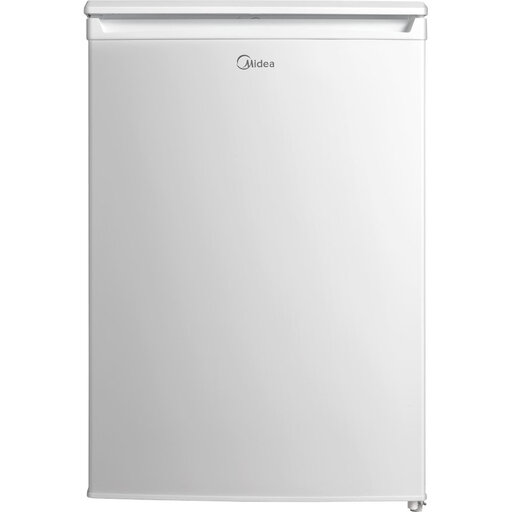
Why This Fits Their Persona: A compact option for flats, smaller kitchens or households needing supplementary frozen storage beneath a worktop.
Its 86-litre capacity and stated 84.5cm height make the space requirement clear. Note that it uses manual defrosting, so it is less suitable for users wanting Total No Frost.
Three transparent drawers, reversible door, E energy rating and 39dB stated noise level.
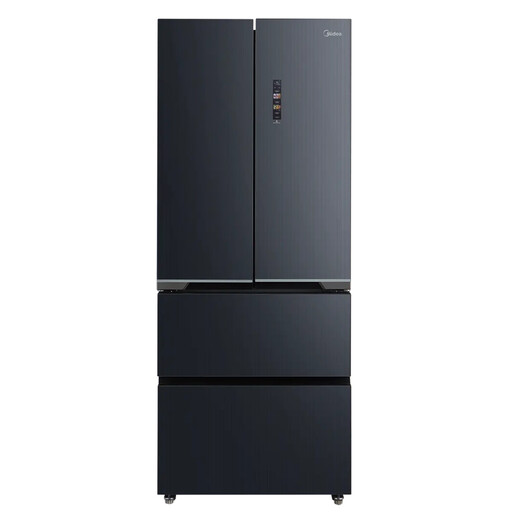
Why This Fits Their Persona: Suits homeowners wanting American-style storage with a 600mm depth that aligns more naturally with standard kitchen cabinetry.
The specification states 753mm width, 600mm depth and 435-litre capacity, helping buyers assess fit rather than relying on styling alone.
French door layout, Total No Frost, 35dB stated noise level and 285kWh/year listed consumption.
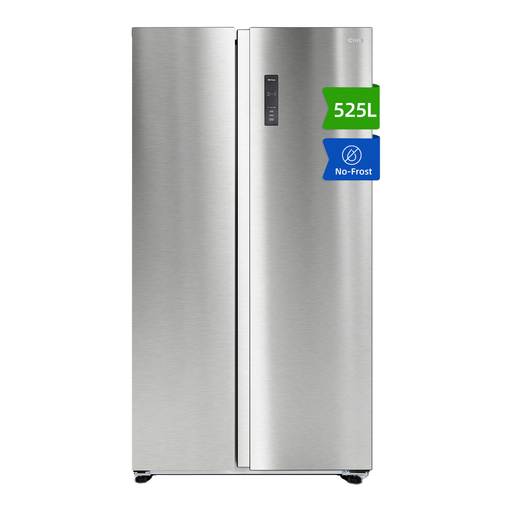
Why This Fits Their Persona: Designed for larger households, frequent bulk shops and users who need substantial fresh and frozen capacity.
Its 912mm width and 1762mm height make the required space clear, while the separate 333-litre fridge and 192-litre freezer figures show how capacity is divided.
525-litre total capacity, Total No Frost, 3D Multi-Airflow and fast freeze specified at -32°C.
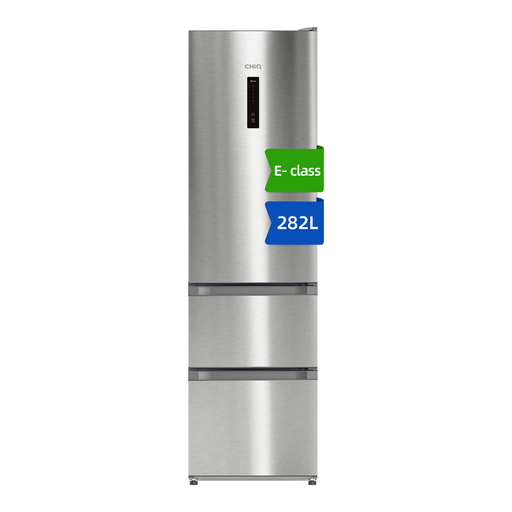
Why This Fits Their Persona: A slim vertical design for flats and modern kitchens where every centimetre matters.
The 54cm width and 282-litre total capacity are stated together, making it easier to judge the space-to-storage trade-off.
Three-door drawer configuration, Total No Frost, 37dB stated noise level and touch controls.
We have compiled a complete, real-time list of products that fully satisfy these strict selection criteria and UK safety regulations.
They can be useful for households that want to reduce manual defrosting. A frost-free system circulates air to limit frost accumulation, but regular cleaning and correct ventilation are still required. Compare the appliance’s noise level, capacity and energy consumption alongside the defrost technology.
The required clearance varies by model. Follow the installation manual rather than using a universal figure. Measure the rear, sides and top clearance, and allow enough room for doors and drawers to open. Insufficient ventilation can affect operation and may affect warranty conditions.
Consumption depends on size, energy rating, annual kWh figure, room temperature and usage. Check the UK energy label and compare annual consumption between similarly sized models. Keeping doors closed, maintaining clean seals and avoiding installation beside heat sources can also support efficient operation.