Portion organisers
People sharing a fridge who want distinct places for sealed, labelled cheese portions. Adjustable shelves can help them arrange containers so that each person can find their food; Beko UK discusses this use of adjustable shelving.


Choose the fridge layout before the brand: several people need enough usable shelving to keep sealed, labelled cheese portions separate and easy to find. A 50/50 fridge-freezer suits households that also need substantial frozen storage; if chilled food takes priority, compare fridge-compartment space instead. For either choice, check container fit, installation clearance and the storage instructions on each cheese pack.
People sharing a fridge who want distinct places for sealed, labelled cheese portions. Adjustable shelves can help them arrange containers so that each person can find their food; Beko UK discusses this use of adjustable shelving.
Households storing several portions of cheese alongside other chilled foods, where usable fridge space matters more than a large freezer compartment.
Housemates fitting a fridge-freezer into a compact communal kitchen who need to check its dimensions, ventilation clearance and stated noise figure as well as its storage layout.
Start with the amount of chilled and frozen food the household actually stores, then check whether the containers and appliance fit the available space. A 50/50 split allocates similar space to each compartment; an integrated model also needs compatible cabinet housing, whereas a freestanding one needs a suitable position and clearance.
| Concern | What to check | Who this matters to |
|---|---|---|
| Portion organisation | Look at shelf adjustability, drawer positions and the space your usual sealed containers need. | When several people use the same shelf, I want my labelled cheese portions to remain distinct and visible. Around 31% of consumers put portion organisation first. |
| Chilled storage | Compare fridge-compartment litres and check the controls against each cheese pack’s storage instructions. | If cheese and other chilled foods occupy most of our shared storage, I need fridge space before extra freezer volume. Chilled storage is the first concern for around 31% of consumers. |
| Fit and disturbance | Measure the delivery route and door swing; check the model’s ventilation clearance and declared noise in dB(A). | With a small kitchen near shared living space, I need the appliance to fit, open and run without unnecessary disturbance. Around 23% of consumers prioritise fit and disturbance. |
| Freezer and upkeep | Choose the fridge/freezer split for your shopping habits; compare the exact model’s energy information and defrosting requirements. | We store frozen food as well as cheese, so I want the compartment balance and routine upkeep to suit both. Freezer and upkeep needs come first for around 15% of consumers. |
Total capacity includes freezer space, which does not tell you whether several cheese containers will fit on accessible fridge shelves.
Compare chilled-compartment litres, shelf positions and your usual container dimensions. Bosch UK’s published compartment figures for individual models illustrate why the fridge and freezer volumes should be read separately.
A fitted fridge-freezer depends on the cabinet, hinge arrangement and ventilation path, not just the appliance’s nominal height.
Use the exact model’s installation drawing to measure the housing, door arrangement and delivery route before ordering.
A mismatch may mean altering the cabinet or choosing another appliance.
Electrical Safety First advises leaving room behind fridges and freezers for air to circulate freely.
Follow the model’s clearance instructions and avoid positioning it close to cookers, radiators or direct sunlight.
Sharing a domestic fridge is different from preparing or serving food for customers as a food business.
If the kitchen will be used for a food business, check registration and applicable hygiene requirements with the local authority. For household use, follow the storage instructions on each cheese pack and keep portions identifiable.
Relevant when comparing built-in or freestanding models with different storage layouts and published compartment specifications.
Relevant to households comparing models marketed around internal capacity and air circulation.
Relevant to buyers thinking about shelf organisation and access to model documentation.
These freestanding and integrated fridge-freezers offer different sizes and compartment arrangements to consider for a shared kitchen. Check the exact shelf layout, cheese-pack storage instructions and installation requirements before choosing.
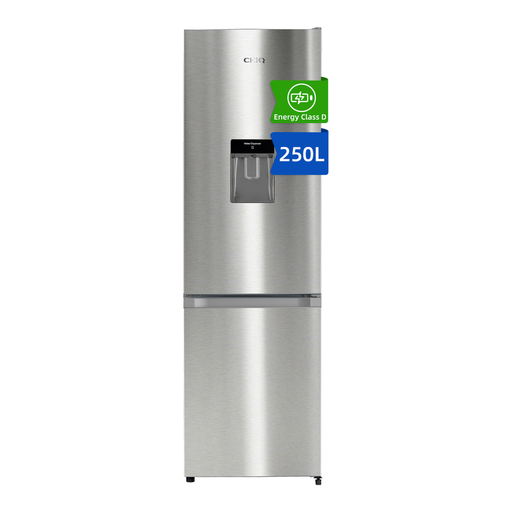 No image available
Consider this freestanding model if separate shelf space for shared portions matters; check the shelf dimensions against your containers. The title specifies a 54cm width, 181cm height and Total No Frost. Confirm installation clearance and that the fridge settings suit the cheese you store.
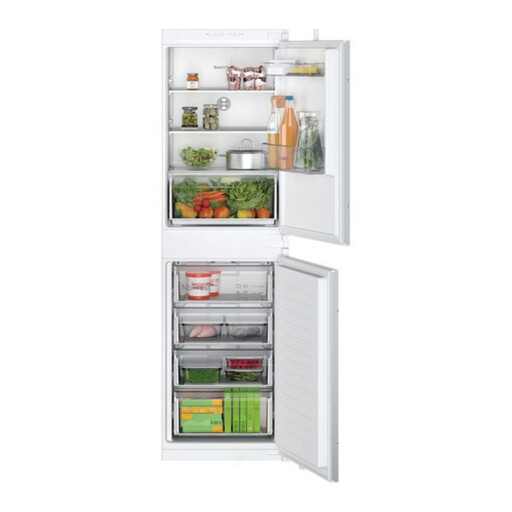 No image available
Consider this model where a fitted kitchen and a 50/50 fridge-freezer arrangement suit the household. Its title specifies a 177cm height, frost-free design and sliding hinge. Check the cabinet and hinge installation drawing, container fit and fridge settings before ordering.
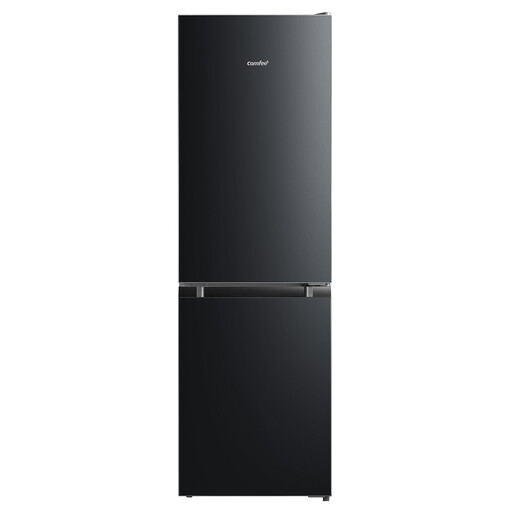 No image available
Consider this 70/30 arrangement if chilled storage takes priority over frozen storage in a compact kitchen. The title specifies a 150cm height, reversible door and Low Frost freezer; Low Frost does not eliminate defrosting. Check the shelf layout, clearances and fridge settings for your food.
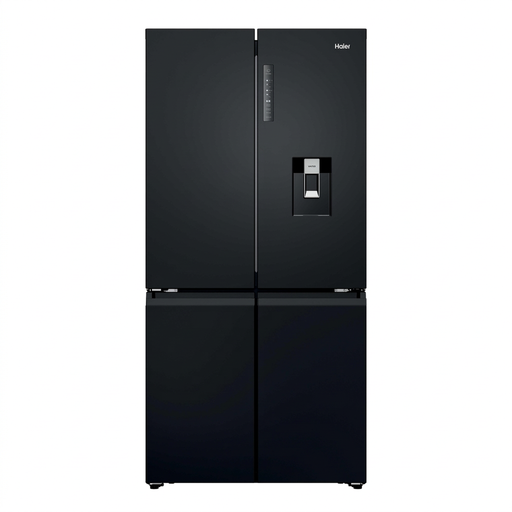 No image available
Consider this freestanding format if the household needs substantial shared storage and has room for a larger appliance. Check shelf positions and container fit, then measure the kitchen space, delivery route, door clearance and ventilation requirements. Confirm that its fridge settings suit the cheese you store.
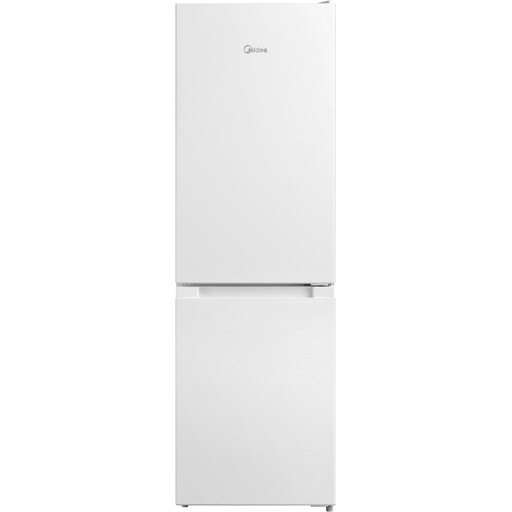 No image available
Consider this 50cm-wide model where kitchen width is limited and separate chilled and frozen compartments are needed. Check whether its shelves accommodate the household’s labelled containers. Its Low Frost feature does not eliminate freezer defrosting; also confirm placement clearance and suitable fridge settings.
Follow the storage instructions and use-by date on each cheese pack, and check that the fridge can be set appropriately. GOV.UK advises food businesses to set fridges to 5°C or below; that business guidance does not replace the instructions for a particular cheese in a domestic shared kitchen.
Keep portions in suitable original packaging or sealed, clearly labelled containers rather than leaving them loose. Labels help housemates identify whose food it is and which date applies, while separation helps protect ready-to-eat food from contamination.
Avoid sharing an extension lead with other large appliances: Electrical Safety First warns that this can overload it and create a fire risk. Check the fridge-freezer’s electrical and installation instructions and use a suitable wall socket.
No, sharing a household kitchen does not by itself mean operating a food business. If you will prepare or serve food for customers as a business, check the applicable registration and hygiene requirements with your local authority; the Food Standards Agency says food businesses must register at least 28 days before trading or starting food operations.
Arrange an appropriate electrical-appliance collection rather than putting it in general waste. Check the retailer’s collection service or your local authority’s current arrangements before delivery, since collection availability can vary.