Regular curry batch cook
If you freeze homemade curry for future meals, check usable freezer space and whether your portion containers fit the drawers. Total appliance capacity alone will not answer either question.


A 50/50 fridge-freezer is a useful starting point if you regularly freeze curry portions; a fridge-heavy 60/40 or 70/30 layout may suit you better if fresh groceries take most of your space. Whichever layout you consider, check the actual freezer capacity and whether your containers fit its drawers, then compare kitchen dimensions and annual energy use. Cool and portion curry promptly before freezing it.
If you freeze homemade curry for future meals, check usable freezer space and whether your portion containers fit the drawers. Total appliance capacity alone will not answer either question.
If curry portions are occasional freezer stock but fresh ingredients take up more room, consider a fridge-heavy layout. Check that its freezer still holds the portions and other frozen food you plan to keep.
If kitchen space is limited, measure the appliance opening and door clearance alongside freezer capacity. The drawer layout matters when you need to store several portions in a compact footprint.
Start with the number and size of portions you want to store, then rule out appliances that cannot fit your kitchen. Compare energy information among the models that meet those needs.
| Concern | What to check | Who this matters to |
|---|---|---|
| Usable freezer space | Compare frozen-compartment litres and the internal dimensions of the drawers with your portion containers. Bosch identifies 50/50, 60/40 and 70/30 as common fridge-to-freezer layouts. | If I freeze curry regularly, I need room for my usual containers as well as other frozen food. Around 29% of consumers put usable freezer space first. |
| Cooling and storage | Plan room for cooled portions and check how to control the freezer temperature. GOV.UK advises keeping a freezer around −18°C; NHS guidance says rice should be cooled as quickly as possible, within one hour, before refrigeration or freezing. | If I prepare curry ahead, especially with rice, I need a routine that lets me cool and store portions promptly. Around 29% of consumers make safe handling their primary concern. |
| Kitchen fit | Measure the installation space, delivery route and door-opening clearance; confirm whether your kitchen needs a freestanding or integrated model. | If the kitchen opening is tight, a larger appliance is no use to me unless it can be delivered, installed and opened properly. Around 24% of consumers put fit and access first. |
| Energy and upkeep | Compare annual energy use, energy class and frozen-compartment capacity on suitable models; check the exact model if frost-free operation matters to you. Energy Saving Trust notes that appliance size affects energy use even within the same rating. | If several models hold my planned portions, I want to compare their ongoing energy use and defrosting needs. Around 18% of consumers prioritise energy and upkeep. |
A large fridge-freezer may devote much of its volume to chilled food. Energy Saving Trust notes that fridge-freezer energy labels show chilled and frozen compartment capacities separately.
Decide how many curry portions you want to keep, measure your containers and compare the freezer compartment and drawer dimensions.
Freezer capacity does not replace prompt cooling. GOV.UK advises dividing cooked food into smaller portions so it cools more quickly and putting it in the fridge within one to two hours.
Portion curry into shallow containers or freezer bags, cool it promptly, then refrigerate or freeze it rather than loading it while hot or warm.
An energy class does not show annual consumption on its own. Energy Saving Trust notes that larger appliances can use more electricity than smaller ones with the same rating.
Compare annual energy use alongside freezer capacity and kitchen fit, using models that can actually hold your planned portions.
Rice needs a quicker cooling routine than the general cooked-food timeframe: the NHS advises cooling it as quickly as possible, within one hour, before putting it in the fridge or freezer.
If your portions include rice, divide them for quicker cooling and plan how you will move them into cold storage promptly.
Relevant when comparing fridge-to-freezer splits and freestanding or integrated installation.
Relevant when comparing standard-width, wider and multi-door formats.
Relevant when considering freestanding or integrated fridge-freezers and model-specific frost-free features.
These models offer integrated, narrower freestanding and wider formats for storing cooled curry portions. Compare the freezer compartment and container fit for your planned batch size rather than choosing by total appliance capacity.
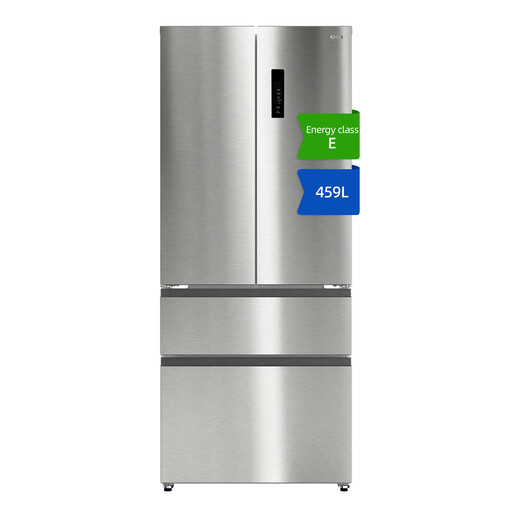 Image unavailable
Consider this wider format if a standard-width appliance cannot accommodate the portions and other food you plan to store.
The title specifies 459 L total capacity, 80 cm width, Total No Frost and an E energy rating. Check the freezer compartment and internal container fit separately.
Measure the kitchen opening, delivery route and installation clearances before choosing it.
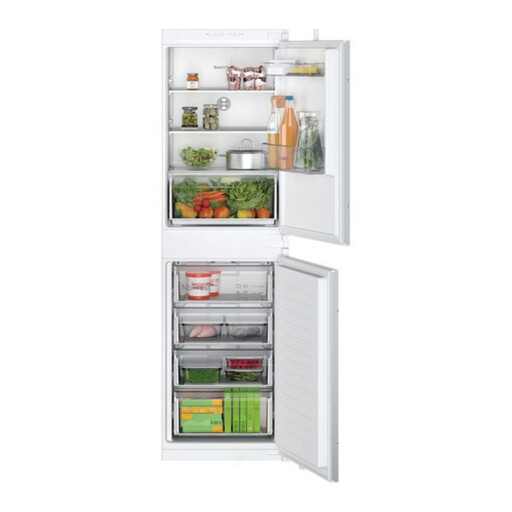 Image unavailable
This is an option if your fitted kitchen requires an integrated appliance and you want a 50/50 layout for chilled and frozen food.
The title specifies a 177 cm built-in model with a sliding hinge, 249 L total capacity, frost-free operation and an E energy rating.
Confirm the housing and hinge arrangement, then check the freezer’s usable capacity and whether your portion containers fit.
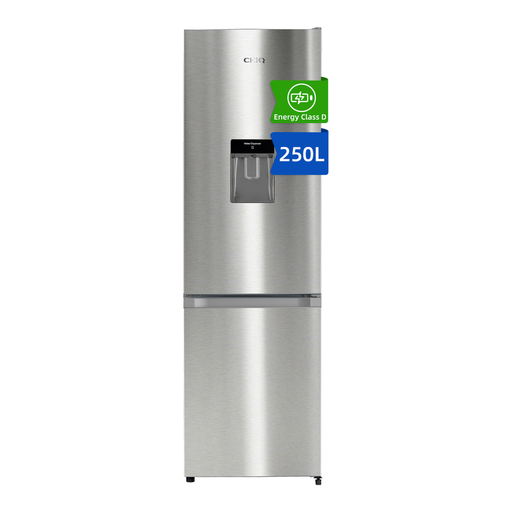 Image unavailable
Consider this narrower model if kitchen width is a constraint, while checking that its freezer holds your intended portions.
The title specifies 54 cm width, 181 cm height, 250 L total capacity, Total No Frost and a D energy rating.
Compare the freezer compartment and drawer dimensions with your containers before buying.
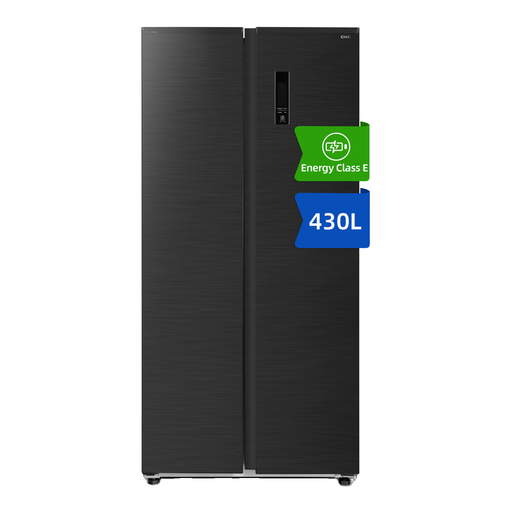 Image unavailable
This side-by-side format is worth considering if you have room for a wider appliance and need to assess substantial frozen-food storage.
The title specifies 430 L total capacity, 84 cm width, No Frost and an E energy rating. Check frozen-compartment capacity and the space available for your containers.
Allow for the delivery route and door-opening clearance as well as the installation width.
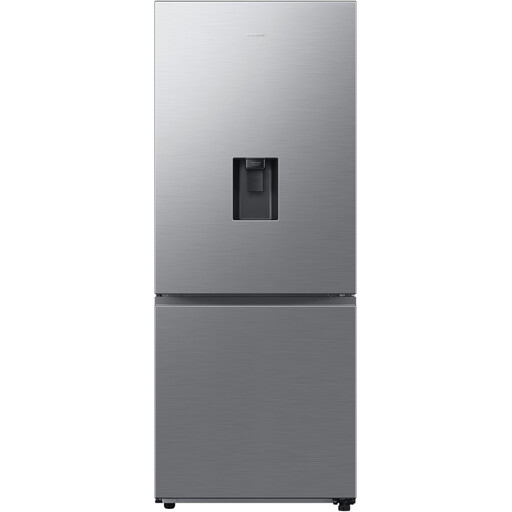 Image unavailable
Consider this larger-capacity appliance if you want to assess room for regular curry portions alongside other groceries.
The title specifies 505 L total capacity, a 75 cm width designation and an E energy rating. Confirm the installation dimensions and the freezer compartment’s capacity and drawer fit.
Compare its annual energy use with other models that meet your storage needs.
Aim for around −18°C when storing cooled curry portions, in line with GOV.UK guidance for household freezers. Check the appliance manual for how to set and monitor its temperature.
No: cool it promptly before refrigerating or freezing it. GOV.UK advises putting cooked food in the fridge within one to two hours and dividing it into smaller portions to help it cool more quickly.
Yes. The NHS advises cooling rice as quickly as possible, within one hour, then putting it in the fridge or freezer. Plan the portioning and storage steps before preparing a batch that includes rice.
Compare the energy class alongside compartment capacities and noise, rather than using the letter alone. Energy Saving Trust explains that fridge-freezer labels show chilled and frozen capacity; check annual energy use when comparing models that fit your kitchen and storage needs.