Regular batch-cooking families
If you freeze several portions at a time, look for freezer drawers that can hold your usual labelled containers without making other frozen food difficult to reach.


Choose by usable freezer space and drawer fit before comparing total appliance capacity. If family-sized curry portions are a regular part of your routine, start with a freezer layout that accommodates your containers alongside other food; a larger format makes sense only if its dimensions and delivery route work for your kitchen. Cool cooked portions promptly before freezing them, and treat a fast-freeze setting as a supporting feature rather than a substitute for food handling.
If you freeze several portions at a time, look for freezer drawers that can hold your usual labelled containers without making other frozen food difficult to reach.
A narrow appliance space makes freezer-compartment volume and drawer dimensions more useful checks than the headline capacity of the whole fridge-freezer.
Frequent access makes drawer organisation and defrosting requirements worth comparing. Check how the exact model's frost-management and rapid-freezing controls work.
Start with the space your curry containers need in the freezer, then check the cooling routine you can follow and whether the appliance fits the kitchen. A total-capacity figure cannot tell you how much of that space is available in freezer drawers.
| Concern | What to check | Who this matters to |
|---|---|---|
| Freezer space and organisation | Compare frozen-compartment litres and measure your containers against the drawer dimensions. | If I freeze several family portions at once, I need room for their containers without displacing everything else. Around 50% of consumers would put freezer space and organisation first. |
| Cooling and freezing routine | Check the fast-freeze instructions and how you will cool cooked portions promptly before storage. | When I batch-cook curry, I need a routine that gets cooled portions into the freezer promptly; a rapid-freezing control cannot make up for leaving food warm too long. For around 30% of consumers, that handling routine is the primary concern. |
| Kitchen fit and upkeep | Measure the appliance space and delivery route; compare energy information and defrosting requirements for the exact models. | I need the fridge-freezer to fit my kitchen and want to understand its energy information and upkeep before choosing a larger format. Those fit and maintenance questions come first for around 20% of consumers. |
Total litres include the fridge. For example, Beko lists a 71L freezer for its compact CNE4552, while Bosch lists a 107L frozen compartment for the KGN34NWEAG; neither figure establishes whether your containers fit the drawers.
Measure the footprint and height of the containers you normally freeze, then compare them with the exact model's freezer volume and internal drawer dimensions.
A rapid-freezing setting concerns food added to the appliance; it does not address how long cooked curry was left to cool beforehand. NHS guidance on storing prepared food calls for prompt cooling, with a shorter window for food containing rice.
Cool portions promptly in suitable containers before freezing, and follow the appliance manual for any rapid-freezing setting.
The named Beko CNE4552 is 54cm wide, the Bosch KGN34NWEAG is 60cm wide, and Beko's ASL1442V American-style model is 91cm wide. Width is only one part of fitting and installing an appliance.
Measure the intended space, doorways and route to the kitchen. Check the exact model's height, depth, door-opening clearance and installation instructions as well.
An energy class does not tell you whether two differently sized fridge-freezers offer the freezer room your household needs.
Compare the energy label and product information sheet for each exact model alongside its freezer capacity and dimensions.
These named models illustrate different formats and features; their specifications should not be assumed to apply to every fridge-freezer from the same brand.
The KGN34NWEAG is a tall, 60cm-wide freestanding option to examine if a conventional-width kitchen needs a substantial freezer compartment.
The CNE4552 and ASL1442V show how differently sized fridge-freezers within one brand can serve different kitchen spaces.
The RB34C600DSA/EU is a bottom-freezer format to consider when comparing a tall appliance with a rapid-freezing control.
Named Joybuy listings include a French-door format and a tall fridge-freezer, offering different layouts to assess for stored portions.
These fridge-freezers span larger door layouts and narrower or shorter appliances. Compare their exact freezer compartments and drawer measurements with the family portions you plan to store; total appliance capacity alone is not a measure of container fit.
 No image available
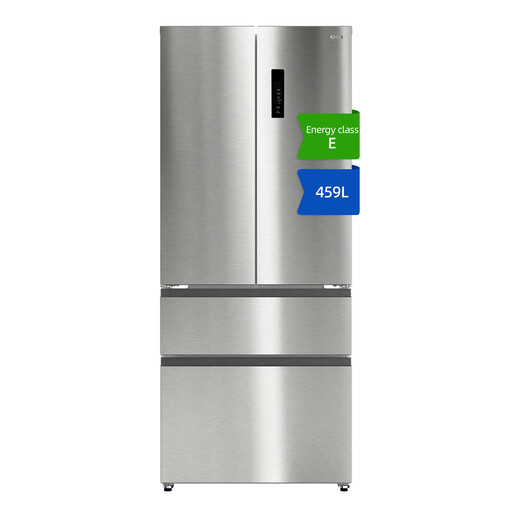
Consider this four-door format if you organise substantial batches of frozen portions and have room for a larger appliance. The product name specifies 459L total capacity and Total No Frost; check the exact dimensions, freezer drawers and your delivery route before choosing it.
 No image available
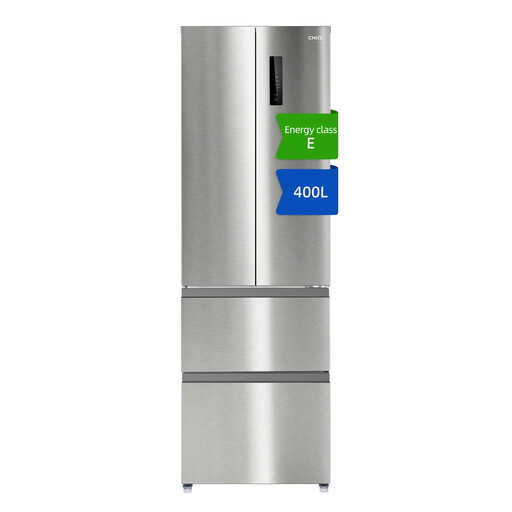
This French-door format is worth examining if you want to organise batch-cooked portions within a stated 60cm appliance width. The product name gives 400L total capacity and Total No Frost; confirm the freezer volume, drawer fit and full installation dimensions for this WSSE variant.
 No image available
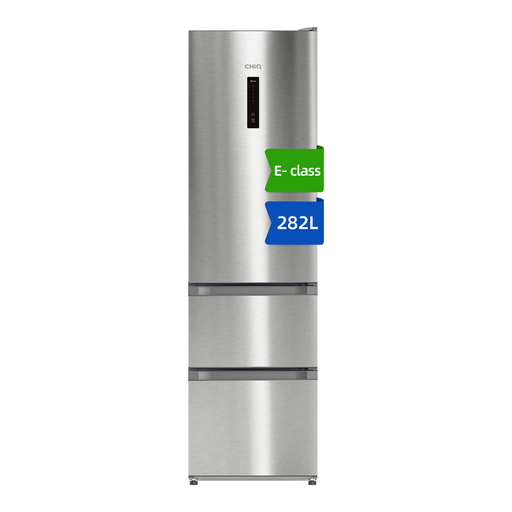
Its stated 54cm width makes this a model to check for a narrower appliance space, provided its freezer drawers accommodate your regular curry containers. The product name also specifies No Frost and 282L total capacity; establish the freezer-compartment volume separately before deciding.
 No image available
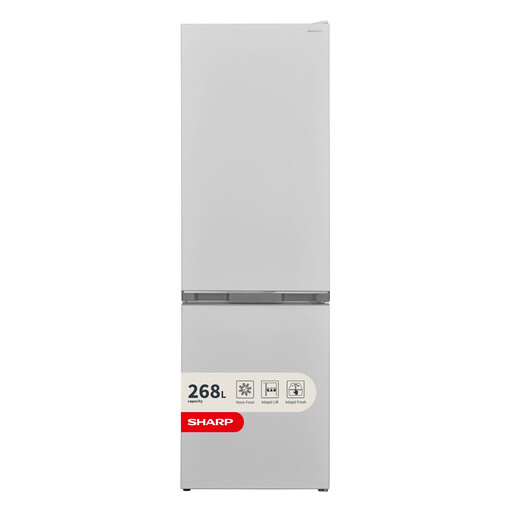
Consider the stated 60/40 layout if you need both fresh-food and frozen-portion storage in a narrower format. Its product name specifies 170 × 54cm, NanoFrost and energy class E; check the freezer drawers and defrosting instructions for your routine.
 No image available
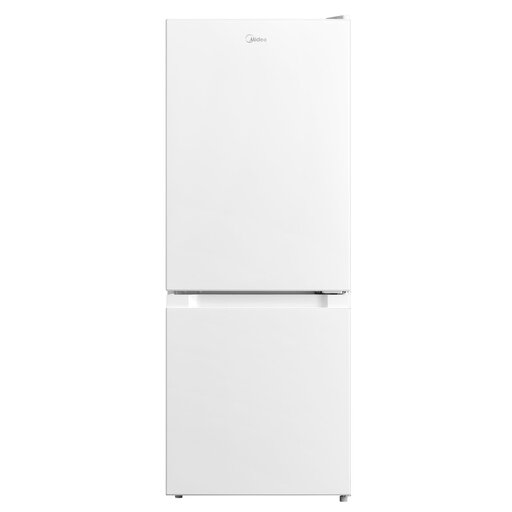
This is a format to assess where appliance height is restricted, although a smaller freezer may limit how many family portions you can store at once. Its product name specifies a height of 123cm and energy class E; check the freezer volume, drawer dimensions and defrosting instructions.
Cool cooked portions promptly before freezing them rather than leaving them warm for an extended period. NHS guidance on storing prepared food advises cooling it ideally within one to two hours before refrigerating or freezing; its guidance for food containing rice calls for cooling within one hour. Leave enough drawer space to arrange the cooled containers without overpacking them.
Cambridge University Hospitals advises households at increased risk of infection to keep a freezer at or below −18°C and check temperatures at least weekly with a food-storage thermometer. The freezer's displayed setting alone is not the same as a temperature measurement.
NHS guidance advises defrosting frozen prepared food thoroughly in a fridge or with a microwave defrost setting rather than at room temperature, then reheating until steaming hot throughout. It advises eating defrosted food within 24 hours and not reheating rice more than once.
Compare the energy label and product information sheet for each exact appliance variant, alongside the freezer capacity you need. GOV.UK guidance says in-scope products must display an energy label at the point of sale and be accompanied by a product information sheet; a retailer title or energy letter alone is less informative when the models differ in size.
No: frost-free operation is a convenience to assess, not a replacement for prompt cooling, adequate freezer room or containers that fit. If you use the freezer frequently, compare the exact models' frost-management systems and defrosting instructions alongside their drawer layouts.