Who is this for?

Shared-kitchen dessert organisers

If several people store cakes, desserts and ingredients in one fridge, shelves that can be allocated and cleaned make it easier to keep food accessible. Food Standards Agency guidance for food businesses also emphasises controls to prevent contamination.

Batch dessert makers

When several boxed desserts or trays need chilling at once, level shelf space and the fridge-to-freezer split matter more than a combined capacity figure. Measure the packaging you routinely use before comparing layouts.

Space-constrained communal kitchens

Where floor space or a fitted opening limits the choice, check the installed dimensions, door swing and delivery route alongside capacity. The exact model’s noise figure and energy label may also affect a kitchen used by several people.

Which layout and features matter?

Fridge-led freestanding

Choose when: Most stock is chilled desserts or ingredients and frozen storage is secondary.

Trade-off: A split that favours the fridge leaves less room for frozen stock.

50/50 frost-free

Choose when: Chilled desserts and frozen items both need substantial space, and shared users would benefit from avoiding routine manual defrosting.

Trade-off: The fridge section may offer less room for tall dessert boxes than a fridge-led layout; frost-free operation does not establish a food-safe temperature.

Integrated

Choose when: The kitchen has an appliance housing and a fitted appearance matters.

Trade-off: The exact cabinet niche, hinge system and ventilation requirements must match the appliance.

Wide multi-door

Choose when: A high-volume kitchen needs broad shelf access or separately organised storage zones.

Trade-off: The greater width and depth can rule out a compact kitchen or narrow delivery route.

Concern What to check Who this matters to
Usable chilled space Measure the largest box or tray against clear shelf width, depth and height; compare fridge and freezer volumes separately. When I store whole cakes, I need them to sit flat without blocking everyone else’s food. Around 31% of consumers would put usable chilled space first.
Temperature control Check how fridge temperature is set and where a separate thermometer can be read, including during normal shared use. If the door is opened often, I want to know the desserts are staying properly chilled rather than relying on a numbered dial. For around 25% of consumers, temperature control is the primary concern.
Shared-use organisation Check whether shelves can be allocated and cleaned easily, and whether the freezer is frost-free if manual defrosting is a concern. I need other users to find their food without moving uncovered desserts or leaving spills behind. Organisation and upkeep come first for around 25% of consumers.
Fit and ongoing use Measure the appliance, open doors and delivery route; compare exact-model noise figures and annual kWh. In a tight kitchen, I cannot use extra capacity if the doors will not open properly or the appliance disrupts the space. Around 19% of consumers would prioritise fit and ongoing use.

What should you avoid?

  • Choosing by total litres alone

    A combined capacity figure cannot tell you whether a boxed cake fits flat in the fridge or how much of the space belongs to the freezer.

    Measure your largest routine box or tray, then check usable shelf dimensions, shelf positions and the separate compartment capacities on the exact model.

  • Reading a numbered dial as a temperature measurement

    A dial setting does not establish the temperature inside a busy shared fridge. GOV.UK advises a fridge setting of 5°C or below for food businesses; its consumer guidance gives a fridge range of 0–5°C.

    Use a refrigerator thermometer and check readings during normal use, particularly after substantial loading or frequent door opening.

  • Assuming frost-free makes food storage safe

    Frost-free operation concerns ice build-up in the freezer. It does not establish the temperature of chilled desserts or replace procedures for keeping shared food separate.

    Check fridge temperature, follow the model’s installation and airflow instructions, and agree how users will store and clean around desserts.

  • Ordering a wide appliance before measuring access

    Some multi-door models need considerably more width than a conventional layout: Haier lists its HCR59F18DNMM multi-door model at 905 mm wide.

    Measure the kitchen position, door-opening space and full delivery route for the exact appliance before ordering.

Brands to consider

Bosch

Bosch offers freestanding and integrated fridge-freezers for kitchens considering different installation layouts.

  • Bosch lists 184 L of chilled volume, 76 L of frozen volume and 35 dB(A) noise emissions for the integrated KIN86VFE0G.
  • Those figures describe that model, not every Bosch fridge-freezer; check shelf geometry and fitting requirements for the one you choose.

Beko

Beko has freestanding and integrated options relevant to kitchens considering separate fridge and freezer cooling.

  • Beko describes separate cooling conditions and frost-free freezer operation on its CNG4793V.
  • Its HarvestFresh feature concerns selected fruit and vegetables; do not treat it as a dessert-storage temperature specification.

Samsung

Samsung offers bottom-freezer and integrated formats to compare against the available kitchen space.

  • Samsung lists 390 L total capacity for the RB38C602CWW bottom-freezer model.
  • Check that model’s actual shelves, dimensions and noise figure rather than using its total capacity as a measure of dessert-box fit.

Haier

Haier’s range includes standard-width and multi-door formats for kitchens assessing different storage layouts.

  • Haier lists a 255 L fridge and 147 L freezer for the HFKR5718DNMM.
  • Its HCR59F18DNMM multi-door model is listed at 905 mm wide; measure both the intended position and delivery route before considering that format.

Joybuy products for this use

These fridge-freezers offer different freestanding layouts for shared dessert storage. Compare their stated formats with your box dimensions, chilled-to-frozen needs and available kitchen space.
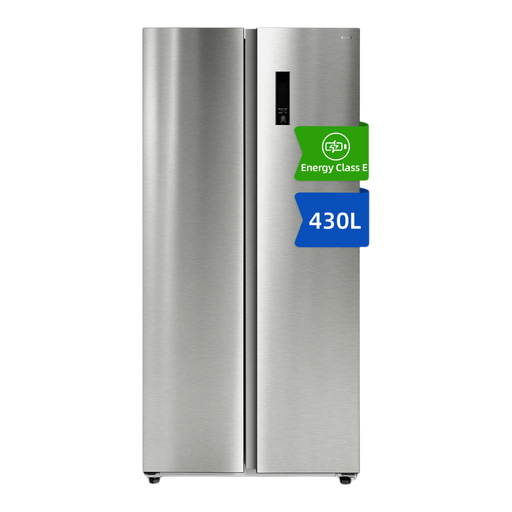
CHiQ JKR433WSSE side-by-side fridge-freezer

CHiQ JKR433WSSE 430 L side-by-side fridge-freezer

Consider this side-by-side layout if several users need to organise chilled desserts alongside frozen food; check that the fridge shelves fit your largest boxes. The product name states an 84 cm width, No Frost operation and energy class E, so allow for the appliance and its open doors when measuring.

View on Joybuy
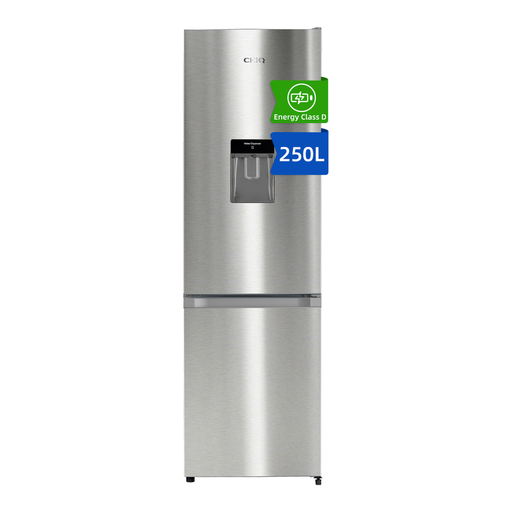
CHiQ JKR250WDSSD freestanding fridge-freezer

CHiQ JKR250WDSSD 250 L fridge-freezer with water dispenser

This freestanding format is worth considering where kitchen width is limited, provided the chilled shelves fit the desserts you store. Its stated width is 54 cm and height is 181 cm; the name also specifies Total No Frost, a water dispenser and energy class D.

View on Joybuy
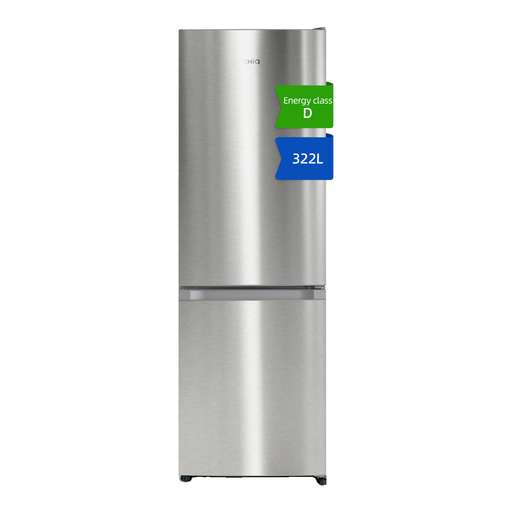
CHiQ JKR318WSSD freestanding fridge-freezer

CHiQ JKR318WSSD 322 L freestanding fridge-freezer

Consider this model if the kitchen can accommodate a taller freestanding appliance and you need to check how its chilled space takes dessert boxes. The stated width is 60 cm and height is 185 cm; the name specifies Total No Frost and energy class D. Confirm usable shelf clearances before choosing it for whole cakes or trays.

View on Joybuy
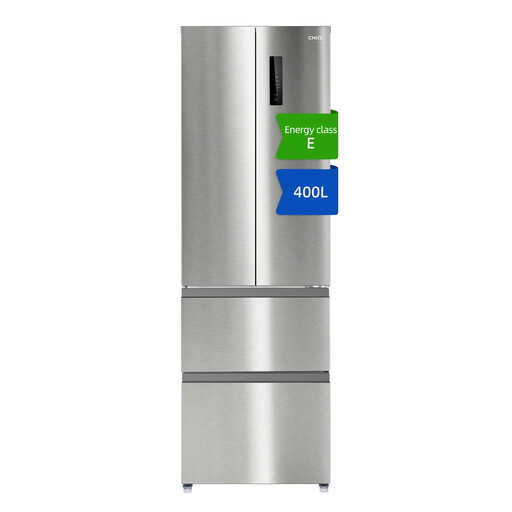
CHiQ JKR420WSSE French-door fridge-freezer

CHiQ JKR420WSSE 400 L French-door fridge-freezer

The French-door format offers another layout to assess if several users need access to chilled and frozen food. Its stated width is 60 cm, and the name specifies Total No Frost and energy class E. Check the usable shelf space and the temperature of any special compartment before assigning it to desserts.

View on Joybuy
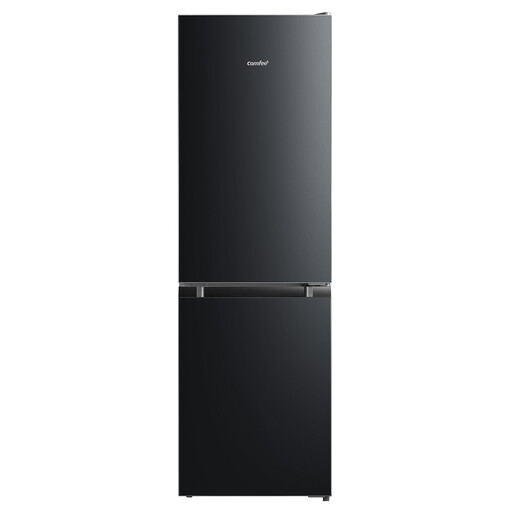
Comfee' RCB169BL2UK(E) fridge-freezer

Comfee' RCB169BL2UK(E) 174 L 70/30 fridge-freezer

This fridge-led split may suit a smaller shared kitchen with more chilled than frozen stock, if its shelves accommodate the usual dessert packaging. The name states a 150 cm height, Low Frost freezer, 39 dB noise figure and energy class E. Low Frost is not the same as frost-free, so plan for freezer defrosting when needed.

View on Joybuy

Common questions

What temperature should I use for chilled desserts?

Keep desserts that require refrigeration within the applicable chilled-storage guidance, and check the fridge with a thermometer. GOV.UK advises food businesses to set their fridge to 5°C or below; its consumer guidance says a home fridge should be between 0 and 5°C. Follow any storage instructions for the particular dessert too.

Does the fridge’s numbered dial show its temperature?

No: a numbered setting should not be read as a measurement in degrees Celsius. GOV.UK recommends checking the fridge with a separate thermometer, which is particularly useful when several people open the door throughout the day.

Does a shared kitchen storing desserts need food-business registration?

It depends on whether the kitchen is used for a food business, not simply on whether people share it. GOV.UK says food businesses in England, Wales and Northern Ireland must register at least 28 days before trading; if the kitchen supplies or sells desserts, check how the requirement applies with the relevant local authority. Do not assume an ordinary shared household is a food business.

How can I compare electricity use between fridge-freezers?

Compare the annual kWh shown on the exact models’ energy labels alongside their size and storage layout. Energy Saving Trust advises considering appliance size as well as its energy rating; a rating alone does not tell you whether two differently sized models meet the same storage need.

How should a food-business kitchen separate desserts from other food?

Use an organised storage and cleaning procedure that addresses contamination and allergen cross-contact, rather than relying on the fridge layout alone. Food Standards Agency guidance calls for contamination controls in food businesses; allocated shelves and closed containers can support those procedures, with separation from raw ingredients where needed.